Share
Catholic University of Croatia Awards Honorary Doctorate to Prof. Dr. Thomas Schwartz
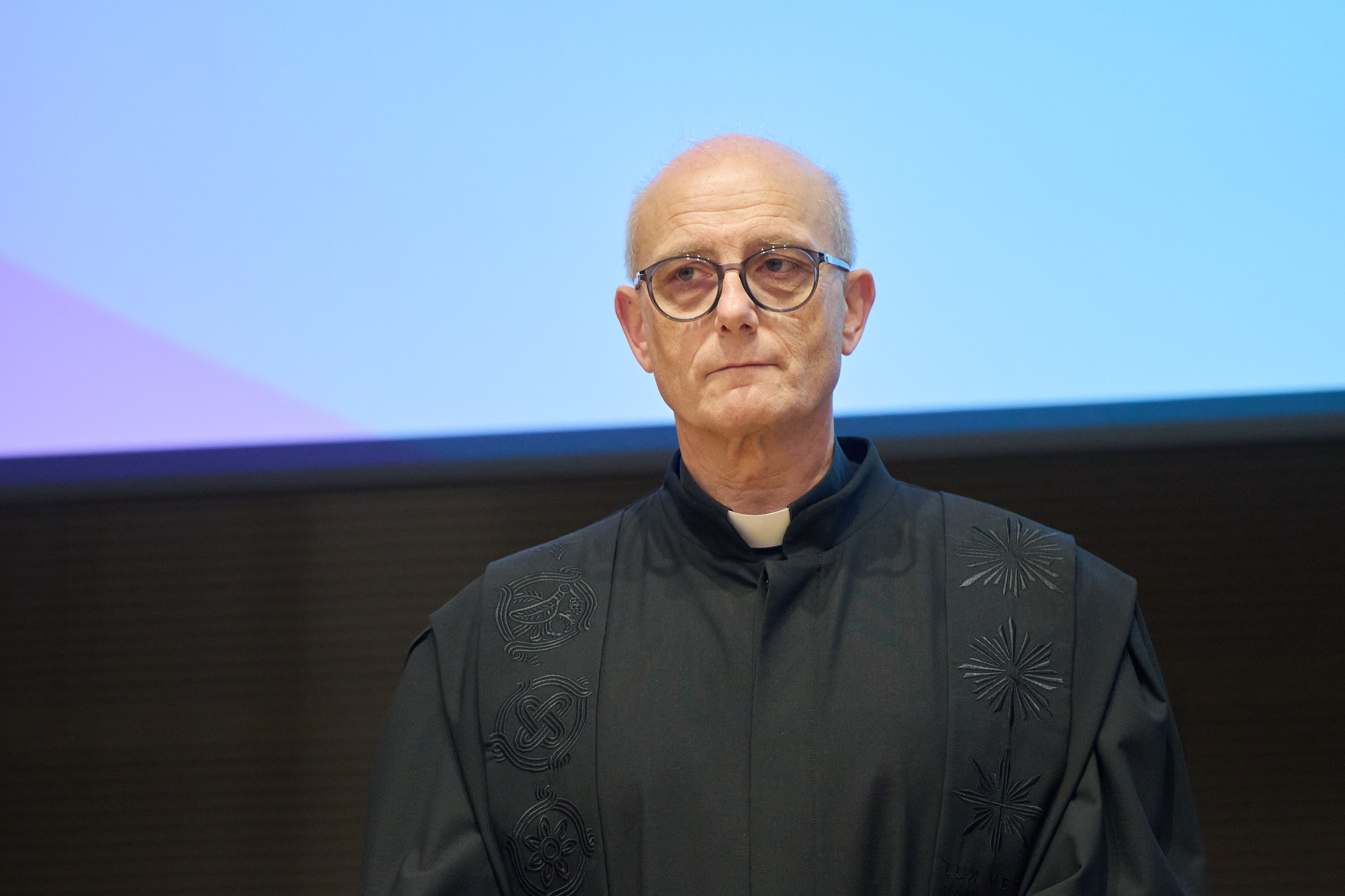
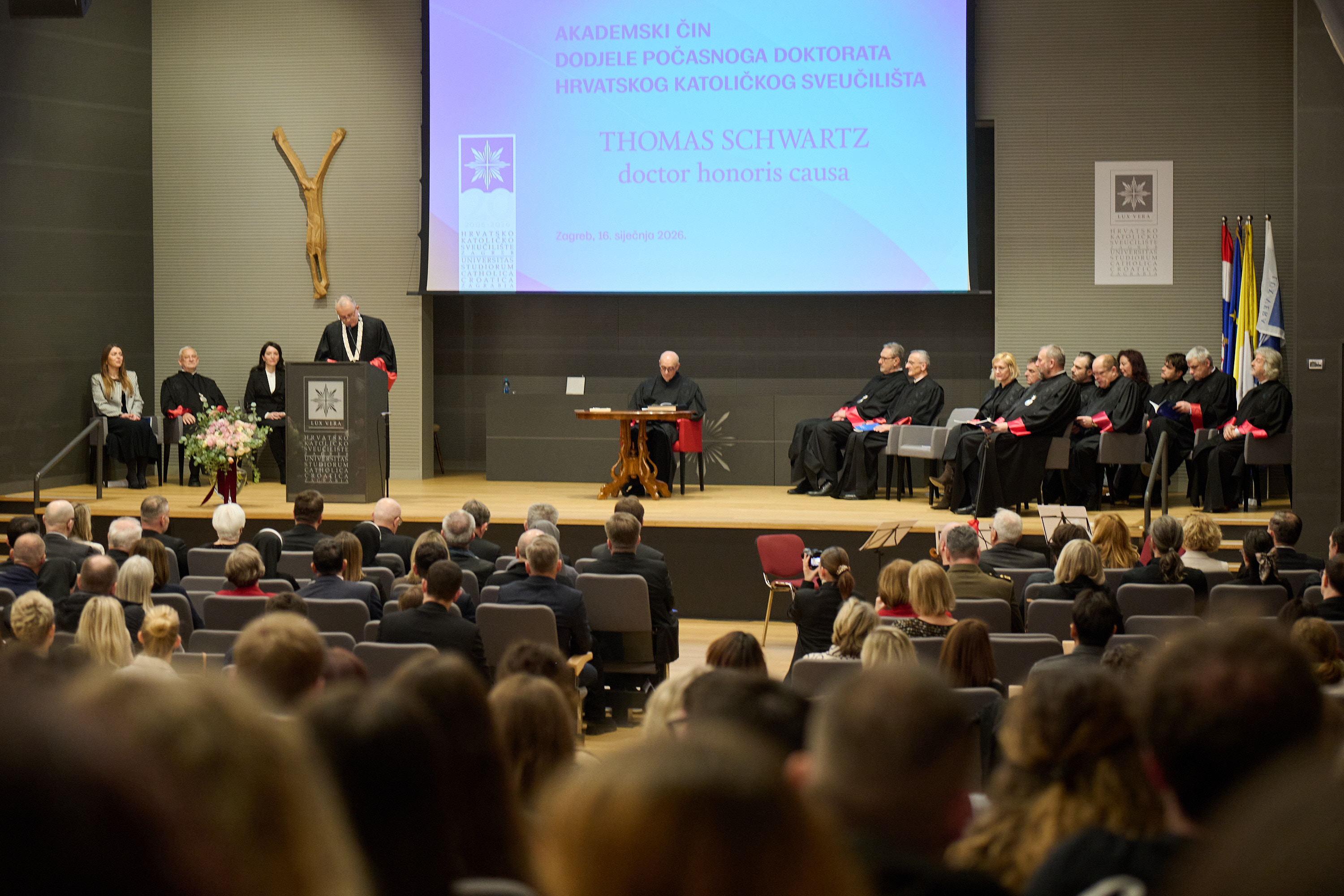
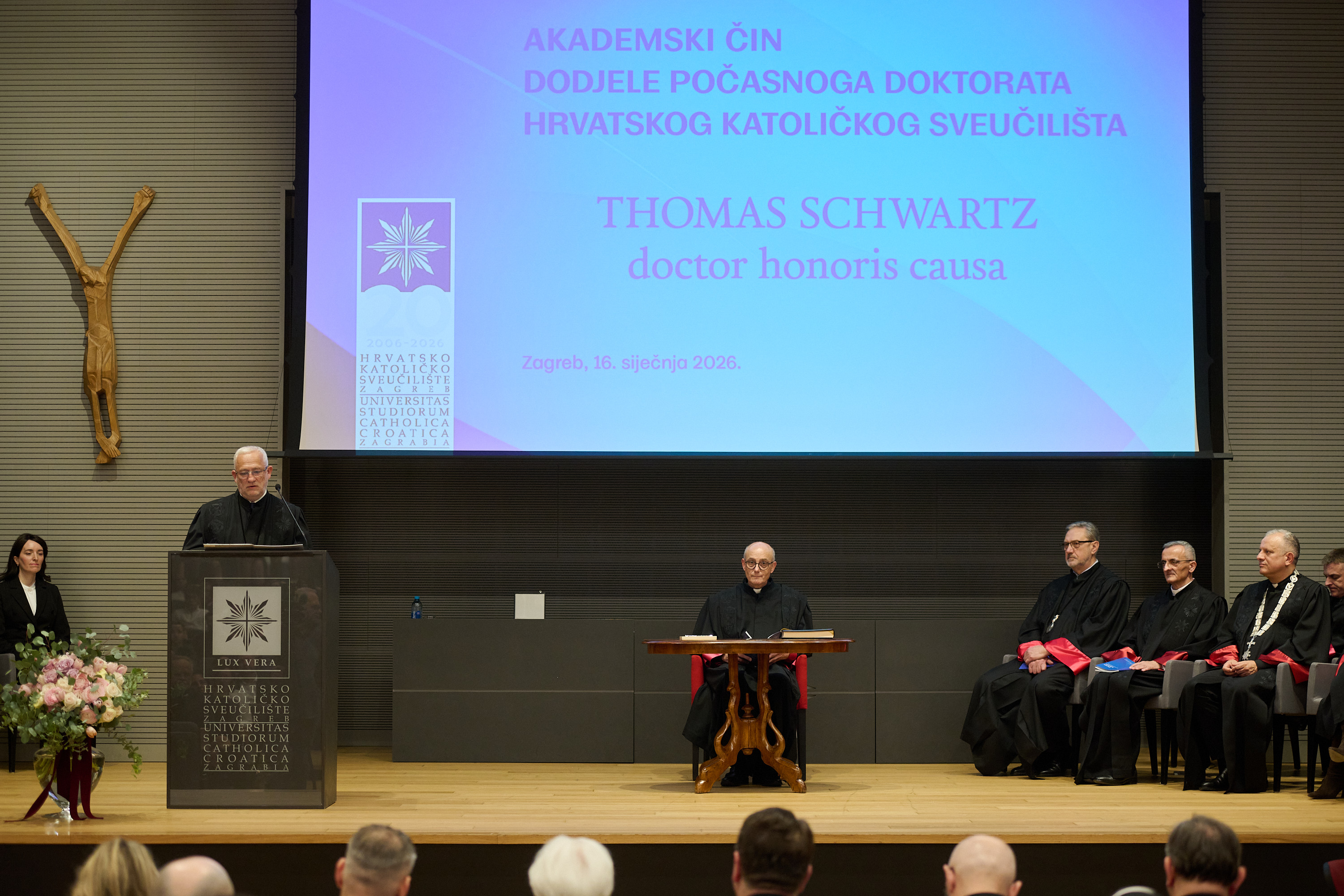
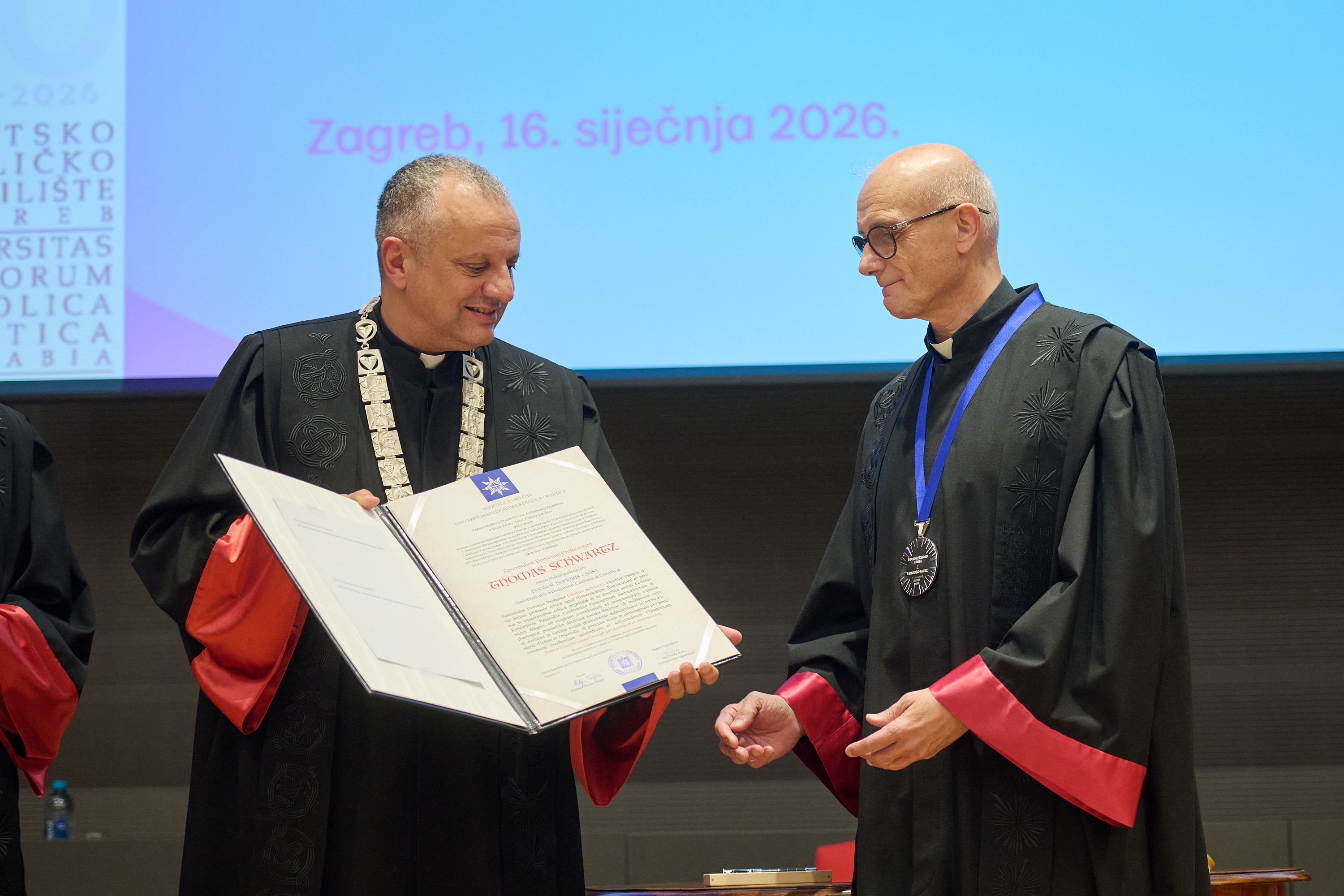
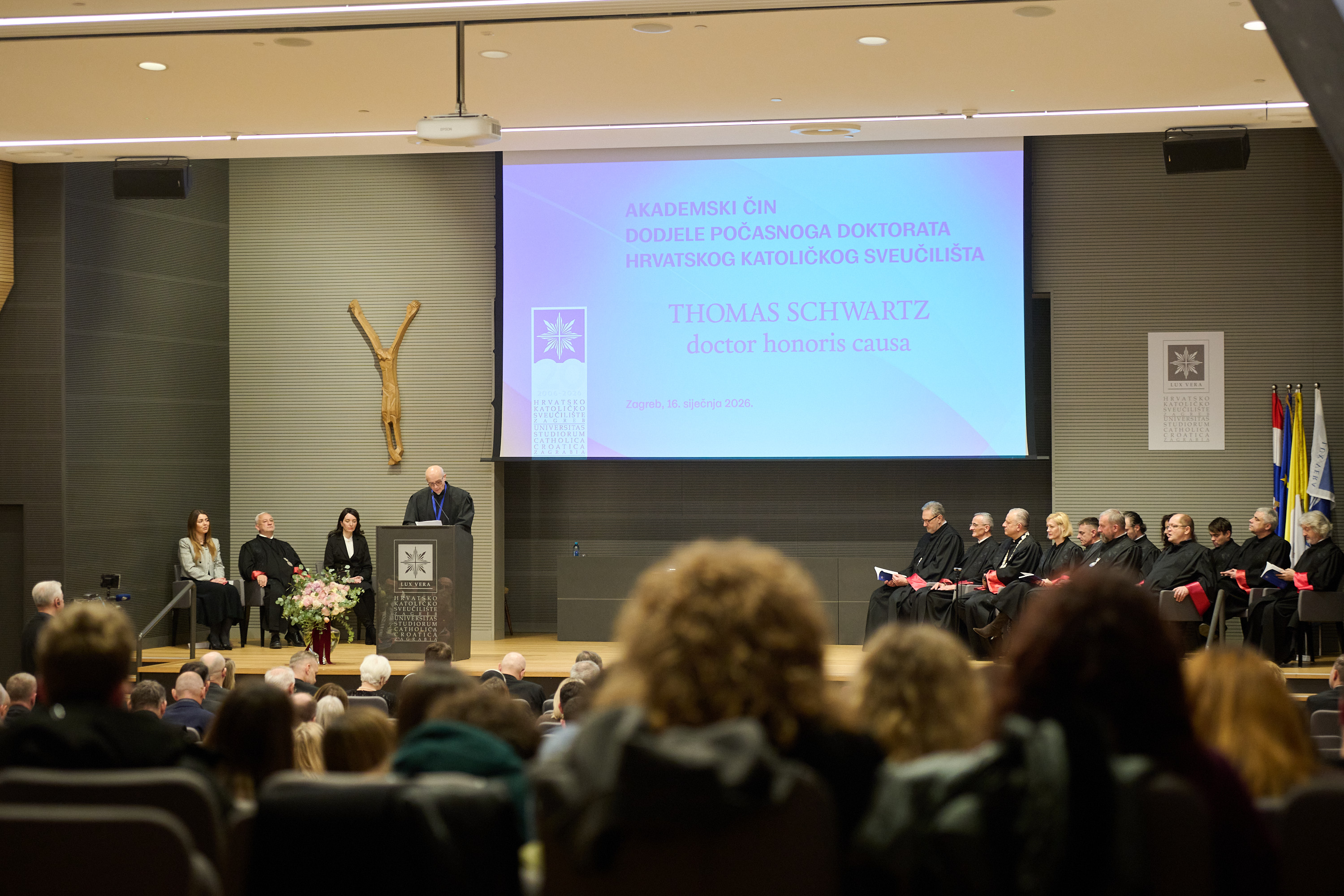
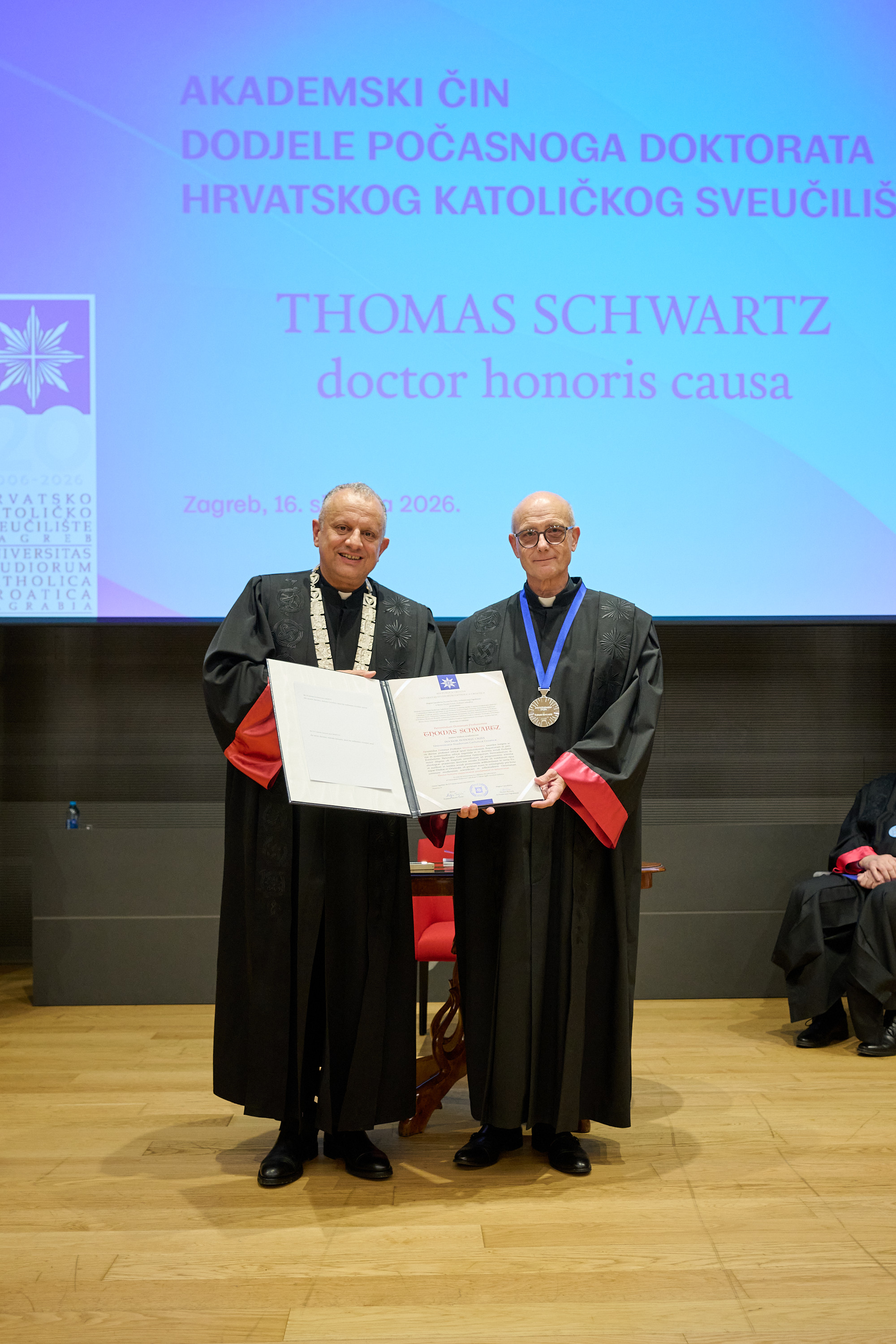
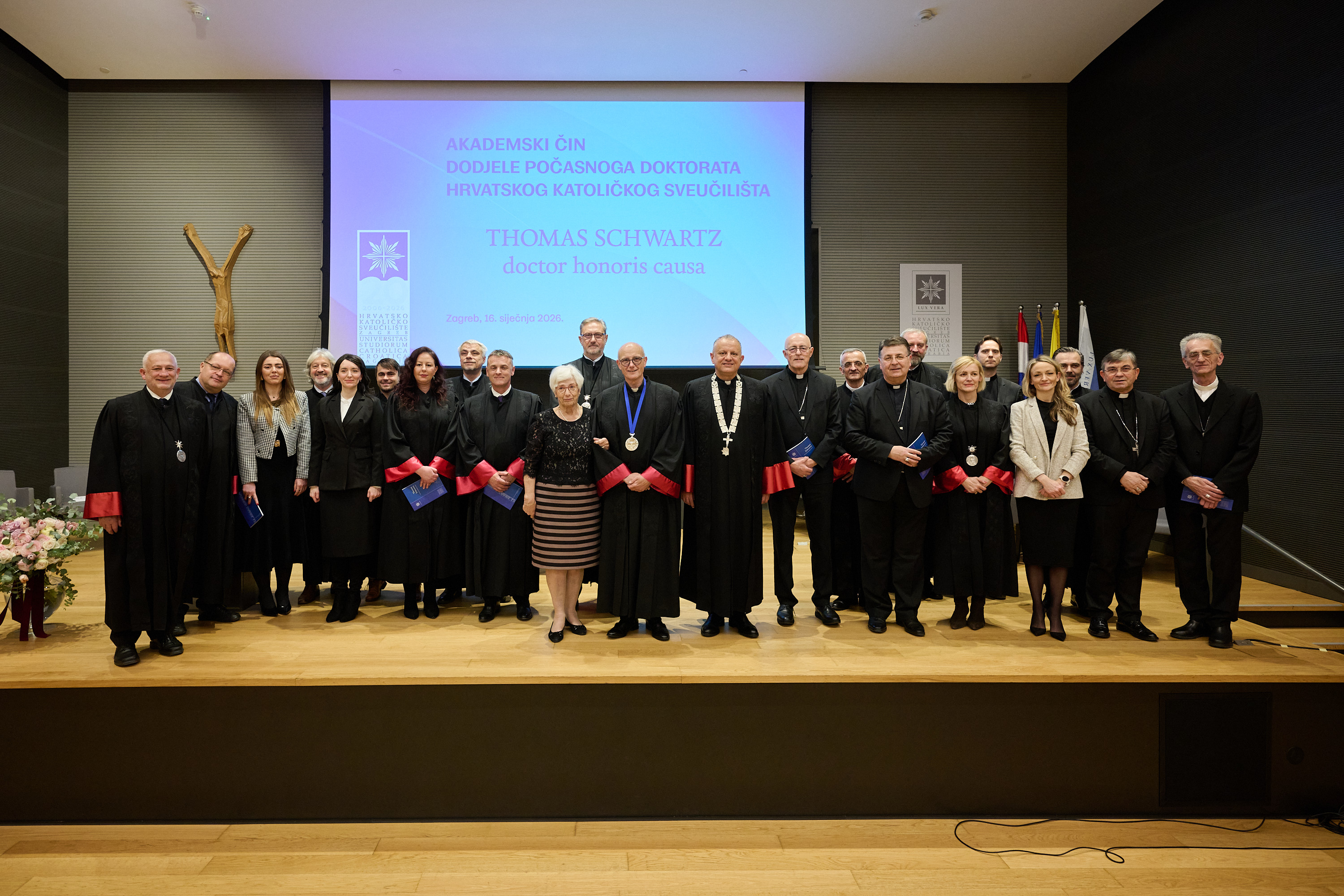
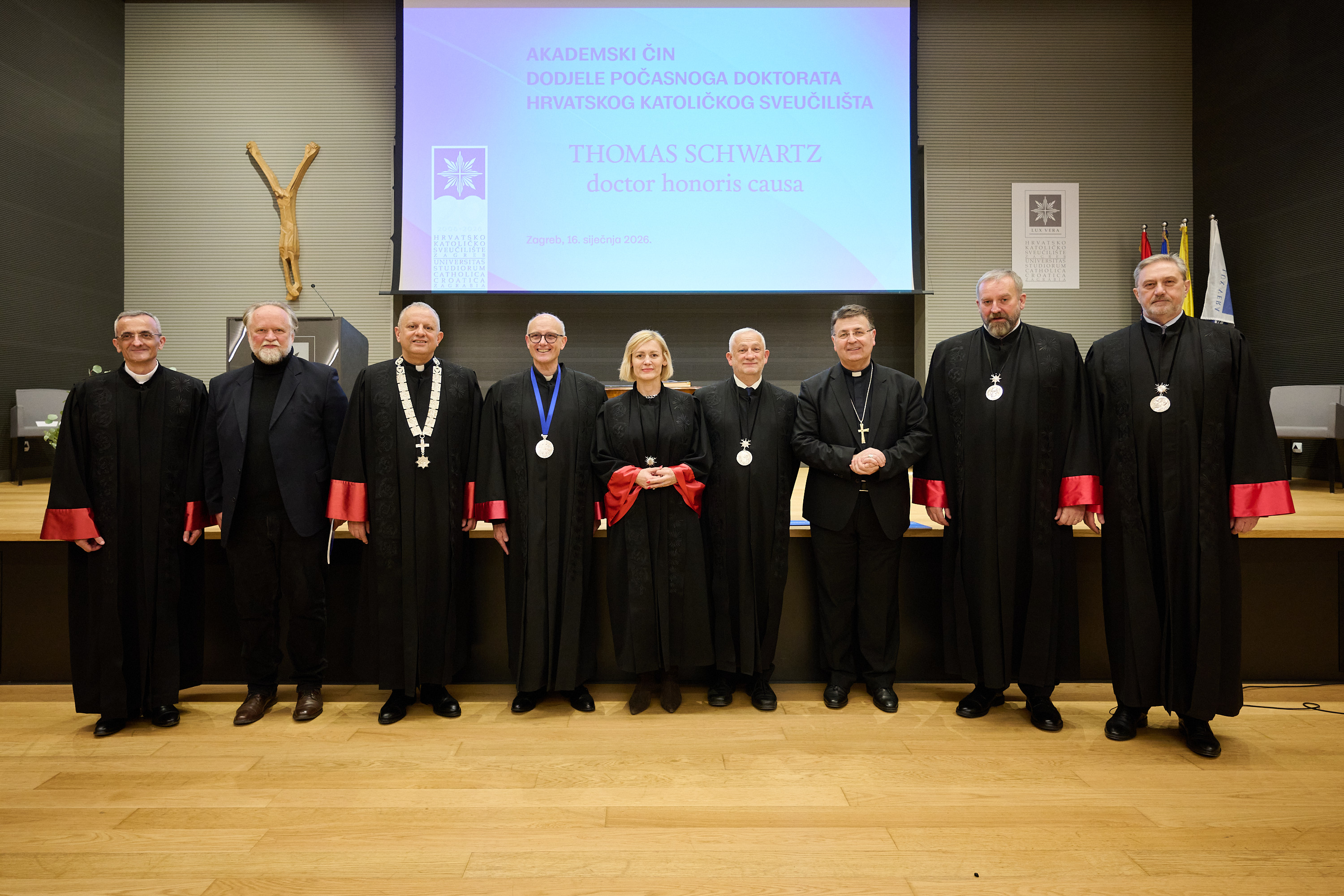
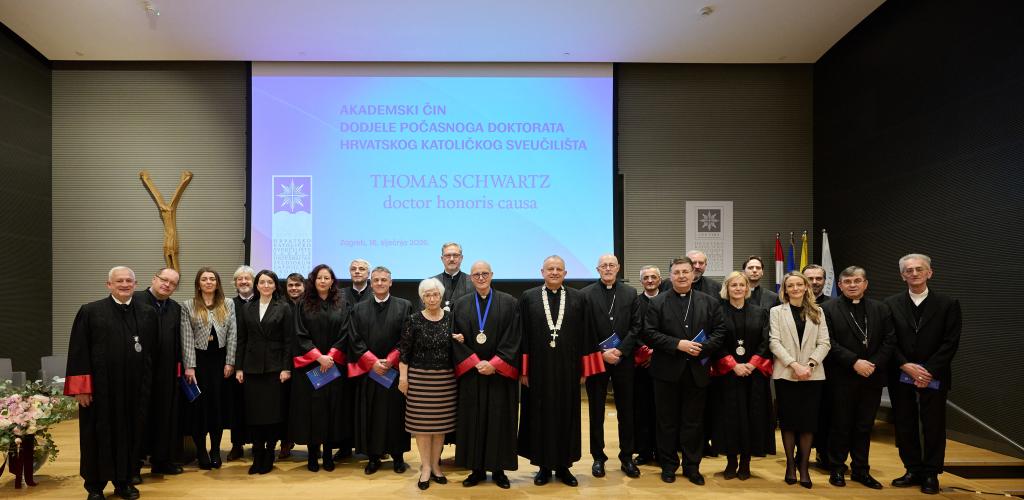
On Friday, 16 January 2026, the Catholic University of Croatia solemnly awarded an honorary doctorate to Prof. Dr. Thomas Schwartz, Director of the Renovabis Foundation of the German Bishops’ Conference, in recognition of his exceptional contribution to the development of science, social responsibility, and his long-standing commitment to upbringing, education, and higher education, particularly in Central and Southeast Europe.
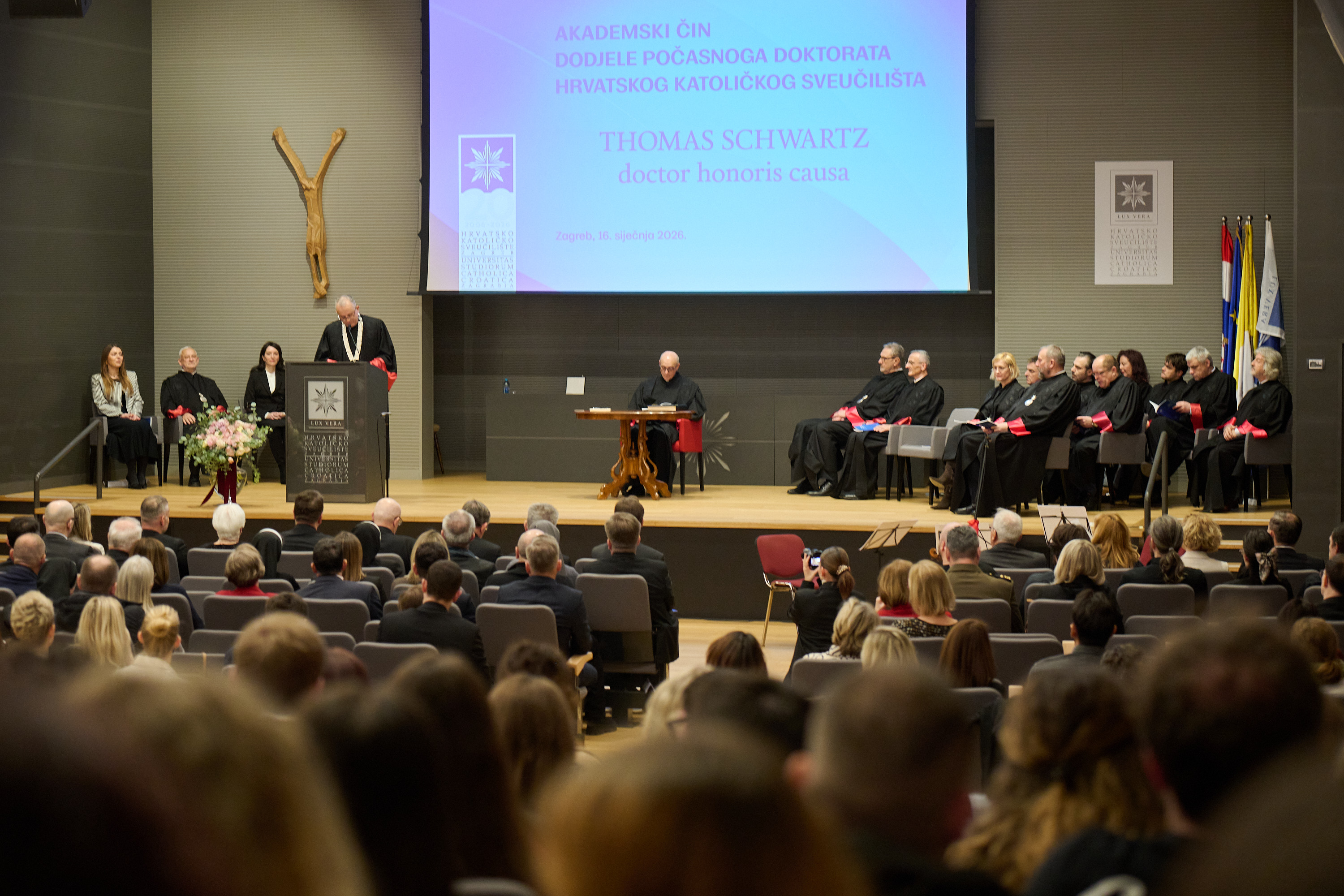
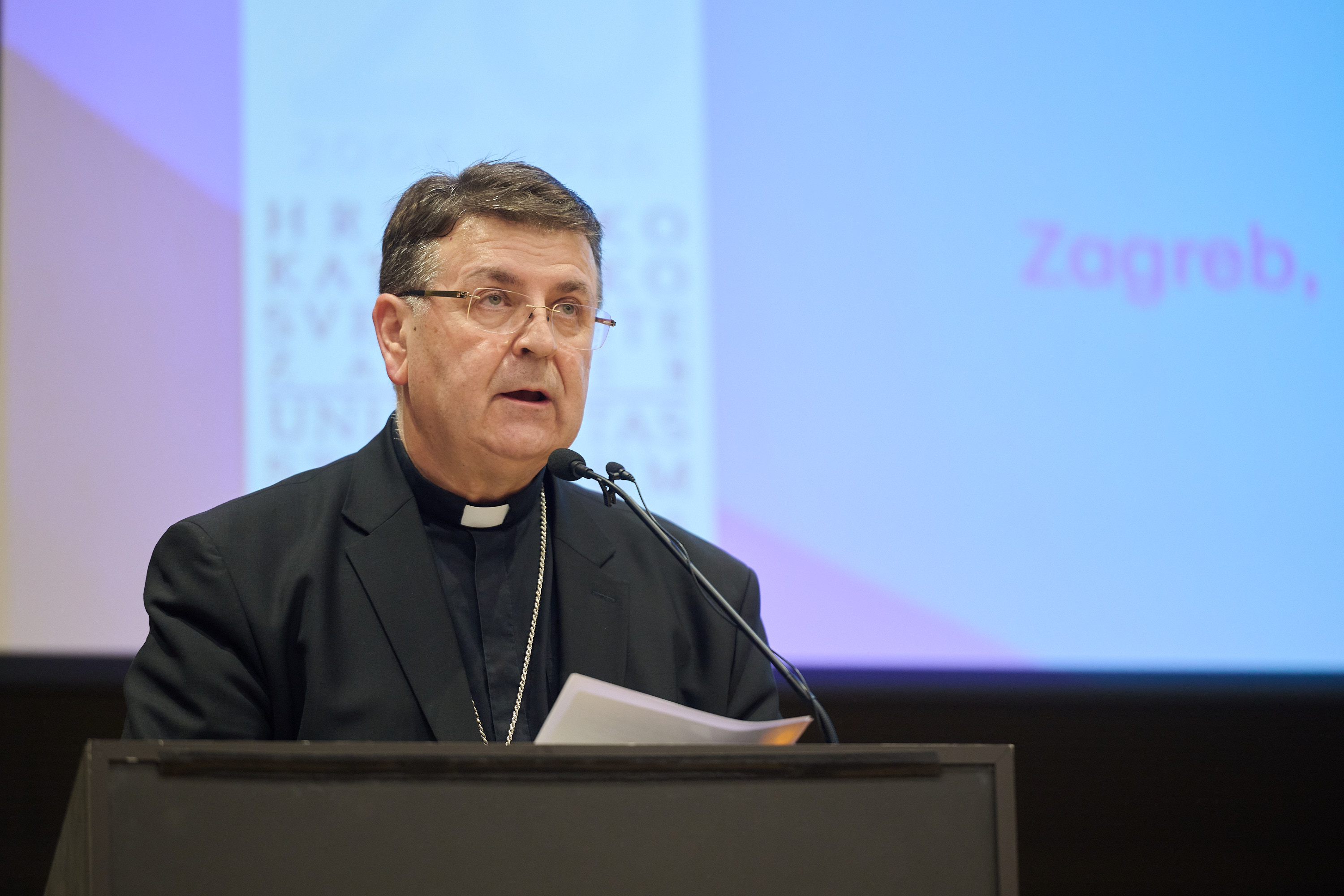
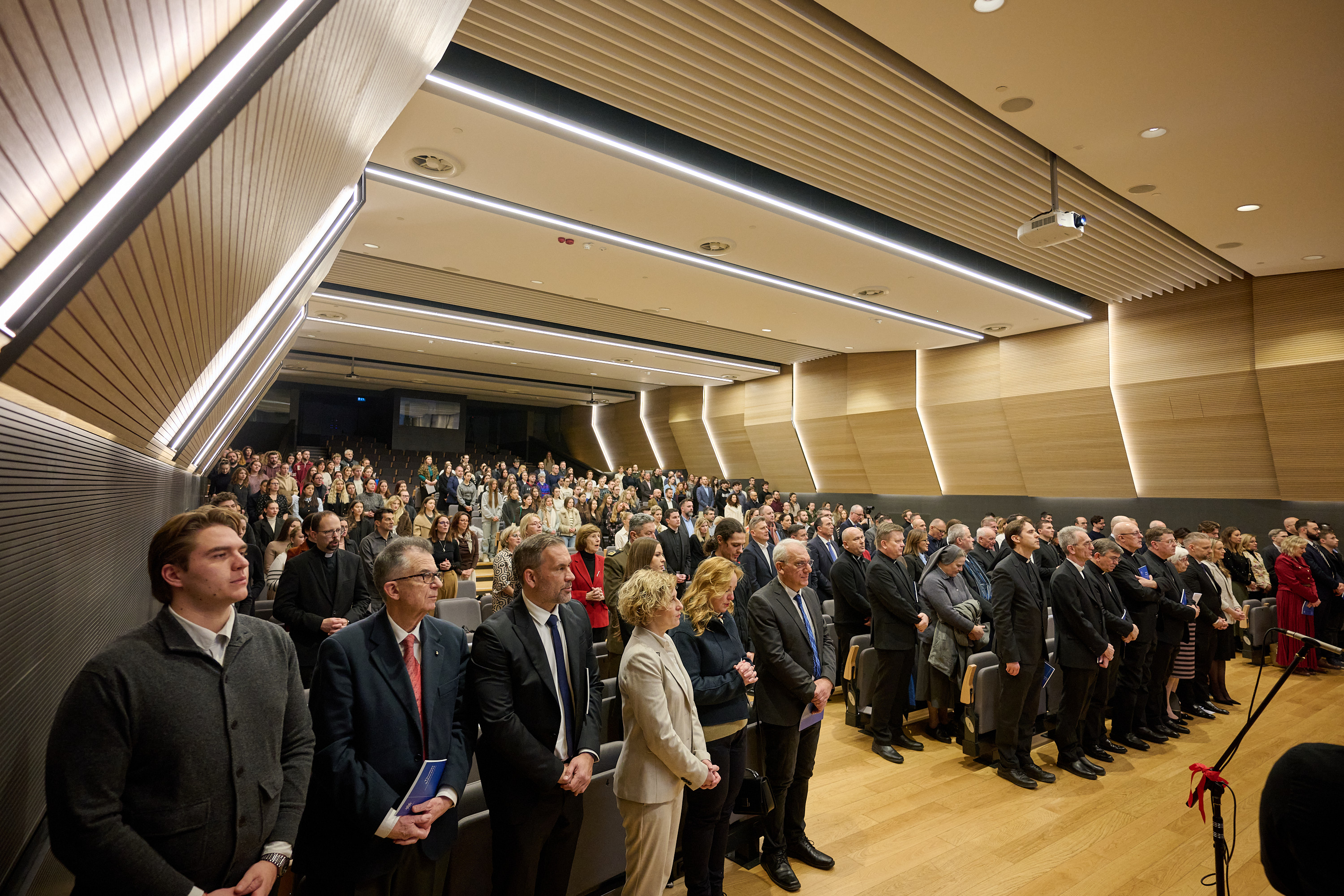
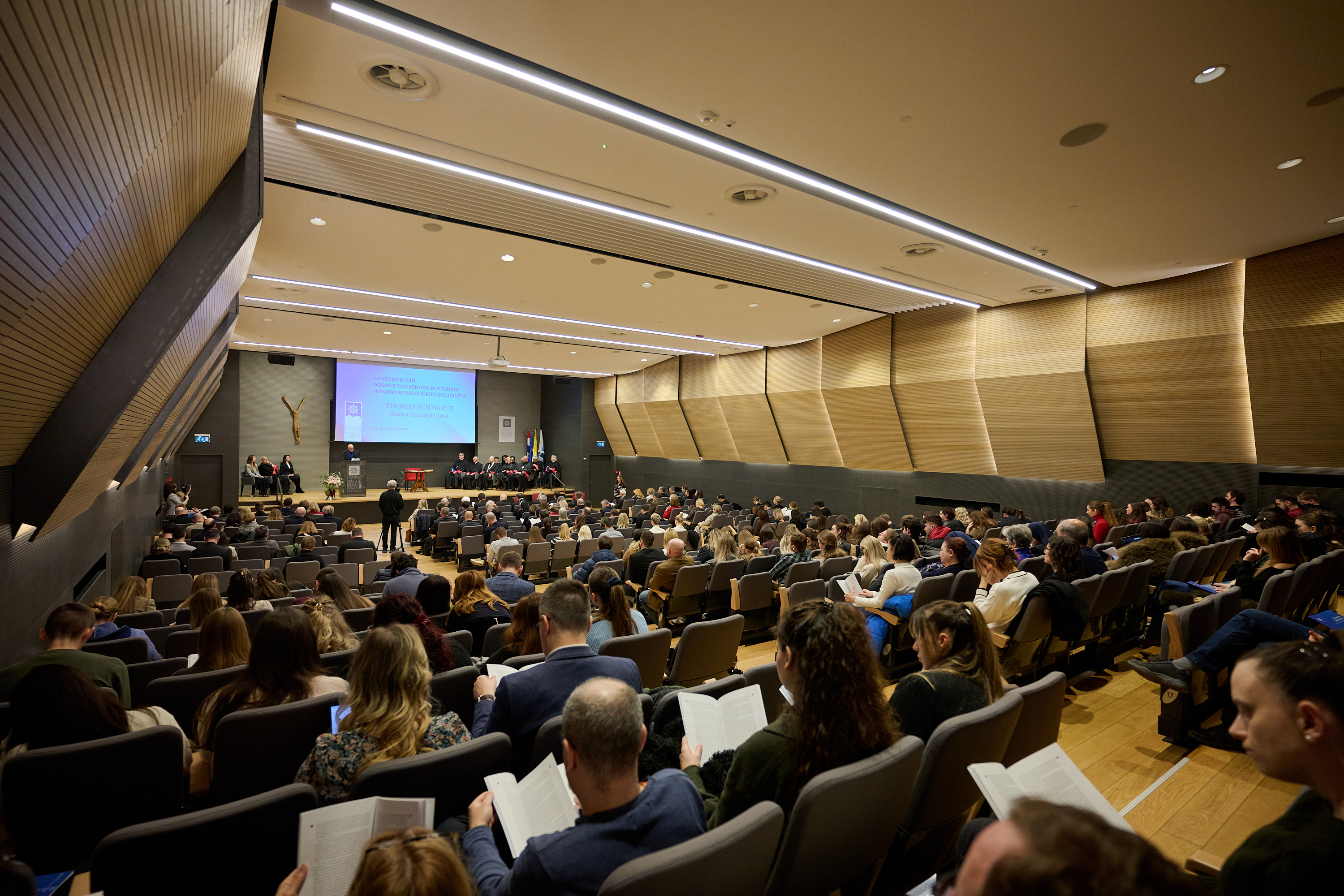
The ceremonial academic event was held in the presence of numerous Church and public dignitaries, members of the academic community, and representatives of public life. Among the guests were Msgr Ivan Šaško, Auxiliary Bishop of Zagreb and envoy of the Archbishop of Zagreb and Grand Chancellor of the University, Msgr Dražen Kutleša; the Apostolic Nuncio to the Republic of Croatia, Msgr Giorgio Lingua; as well as several bishops from Croatia. Representatives of state institutions were also present, including the Ministry of Science, Education and Youth, the Croatian Bishops’ Conference, Caritas, religious communities, and many associates and friends of Professor Schwartz from several European countries.
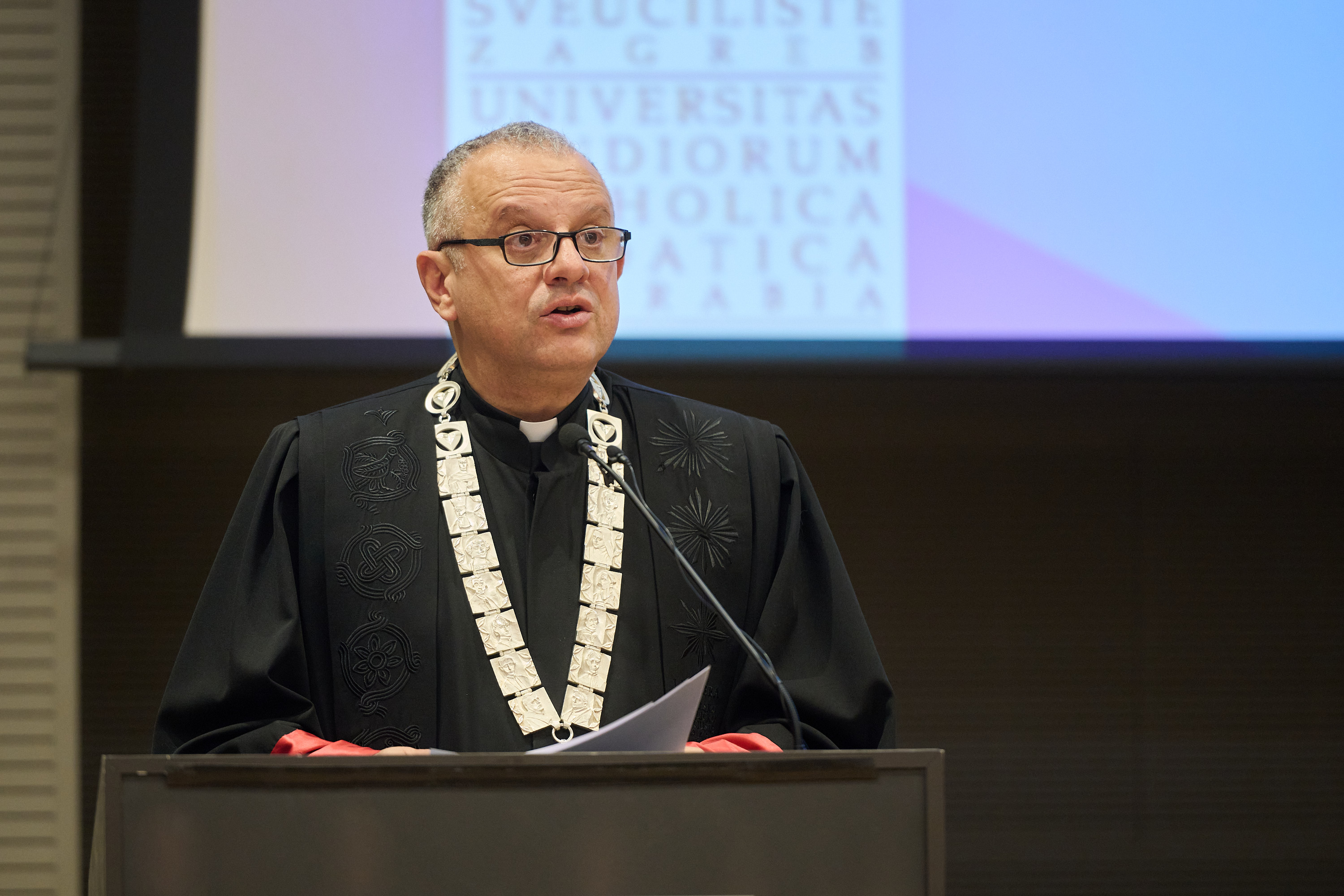
Based on the decision of the Senate of the Catholic University of Croatia of 14 October 2025, the honorary doctorate was conferred on Professor Schwartz by the Rector, Prof. Dr. Željko Tanjić. The laudatio highlighted Schwartz’s academic, pastoral, and social engagement, as well as his key role in promoting solidarity, the Church’s social teaching, and international cooperation among Catholic institutions.
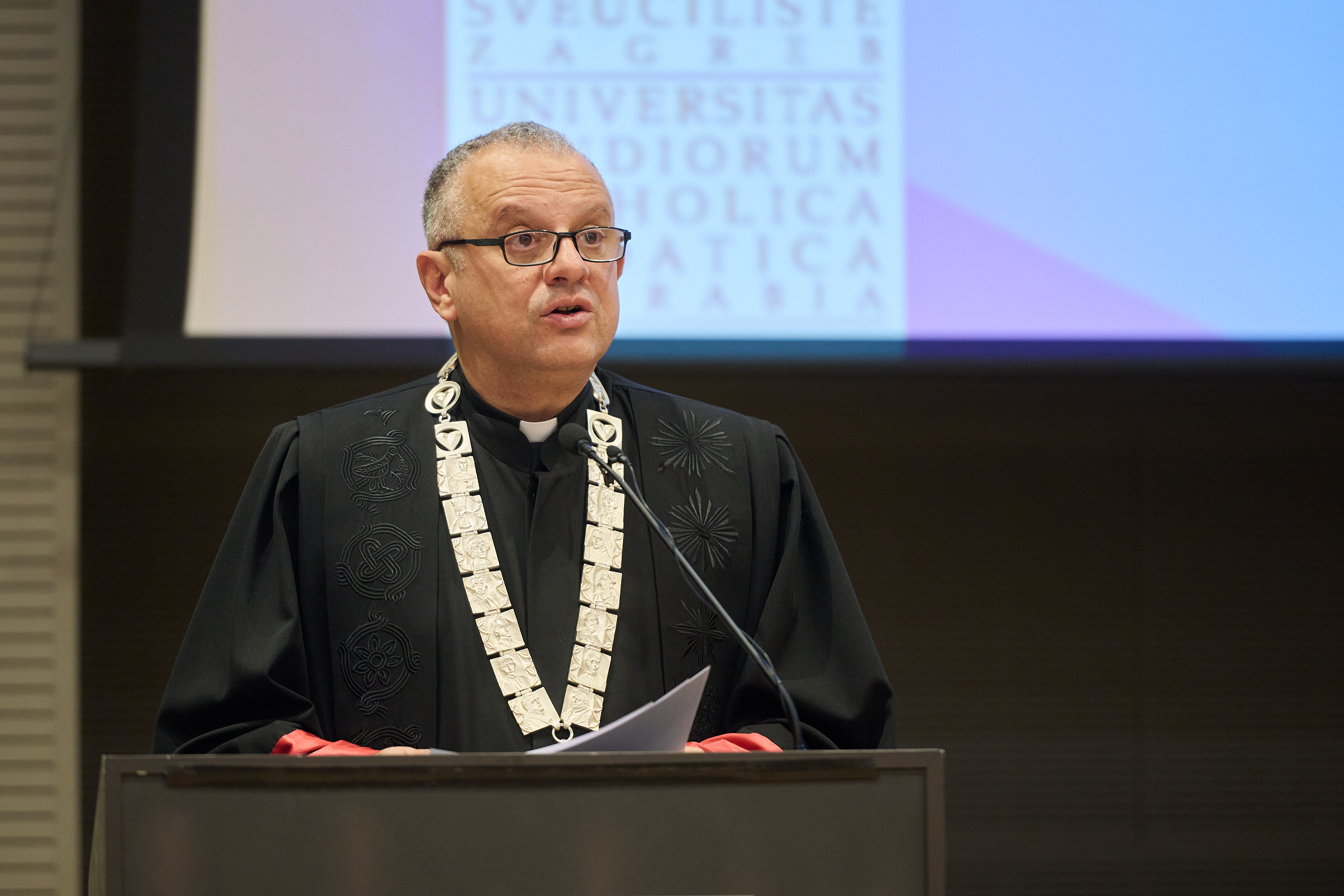
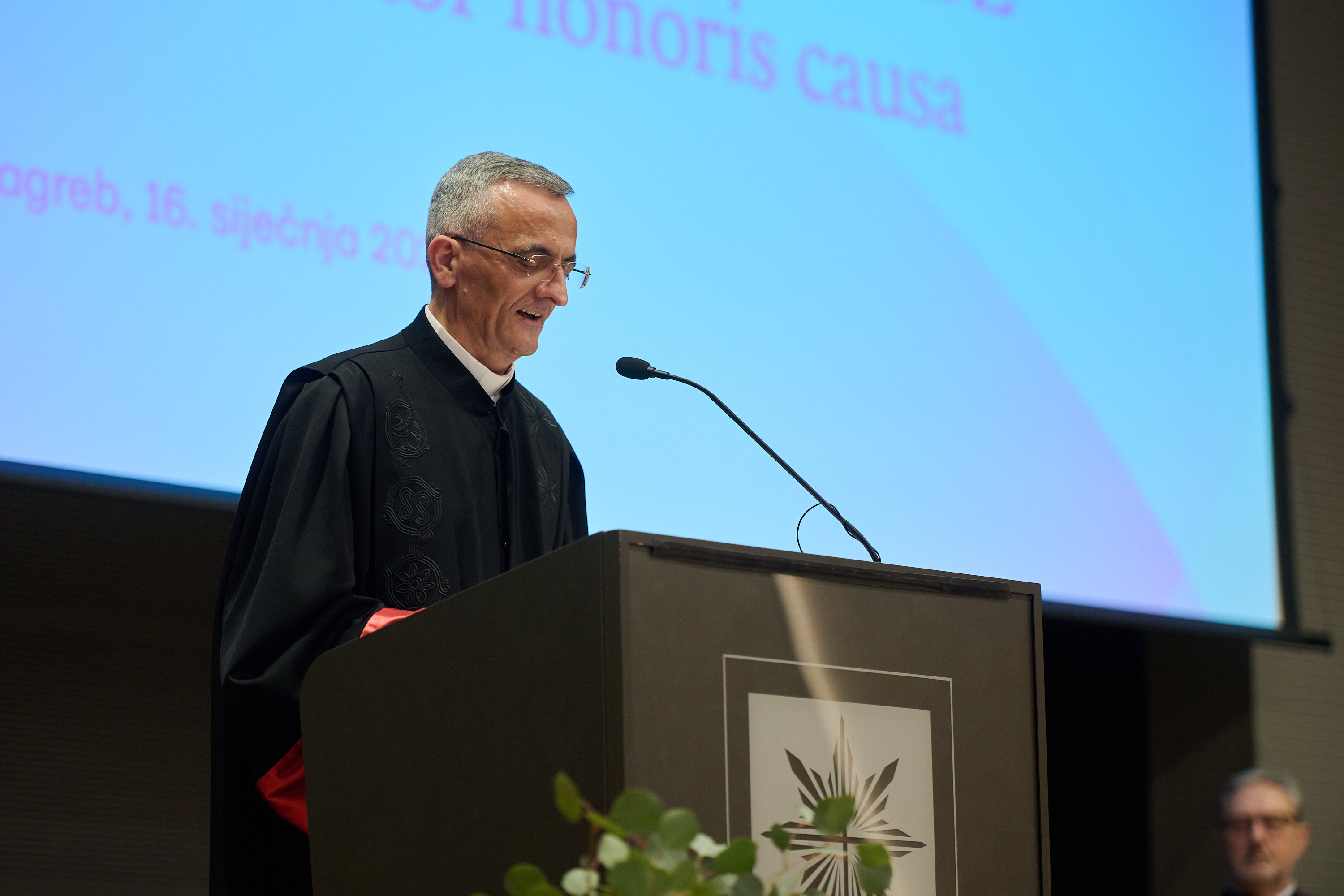
In his address, Rector Tanjić stated:
“Today, for the second time in its twenty-year history—ten years after awarding its first honorary doctorate to His Eminence Cardinal Gerhard Ludwig Müller—the Catholic University of Croatia celebrates the academic conferral of an honorary doctorate upon Prof. Dr. Thomas Schwartz, Director of the Renovabis Foundation of the German Bishops’ Conference and a friend of our University and of Croatia. This joyful and grateful celebration is not merely an academic recognition of a priest, theologian, social ethicist, and friend of our University, Thomas Schwartz; it is also an expression and confirmation of the values that constitute our University—values which our new honorary doctor bears witness to through his personality, priestly life and service, academic seriousness, and ecclesial and social commitment, especially within the local Churches of Central and Eastern Europe…
In an interview he gave shortly before Christmas to a respected Catholic portal in Croatia, Prof. Schwartz said, among other things: ‘Our task is to proclaim the message of the Gospel in such a way that it reaches people in their everyday reality. This does not mean adaptation at any cost, but rather a creative and courageous inculturation of faith. The Church must offer places of encounter, dialogue, and hope—especially at a time when many people are searching for meaning and orientation.’ Thank you, dear Thomas, for bearing witness to this and for encouraging us to do the same. I congratulate you on this honorary doctorate, joyful and proud that in this way you will also become part of our university community. Ad multos annos vivas!” concluded the Rector.
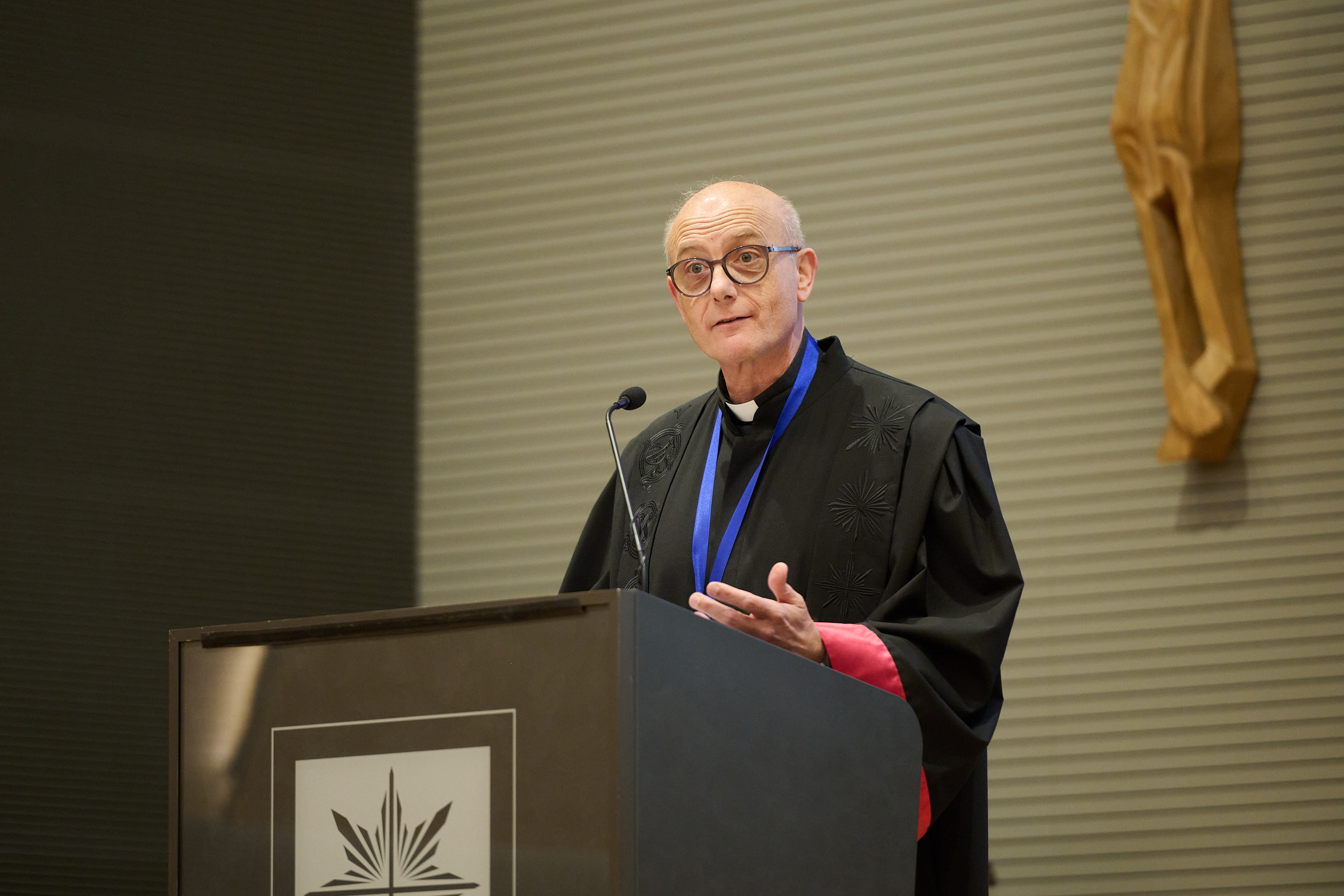
As part of the ceremony, Prof. Dr. Thomas Schwartz delivered a lectio magistralis entitled “Old Wine Retains Its Good Flavor Even in New Wineskins,” in which he emphasized:
“It is a great and special honor for me to receive this high academic distinction at this place and at this solemn moment, in the presence of such distinguished colleagues, respected teachers, and dear friends. An honorary doctorate is never merely a retrospective recognition of past achievements; above all, it is a task—a call to continue one’s work in the various fields in which we are active and to place one’s efforts at the service of the common good—and here, at this place and at this university, allow me to add: in the service of the Church.
The choice of the topic of this address, ‘Old wine retains its good flavor even in new wineskins,’ may at first sound provocative. The metaphor comes from Sacred Scripture, specifically the Synoptic Gospels, where Jesus warns that new wine should not be poured into old, brittle wineskins, lest they burst during fermentation, thus calling for radical renewal—pouring ‘new wine into new wineskins.’ The title of this lecture, however, deliberately reverses that warning. By doing so, I wish to emphasize clearly that the ‘old wine’—which I identify here with the timeless moral truths of the Church’s social teaching—can, precisely through the epochal crises of the 21st century, that is, through ‘new wineskins,’ once again reveal its full quality. The multiple crises of the contemporary world make the very core of the Church’s social teaching all the more necessary, while its content becomes ever more relevant and comprehensible. I am fully aware of the fragmentary nature of these reflections and consciously accept their incompleteness in favor of the intellectual horizon they seek to open…
Amid the systemic crises of the modern world, the Church’s social teaching demonstrates its determination and intellectual radicalism. Its enduring principles not only remain applicable, but in the wineskins of the Anthropocene become clearer and more demanding than ever before.
The ‘old wine’ is not spoiled; it is profound and complex. Its application to contemporary realities shows that:
The revolution of artificial intelligence requires digital subsidiarity that protects human authorship and freedom of thought from the tyranny of algorithms and technocratic control.
Ecological and social transformation requires global, intergenerational solidarity, concretely expressed in the recognition and repayment of ecological debt, and firmly committed to a life worthy of our grandchildren—without growth in consumption.
A world order in crisis requires political subsidiarity that enables the strengthening of effective international institutions with ‘real teeth’ to protect the global common good from the dominance of unrestrained transnational markets and violent neo-colonial imperialisms.
Our analysis teaches us that the crises of climate, artificial intelligence, and global governance represent different faces of the same unbridled attitude that places personal well-being above the common good. We can no longer afford moral lamentation while the world burns. We must rediscover the courage for utopia and believe in the political creative power of the human spirit.
I conclude my address with a call to practical theology: the old wineskins of the nation-state, unrestrained markets, and technological hubris have long since burst. It is up to us not merely to patch them up, but to weave and shape new ones, in the conviction that the old wine of justice will develop its full, powerful effect even in entirely unexpected—perhaps new—forms. In this sense, the Church’s social teaching proves itself to be an indispensable compass for a future founded on solidarity and justice toward our grandchildren,” Schwartz concluded.