Share
Fourth Theological Panel “UniCath Dialogues” Held
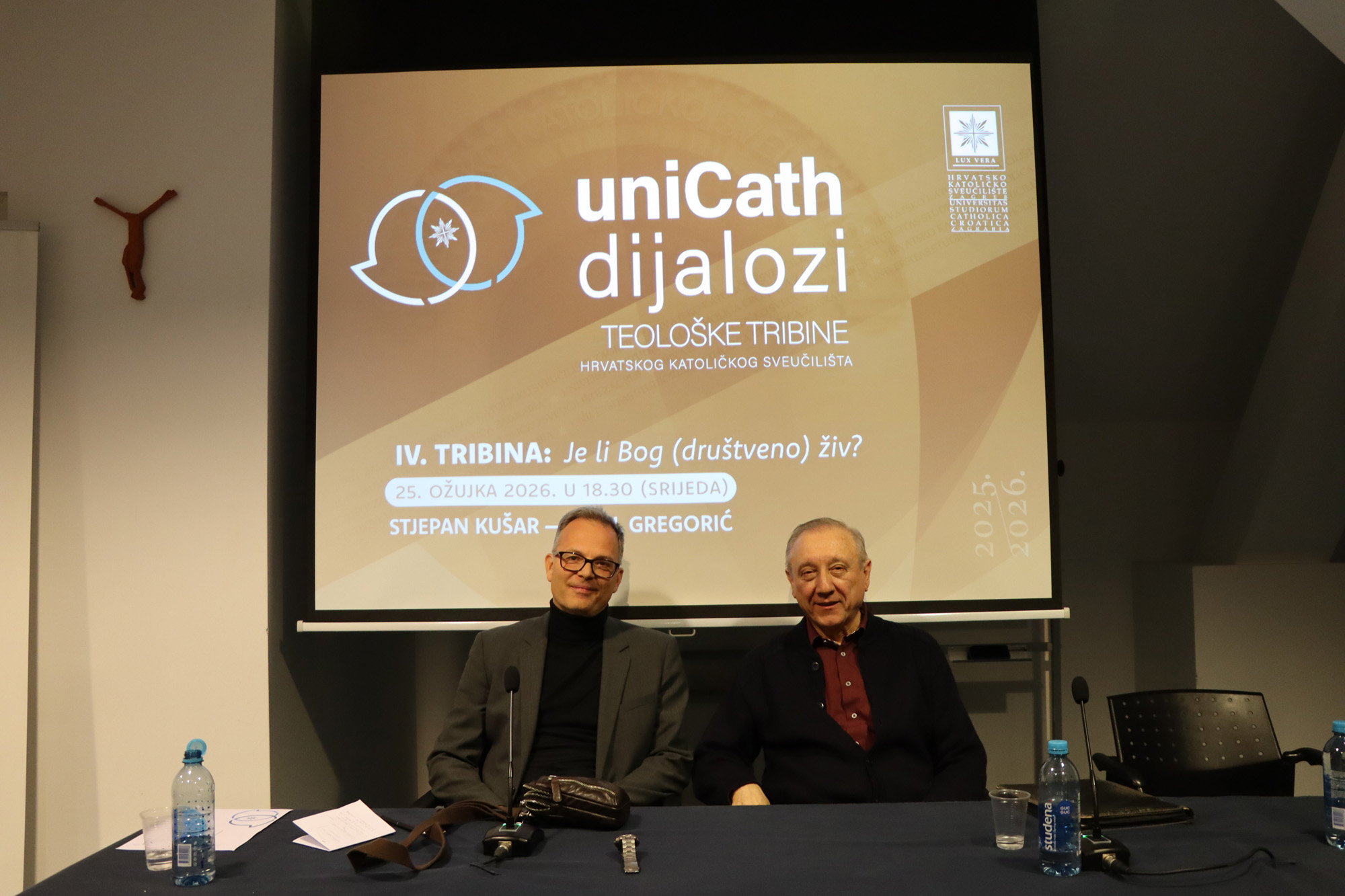
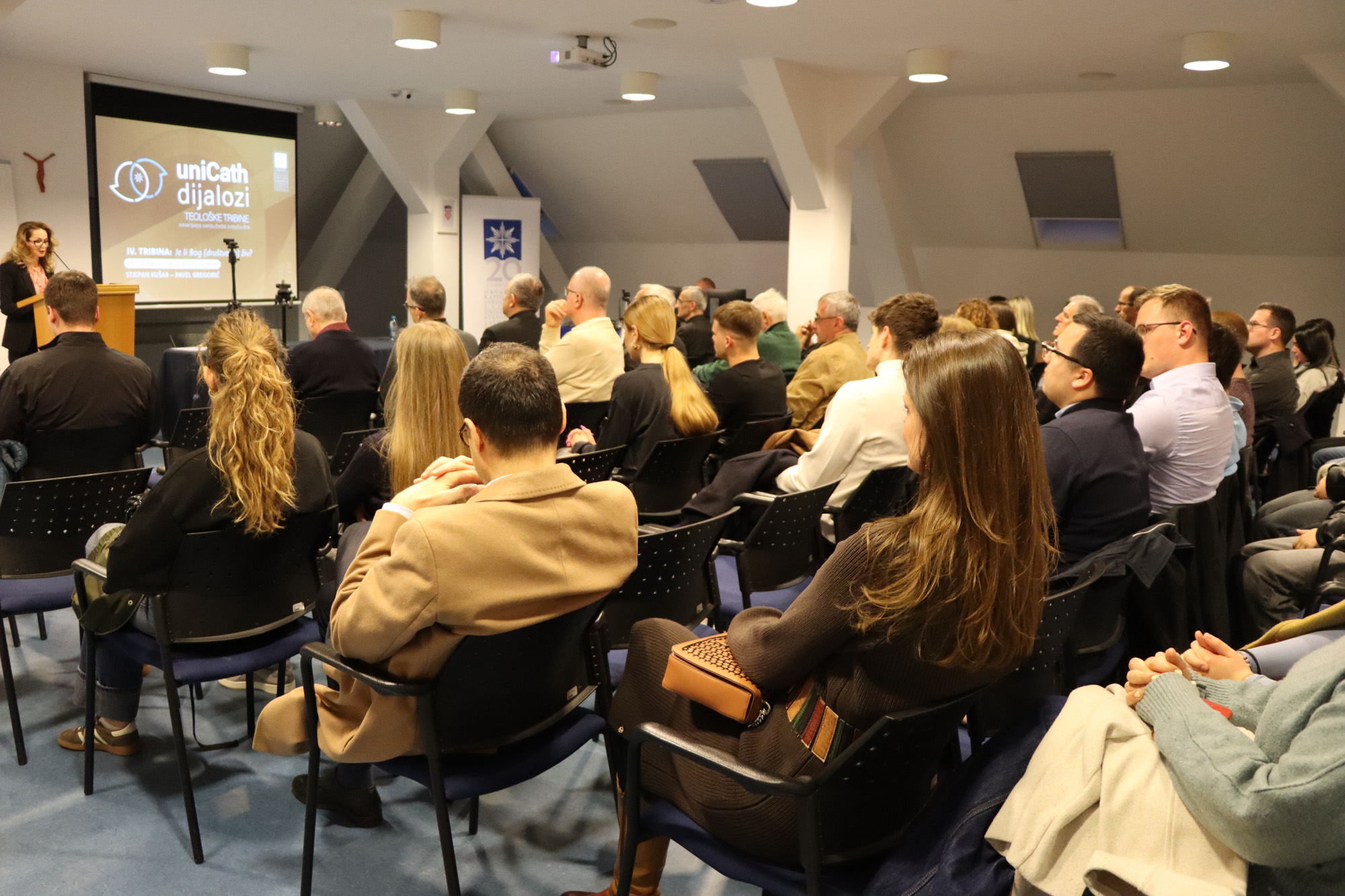
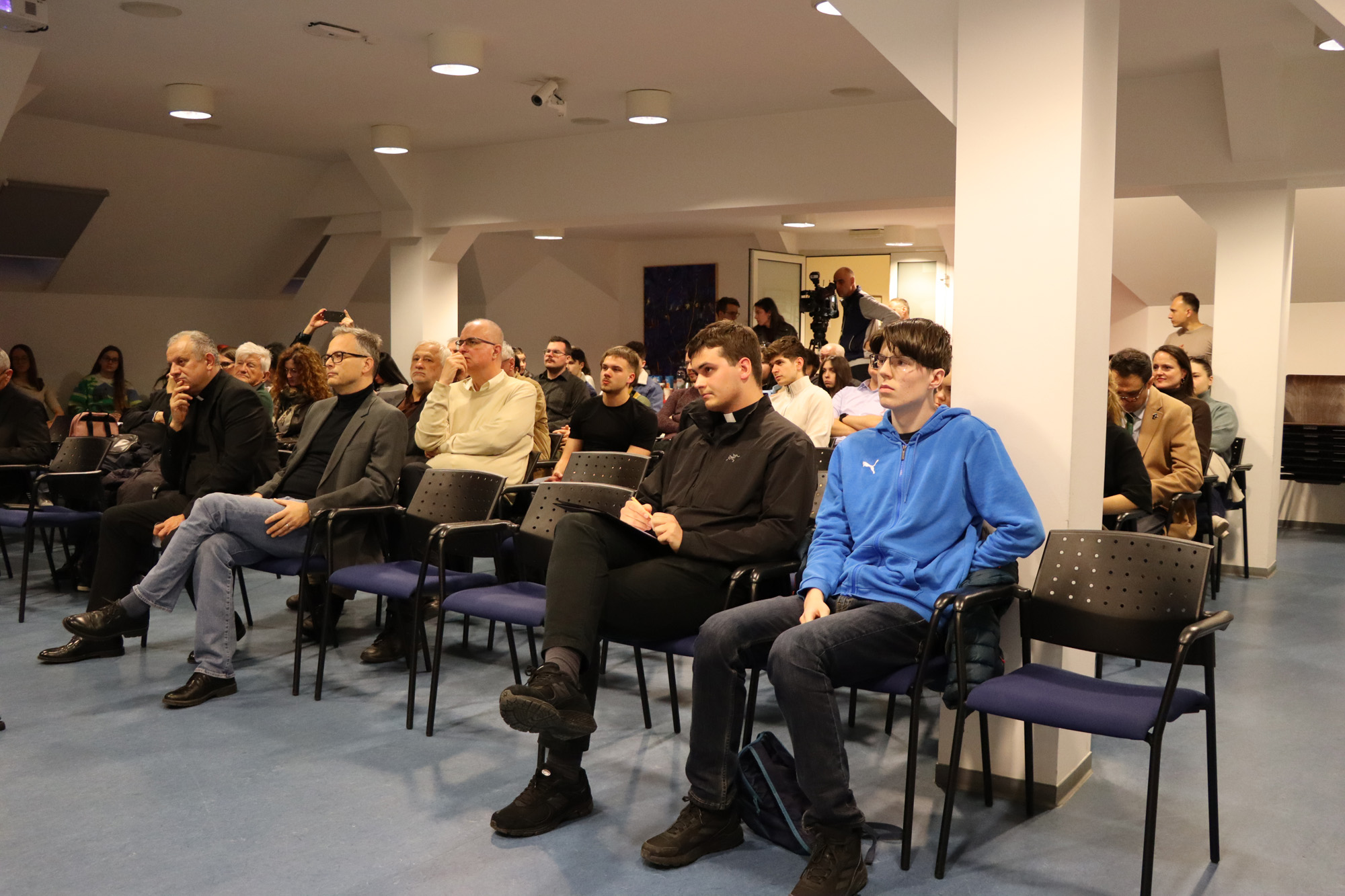
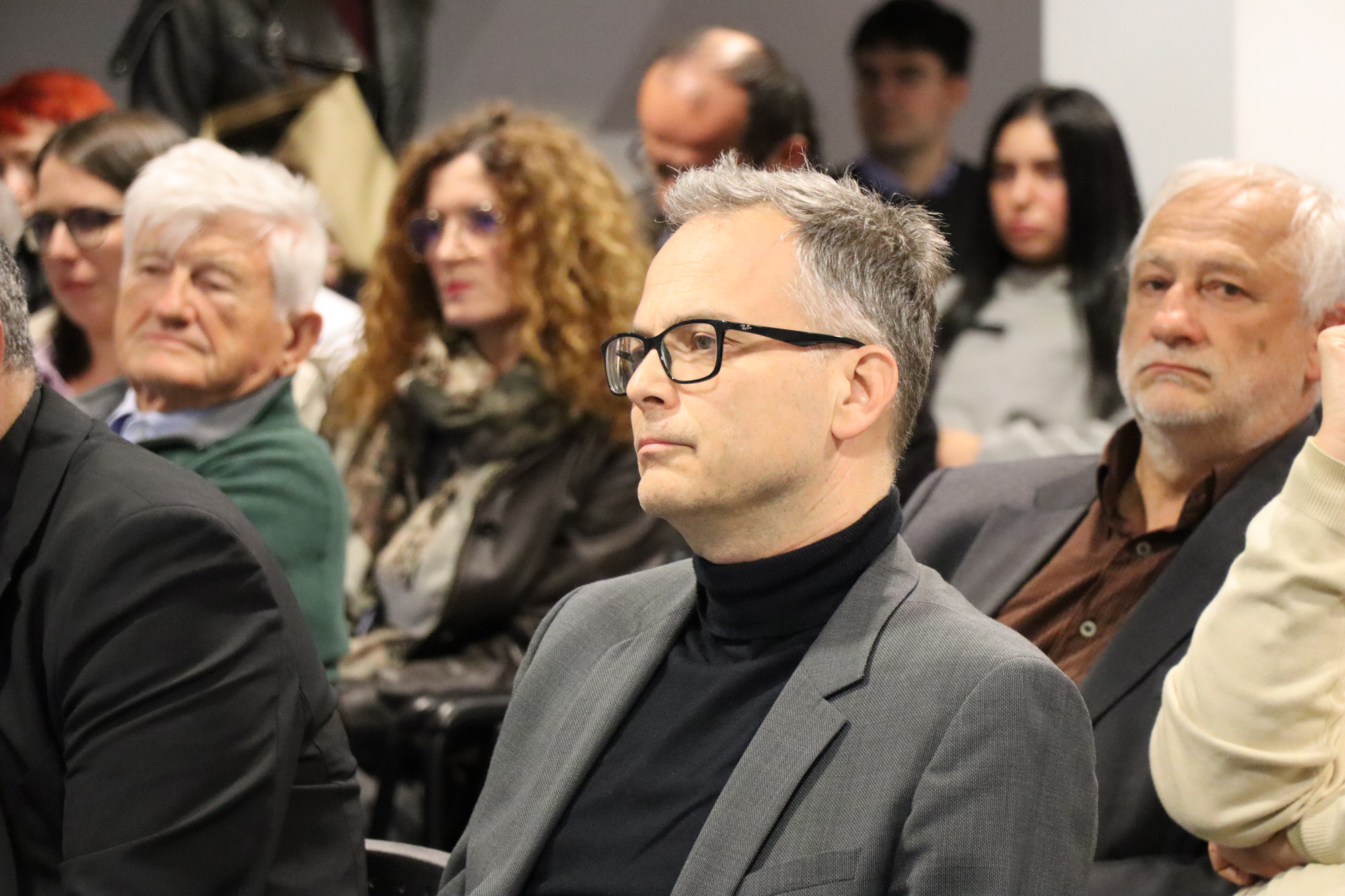
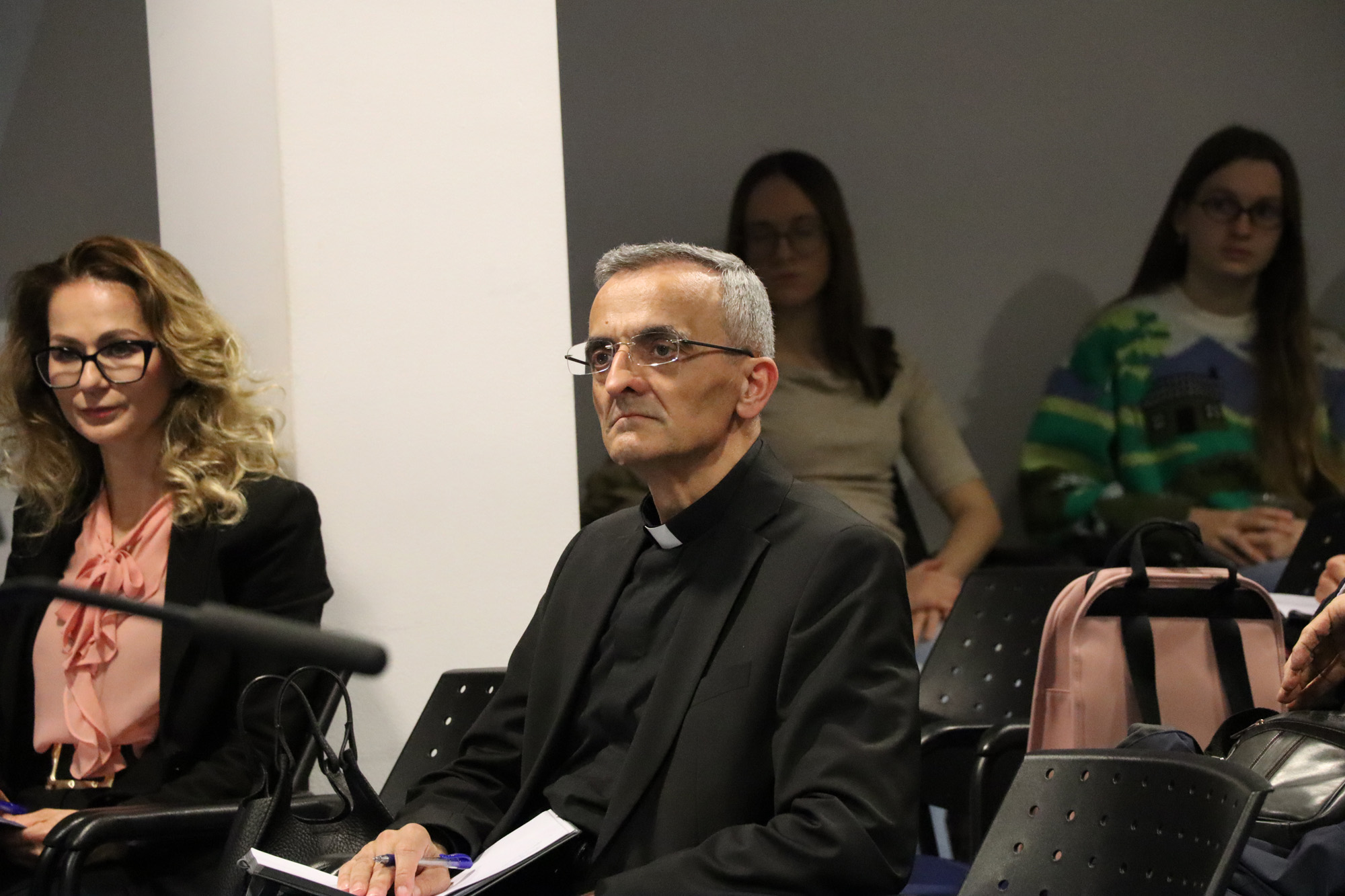
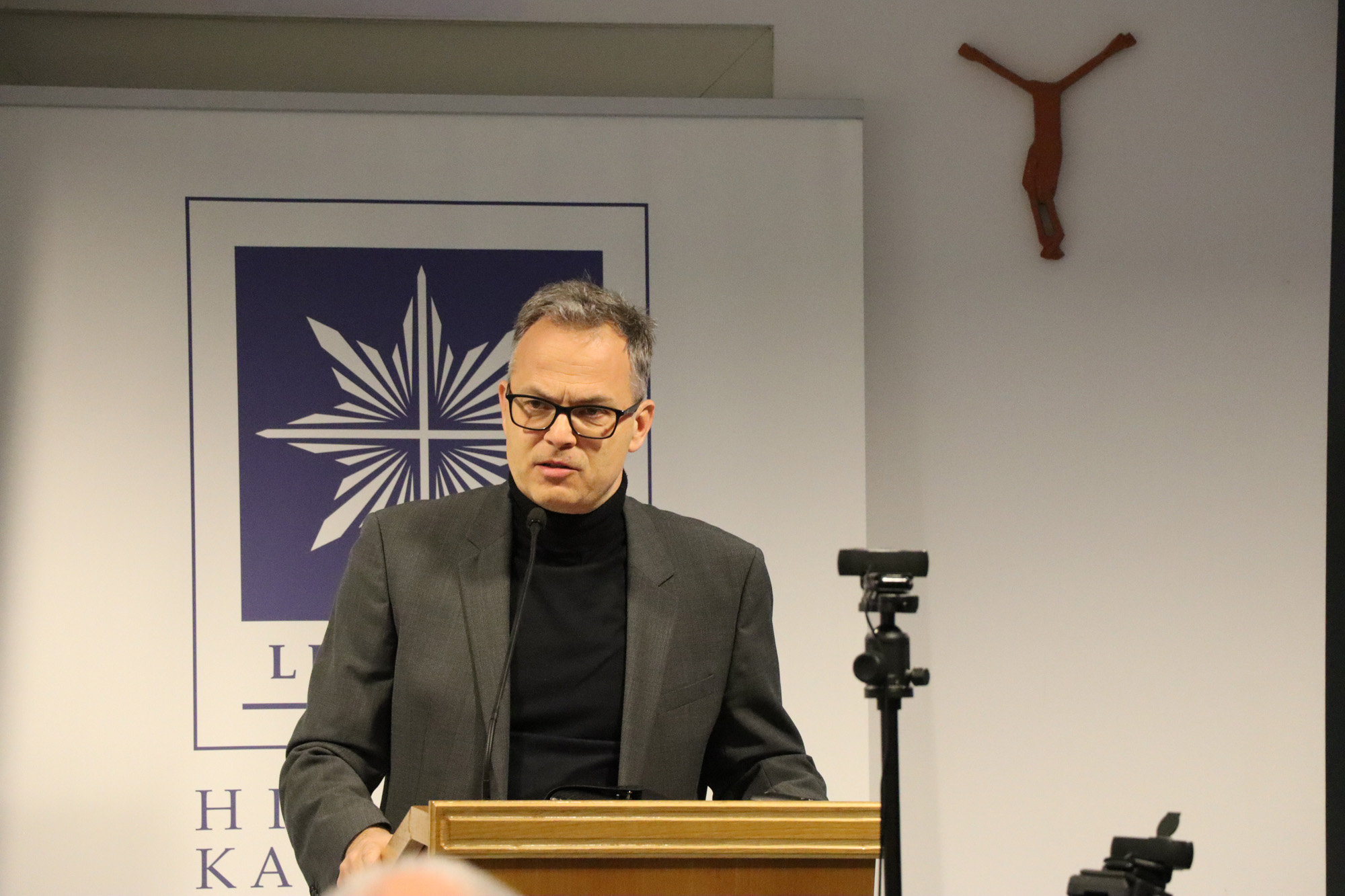
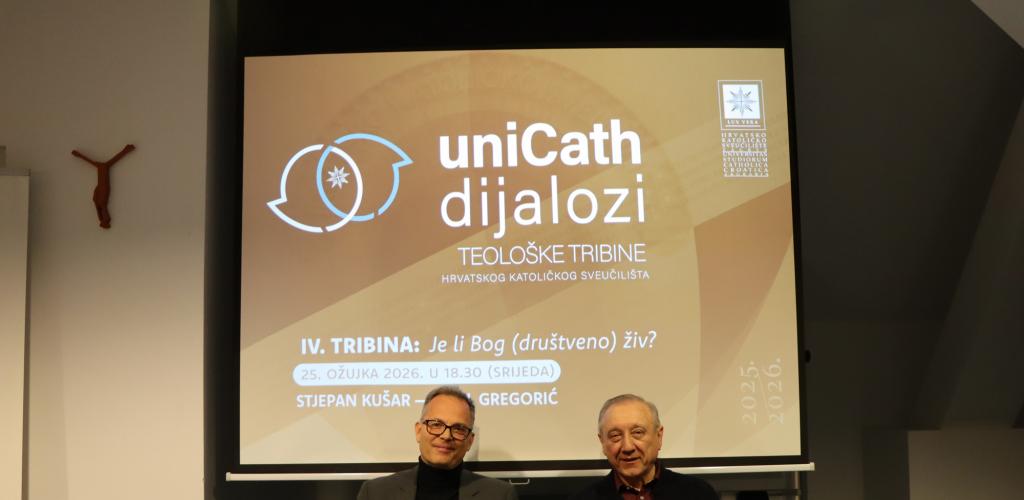
On Wednesday, 25 March 2026, the fourth theological panel in the UniCath Dialogues series was held at the Catholic University of Croatia. After being introduced by moderator Kristina Vujica, PhD, the speakers—Prof. Stjepan Kušar, PhD, from the Catholic University of Croatia, and Pavel Gregorić, PhD, from the Institute of Philosophy—each delivered a fifteen-minute presentation on the topic “Is God (Socially) Alive?”
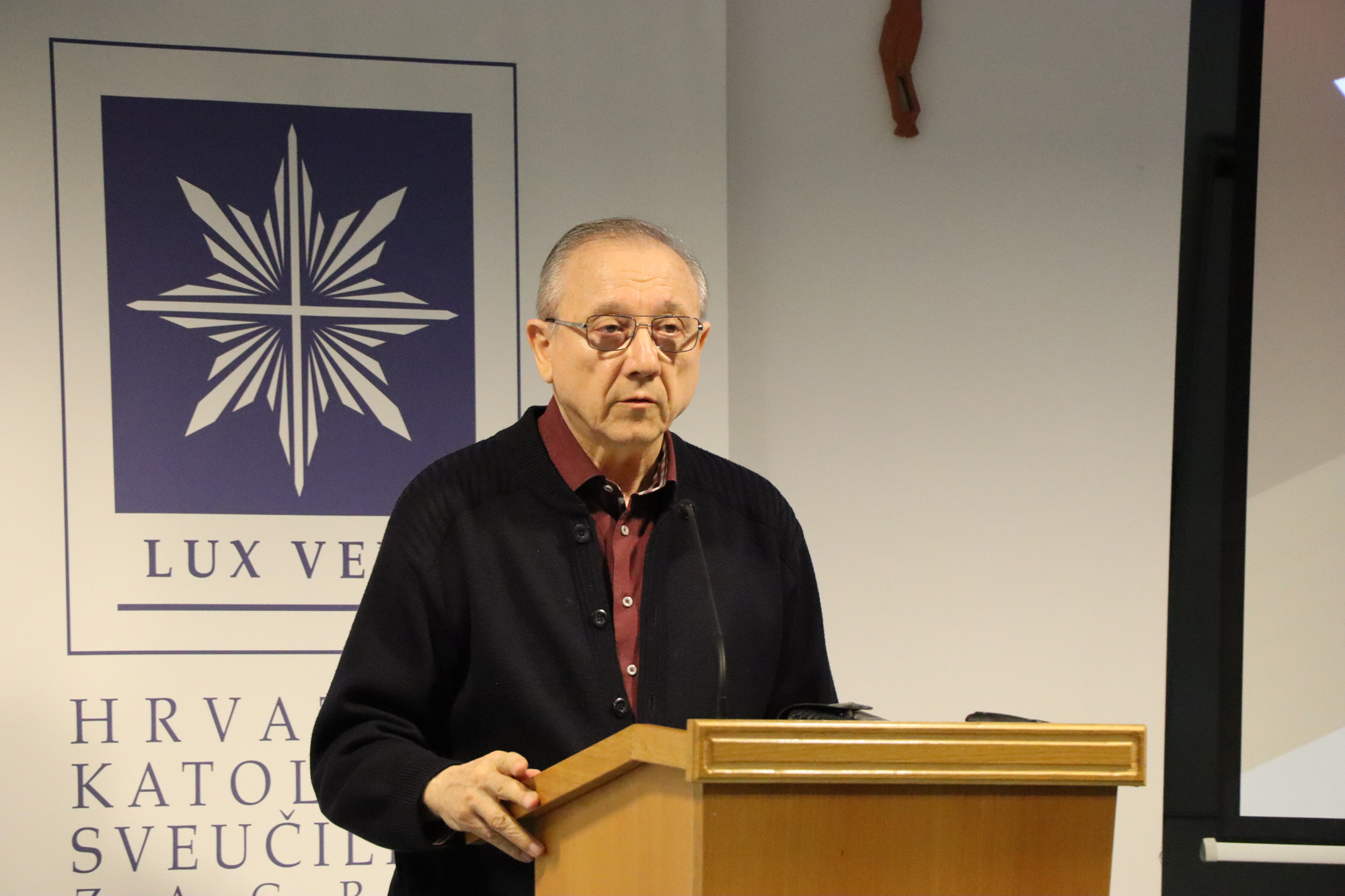
Prof. Kušar situated his presentation within the Christian religious perspective, presenting it as an expression of a specific existential conviction. He emphasized that faith in God is not the result of scientific knowledge or philosophical insight, although it takes both into account. He highlighted that people “take God into account” on multiple levels, and in this sense God is undeniably “socially alive.” This is reflected in language (he even cited swearing as a negative example, describing it as a “powerful word of powerlessness”), in gestures (e.g., the sign of the cross or kneeling), and in actions consistent with religious belief (e.g., care for others). The social vitality—or visibility—of religiosity is also confirmed by sociological research and census data, including EVS results for Croatia. Although it is difficult to objectify and measure people’s inner convictions, they are reflected in attitudes, words, and actions, Kušar stressed.
He also addressed the question of God as a “moral catalyst” in society, emphasizing that religion—in this case Christianity—should not be reduced to a mere mediator of morality. Rather, it should be understood integrally as revealing the meaning of life to the human person in three dimensions: mediating meaning, guiding action, and cultivating emotional life. Kušar does not share Dostoevsky’s view that without God everything would be permitted, but he maintains that through morality we reveal who God is to us. He concluded by posing a key question: “How can Christian faith be affirmed in a society that is not Christian?”—a task he considers more challenging today than ever before.
At the beginning of his presentation, Dr. Gregorić compared the idea of a socially “alive” God to the vitality of human constructs that can have significant social influence despite lacking real referents—from Homeric gods to astrological influences and legal or economic fictions. Starting from the fact that around 80% of the population identifies as Catholic, Gregorić argued that the concept of God undoubtedly has a measurable impact in Croatian society. However, he pointed out several trends: while declared religiosity remains high, religious practice is low—especially among young people aged 18 to 34, where a decline in practice and a rise in agnosticism can be observed.
Dr. Gregorić also offered a critical perspective on social and legal frameworks, arguing that Croatia should work toward greater secularization. He identified several problematic elements: the Vatican treaties grant the Church a privileged position, which he sees as contrary to constitutional equality; the merging of national and religious identity is problematic in a pluralistic society; and the historical role of the Church should not serve as permanent political capital. He also warned against the instrumentalization of religion in issues such as religious education, abortion, and euthanasia. Referring to Jürgen Habermas, he emphasized that moral norms in pluralistic societies must be intersubjective rather than religiously defined. He concluded by stating that he wishes to live in a neutral state that ensures both freedom of religion and freedom from religion, ending with the provocative remark: “God in Croatia is a bit too alive.” and the question: “Is this the same God who is in your hearts?”
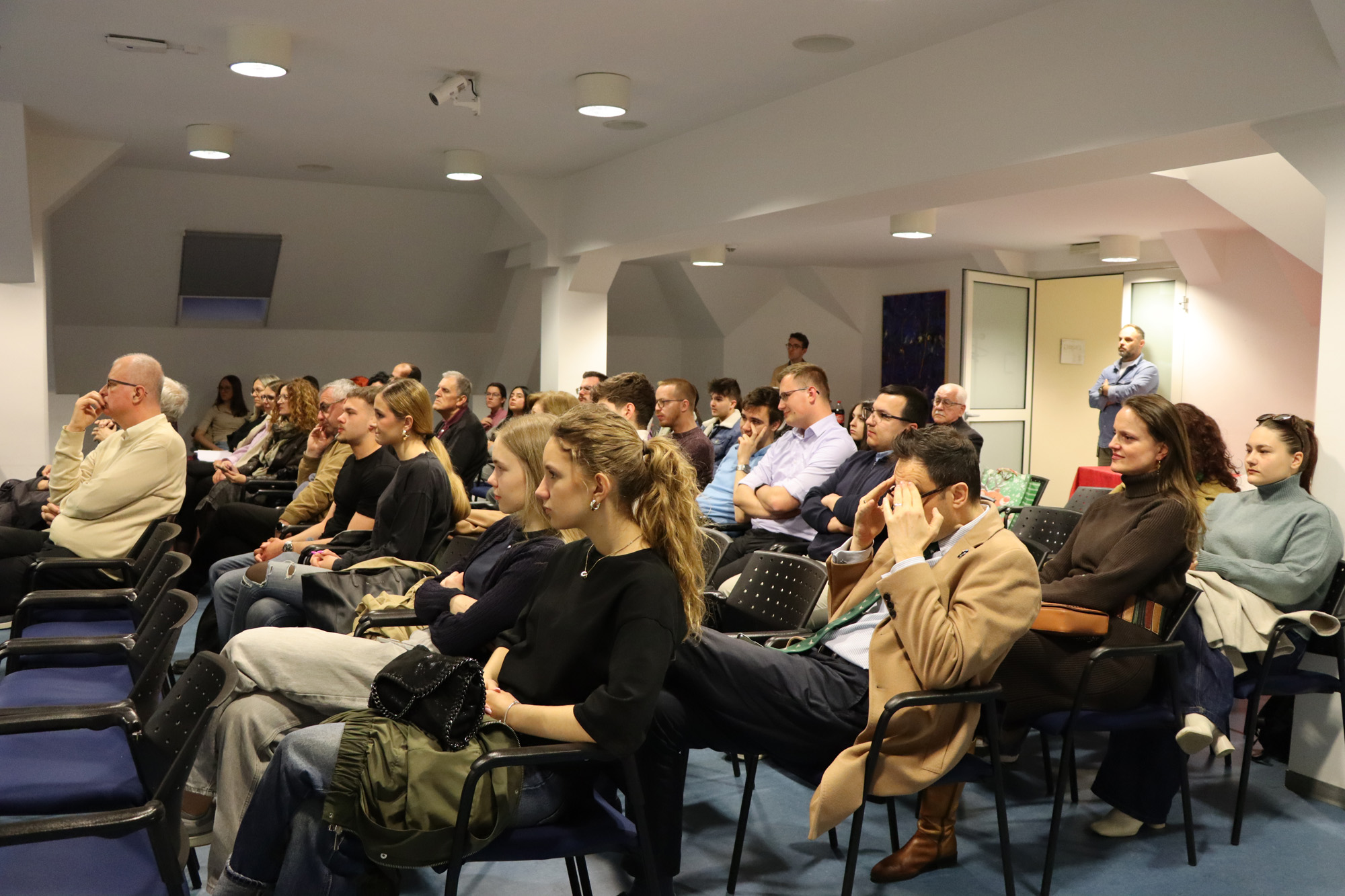
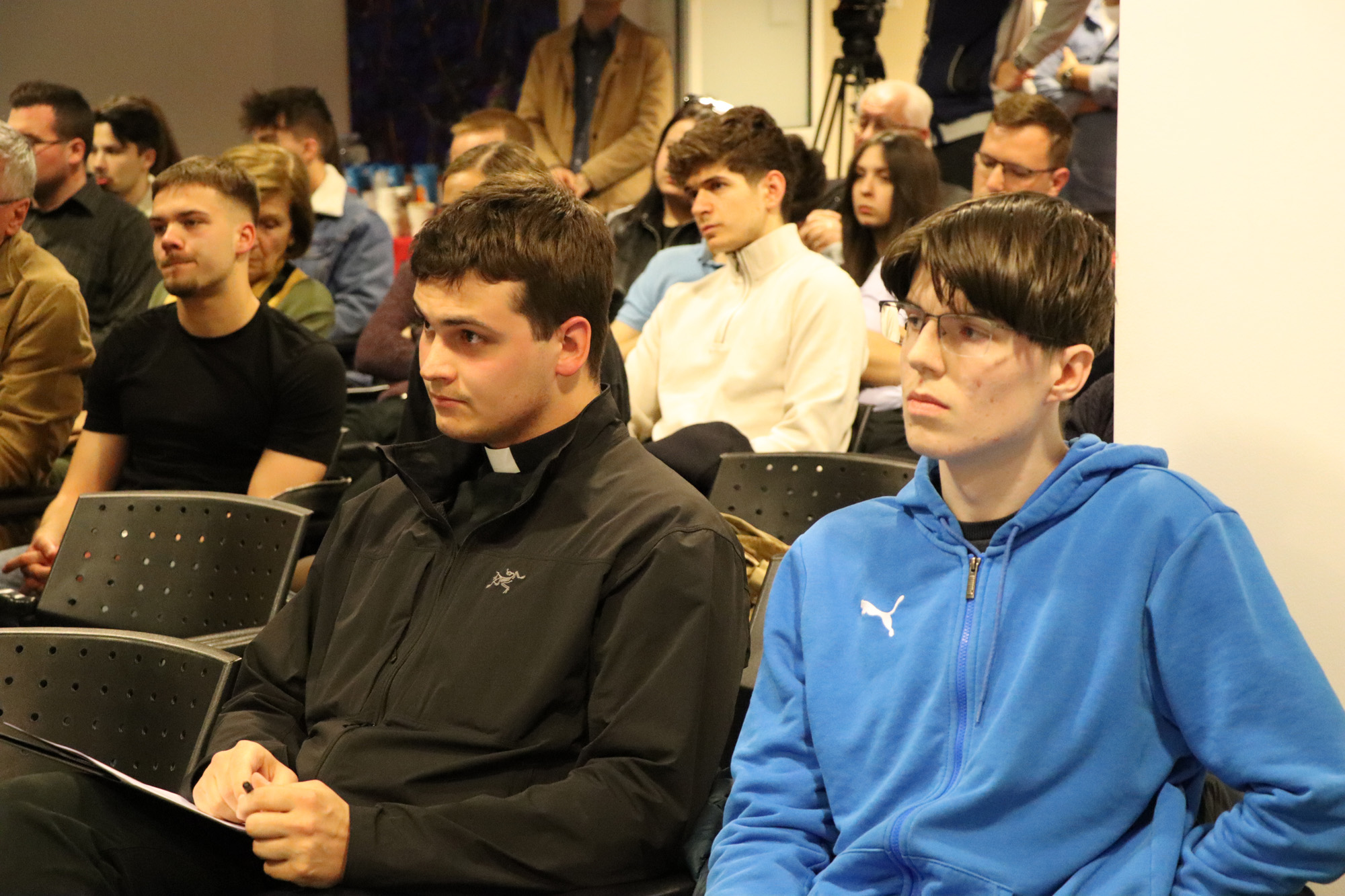
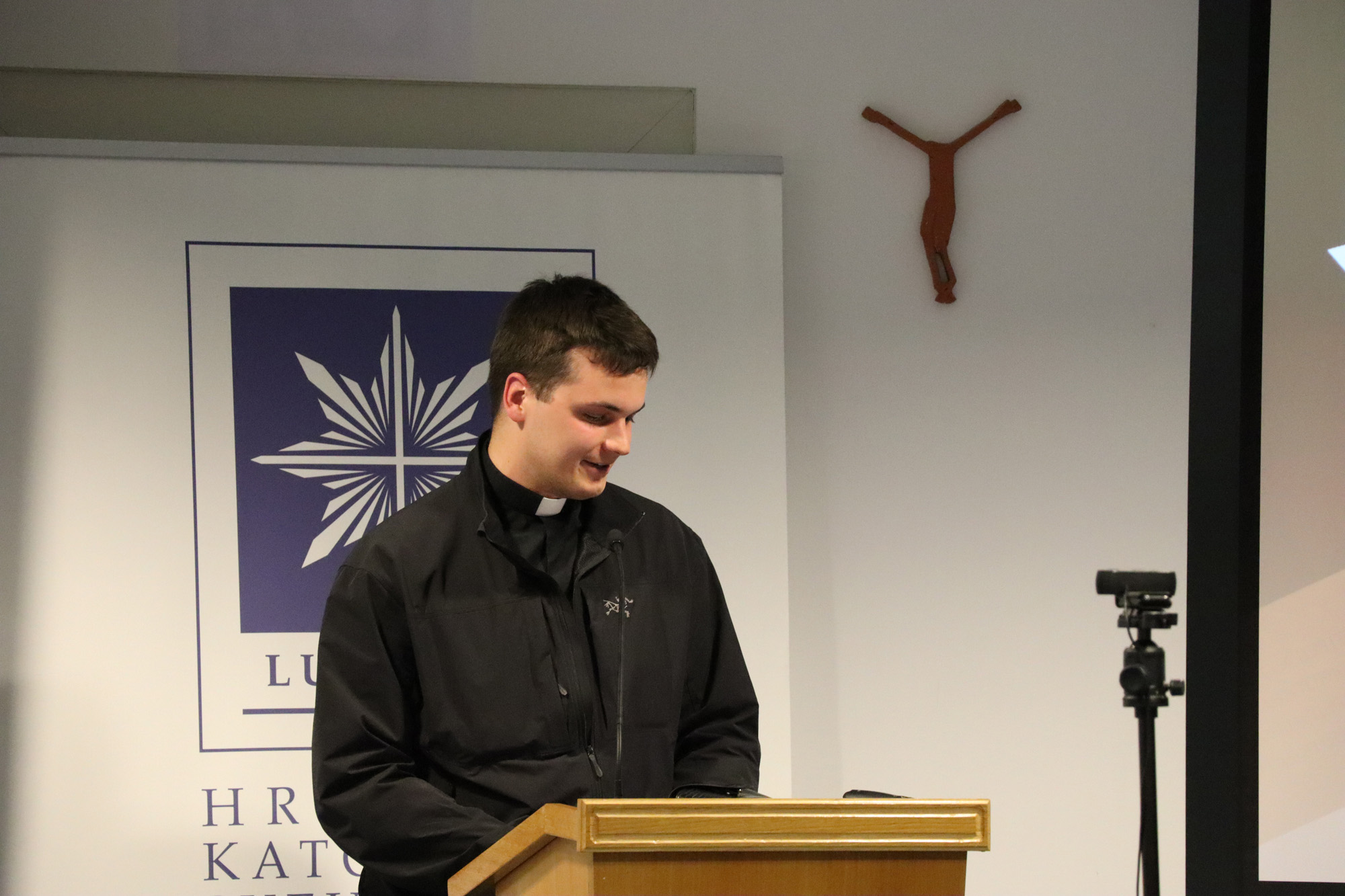
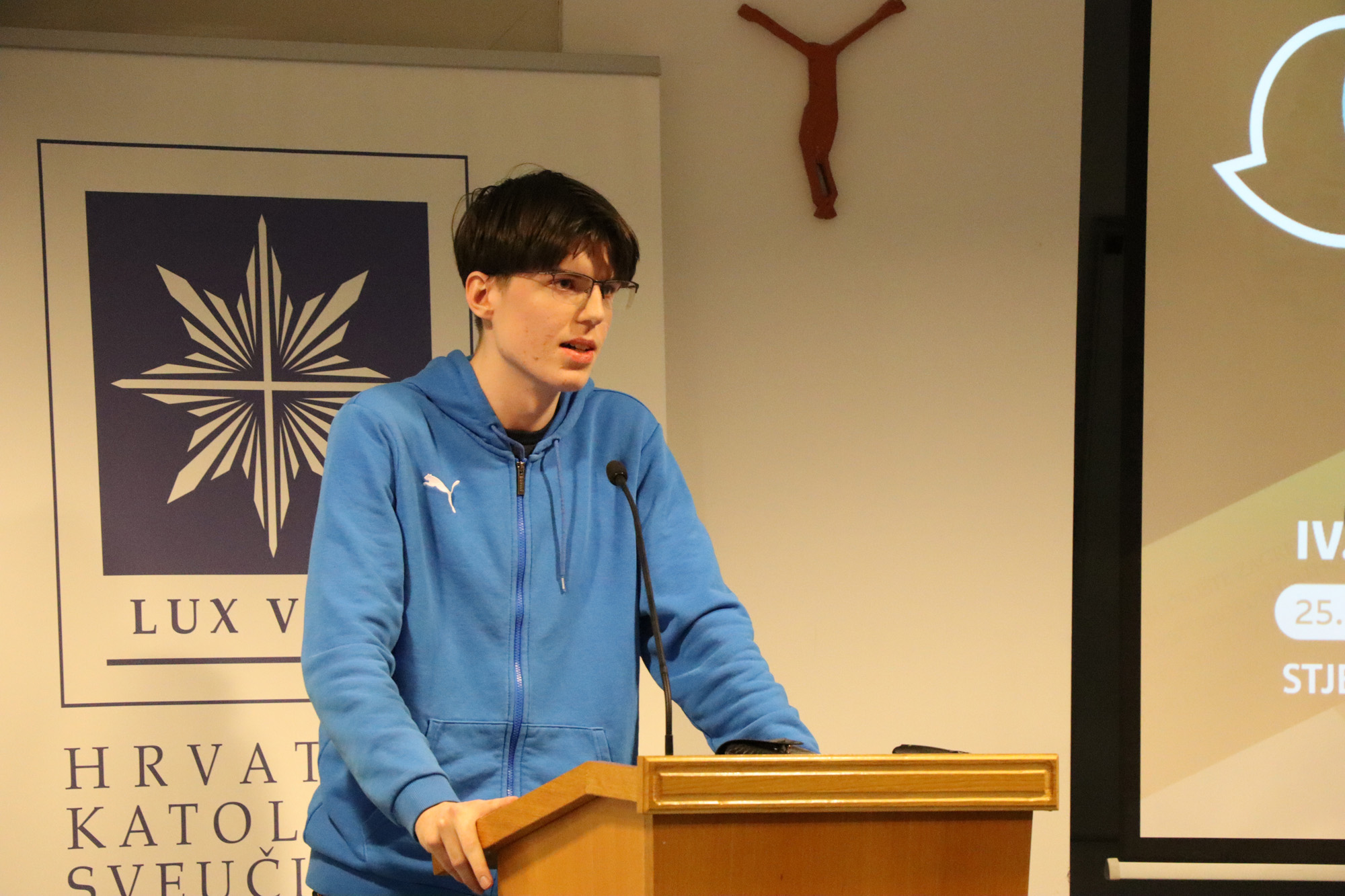
Following the presentations, two respondents—Luka Maras, a seminarian of the Archdiocese of Zagreb, and Filip Krznar, a student of the XV Gymnasium—offered their interventions. A lively discussion followed, raising numerous questions about faith and values, language and interior life, secularization and secularism, law and formalism, neutrality and commitment.
Despite their opposing starting positions (that of a believer and that of someone who does not believe in the existence of supernatural beings), both speakers recognized a gap between declared religiosity and its actual implementation in individual life. Their shared view that the trivialization and folklorization of religion undermine its essence suggests that the “social vitality” of God does not depend on statistics or public manifestations, but on the authenticity of belief.
Author: Marija Đaković