Share
CUC Staff on Erasmus+ Visit to Cardinal Stefan Wyszyński University in Warsaw
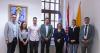
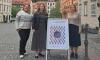
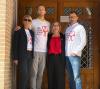
As part of the Erasmus+ mobility programme for teaching purposes, staff members of the Catholic University of Croatia—Prof. Hrvoje Kekez, PhD, and Matea Jurić Matulić, MA (Hist.), from the University Department of History, as well as Assoc. Prof. Mario Bara, PhD, from the University Department of Sociology—visited Warsaw from 16 to 20 March, where they participated in a series of academic and project activities at Cardinal Stefan Wyszyński University.
The mobility was aimed at strengthening international academic cooperation, exchanging experiences in teaching and research, and developing future joint initiatives. As part of the programme, a round table titled “Cooperation between universities in Central Europe – our experiences and perspectives for the future” was held, addressing past experiences of cooperation among Central European universities and possibilities for its further development. In addition, lectures by the faculty members of the Catholic University of Croatia were delivered to students and the wider academic community, and a working meeting was held focusing on the application and implementation of the DECEMS project within the Erasmus Mundus programme.
The host, Cardinal Stefan Wyszyński University, organized these activities as part of Central European Week, a week dedicated to promoting academic cooperation and networking among Central European universities.
During the visit, Prof. Hrvoje Kekez delivered two lectures: “The First Croatian King Tomislav – the Context of His Rule and the Question of the Royal Title” and “The Baptism and Christianization of the Croats.” In his presentations, he introduced participants to key issues of early Croatian history, with particular emphasis on the political, ecclesiastical, and identity contexts of the formation of the Croatian medieval kingdom.
Assoc. Prof. Mario Bara delivered the lectures “The Croatian Trauma of Communism: An Example of the Struggle to Maintain National Identity” and “Some Aspects of Socialist Modernization in Croatian Cities,” in which he addressed complex social and historical processes shaped by the experience of communism, the preservation of national identity, and modernization changes in Croatian urban environments during the socialist period.
Matea Jurić Matulić, MA (Hist.), teaching assistant at the University Department of History, delivered the lecture “Fortified Towns in the Middle Ages: The Case of Steničnjak,” presenting the medieval fortified town of Steničnjak as a valuable case study for understanding fortification, social, and spatial history in medieval Croatia. In a second engagement, she participated in a discussion with doctoral students at Cardinal Stefan Wyszyński University, where she presented experiences from postgraduate studies at the Catholic University of Croatia and exchanged views on teaching practices, didactic approaches, and the challenges of contemporary higher education.
This visit further strengthened the existing cooperation between the Catholic University of Croatia and Cardinal Stefan Wyszyński University, opened new opportunities for institutional collaboration and future international projects, and once again confirmed the importance of academic mobility as a means of enhancing scientific excellence, interinstitutional dialogue, and friendly relations among partner institutions.