Share
Assist. Prof. Brgles Participates in Research Seminar at LCC International University
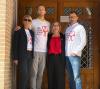
On 4 March 2026, the Center for Research on Faith and Human Flourishing at LCC International University in Klaipėda (Lithuania) organized the second in a series of Faculty Research Seminars titled “Researching Everyday Peace Through Adapted Documentary Theatre Performance: The Gift.” Assist. Prof. Miriam Mary Brgles, PhD, from the University Department of Sociology at the Catholic University of Croatia, was invited to provide a response and commentary on the research project presented by Giedrė Norman.
The hybrid event brought together professors, students, and online participants to explore innovative approaches to research through artistic practice. The seminar opened with remarks by the Head of the Centre and organizer of the seminar, Elena Šiaudvytienė, PhD, followed by a presentation by Giedrė Norman, a mediator and conflict transformation instructor, researcher, and practitioner of applied theatre. Her research explores how arts-based methodologies, particularly documentary theatre and choreography, can illuminate forms of peacebuilding practices through which individuals resist conflict and restore human relationships.
As part of the project, community members, students, and performers collaborated in creating a documentary theatre performance titled “The Gift,” which combines oral storytelling and choreography to explore the meaning of peace and solidarity among divided communities.
Following the presentation, reflections were offered by Prof. Ksenia Ševcova and Assist. Prof. Brgles, followed by a discussion with participants, during which experiences and perspectives on arts-based research methodologies and practices were exchanged. Assist. Prof. Brgles emphasized the importance of researcher positionality and reflexivity, as well as the evolving role of the researcher throughout different phases of the research process—from an external observer to a collaborator and source of data.
She suggested further development of the project through methods such as autoethnography and a/r/tography, which connect artistic practice, research, and teaching. She also highlighted the importance of understanding power relations and various factors influencing the researcher, including personal, external, internal, and relational dimensions. In her commentary, Assist. Prof. Brgles concluded that the systematic data collection and reflective practice of Prof. Norman add a new, sustainable dimension to the project, enabling the results to be viewed from the perspectives of participants, artists, and researchers alike.
PHOTO: Nastasia Iashina