Share
Associate Professor Anto Mikić Lectured at the Monthly Meeting of Priests of the Diocese of Varaždin
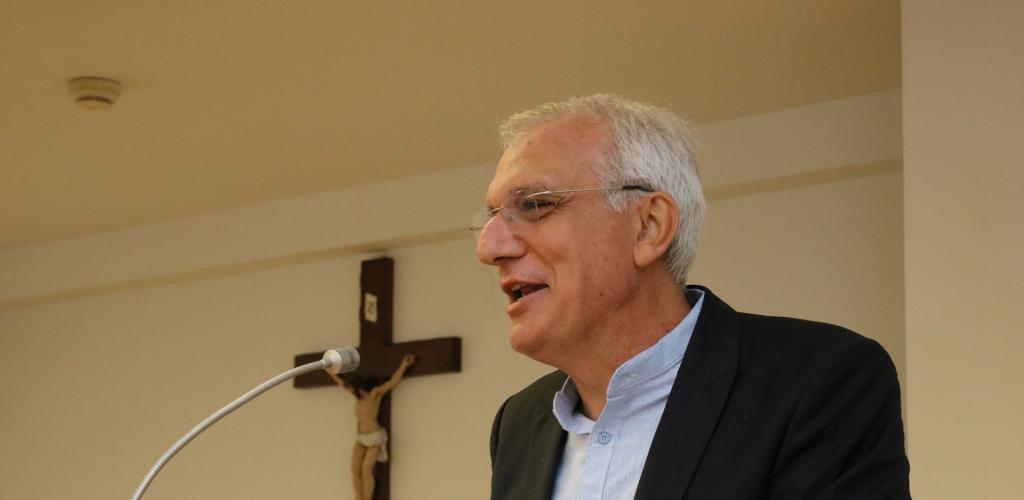
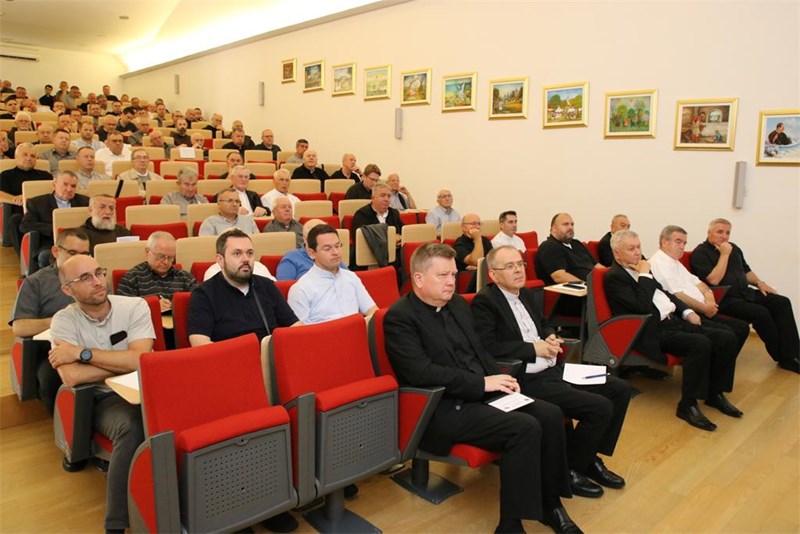
On Tuesday, September 23, 2025, the first monthly meeting of priests of the Diocese of Varaždin in the new pastoral year was held at the Pastoral Center of the Diocese of Varaždin. The theme of the meeting was The Church Facing the Positive and Negative Challenges of the Society We Live In, presented by Assoc. Prof. Anto Mikić, Ph.D., Deputy Head of the Department of Communication Studies at the Catholic University of Croatia and Editor-in-Chief of the portal Bitno.net.
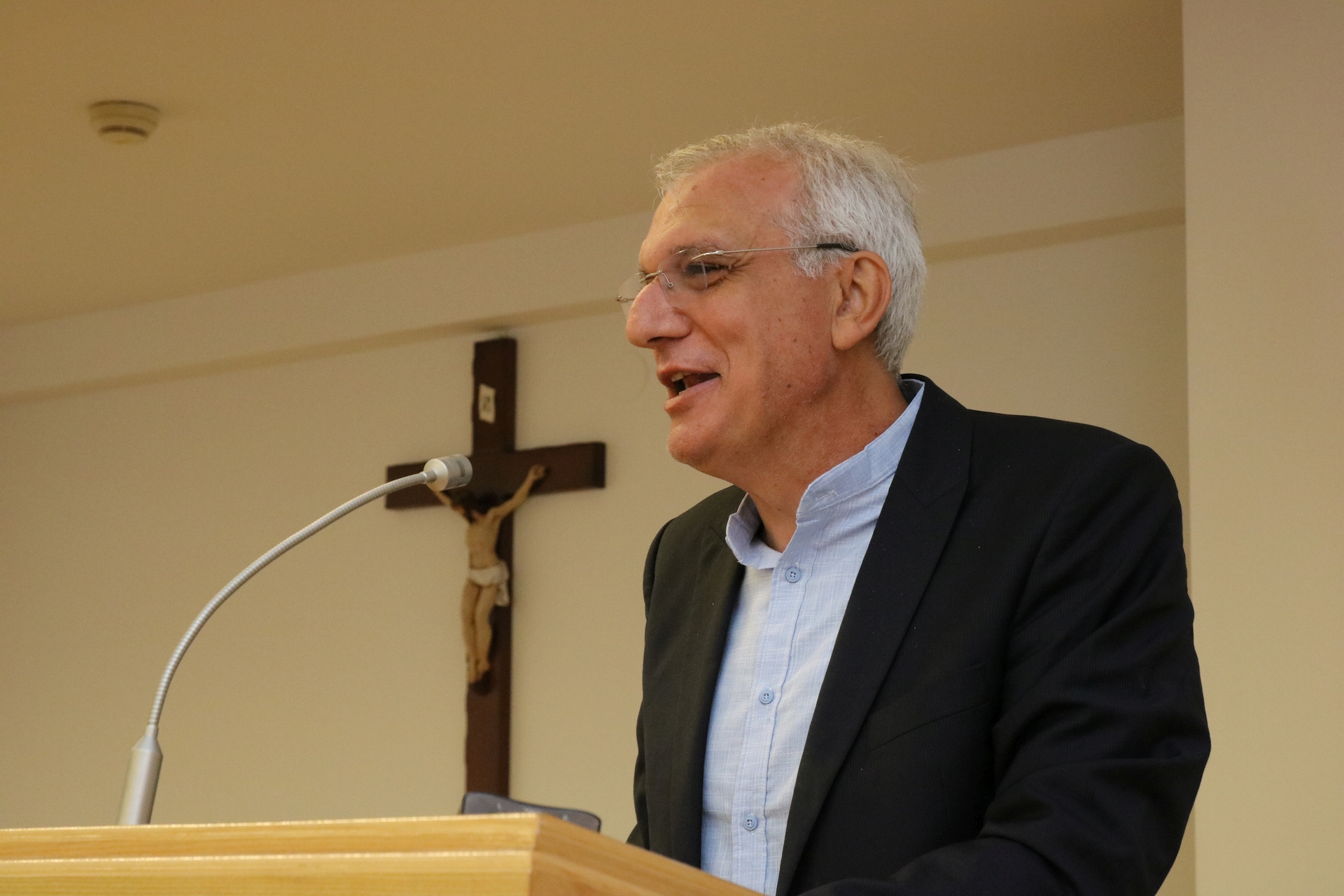
IKA reports that Prof. Mikić emphasized in his lecture that the Church always acts within a concrete social reality and cannot escape from it. At the beginning, he pointed out that his presentation was based on personal insights, focused on what he considers particularly important.
Speaking about society, he stressed that it is made up of people connected by relationships, roles, and culture, and that no society can survive without cohesive elements that hold it together. Once, that was faith, but in a secularized society this is no longer self-evident, and it also seems that other cohesive elements such as values, norms, and often even a common language are missing, since it often appears that we do not understand one another in basic concepts.
Mikić also warned of the danger of virtual communities that create an illusion of connectedness, as well as the crisis of trust in institutions such as family, the Church, or scientific bodies, which profoundly undermines the fabric of society. People are seeking new forms of belonging where they feel accepted, while a shared social vision is weakening, especially after Croatia has achieved major goals such as independence, EU membership, and NATO accession.
The lecturer placed particular emphasis on the challenges facing the Church: social and worldview divisions that threaten dialogue, and demographic and migration processes that are changing reality. He highlighted the lack of dialogue in the Church itself, both with those outside it and within the Church community. Instead of open exchange of views, closed “corridors” often prevail. He critically reflected on two segments: theologians who are not present enough in public life, and overly religious groups of believers who build “parallel Churches” by separating themselves from the community and the Church institution.
In discussing the public sphere, which today is largely shaped by the media, Dr. Mikić highlighted several important principles. The public sphere must be a space of equality in which no one has a privileged position, but everyone has the right to participate and express their views. It must also be accessible to all, without closedness and exclusion of any group. In addition, public discourse should be understandable, shaped so that even those who do not share the same religious or professional assumptions can grasp it. Otherwise, public communication loses its purpose and becomes closed within narrow circles.
Using the example of praying the rosary in public squares, Mikić noted the tension between the legitimate right to public witness and the question of the openness of public space. The rosary is indeed an expression of faith, but at the same time the question arises of its intelligibility—how it is perceived by those who are not believers. In this sense, the Church’s public discourse must always seek balance: to preserve its authenticity, but remain communicative and open.
Professor Mikić emphasized the importance of common themes for dialogue in a pluralistic society. The first is the dignity of the human person, a value that transcends ideological differences and enables a consensus on what is humanly fundamental. The second is the language of benevolent love, in which truth is expressed in a way that builds rather than divides. The third is cooperation in common areas such as care for the poor, environmental protection, and the promotion of peace, where the Church can work with everyone and witness its mission through concrete deeds.
In conclusion, Professor Mikić pointed to the challenges of demography and immigration, underlining that changes in the number, structure, and composition of the population require thoughtful and just social action. He stressed that the Church has an important role as a space of hope, where solidarity, inclusivity, and community are fostered. The Church can provide moral and spiritual support to individuals and communities, encouraging a responsible approach to social change and strengthening the sense of belonging and mutual responsibility in facing today’s challenges.
Text and photos: IKA.hr