Share
First Research Workshop of the CroDaSTrans Project Held at CUC
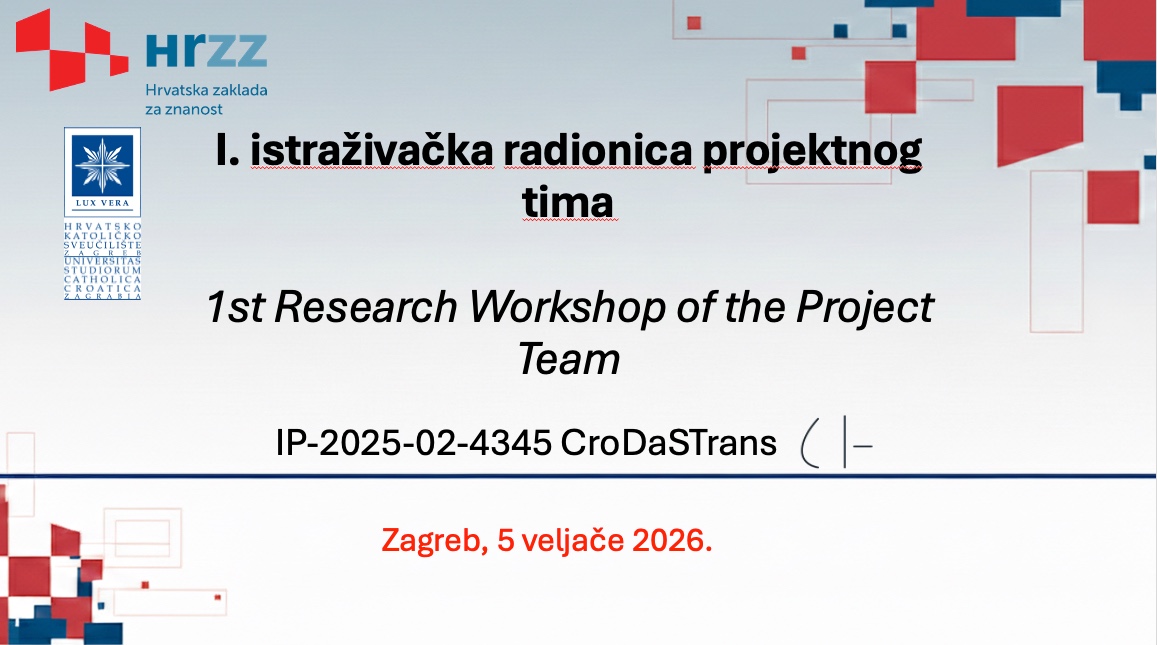
On 5 February 2026, the first research workshop of the project team of the Croatian Science Foundation project “The Formation of the Territorial State in Late Medieval Croatia, Dalmatia and Slavonia: Socio-Political and Administrative Transformations” (CroDaSTrans, IP-2025-02-4345) was held at the Catholic University of Croatia. The project is led by Professor Ivan Majnarić, PhD, and is being conducted at the Catholic University of Croatia.
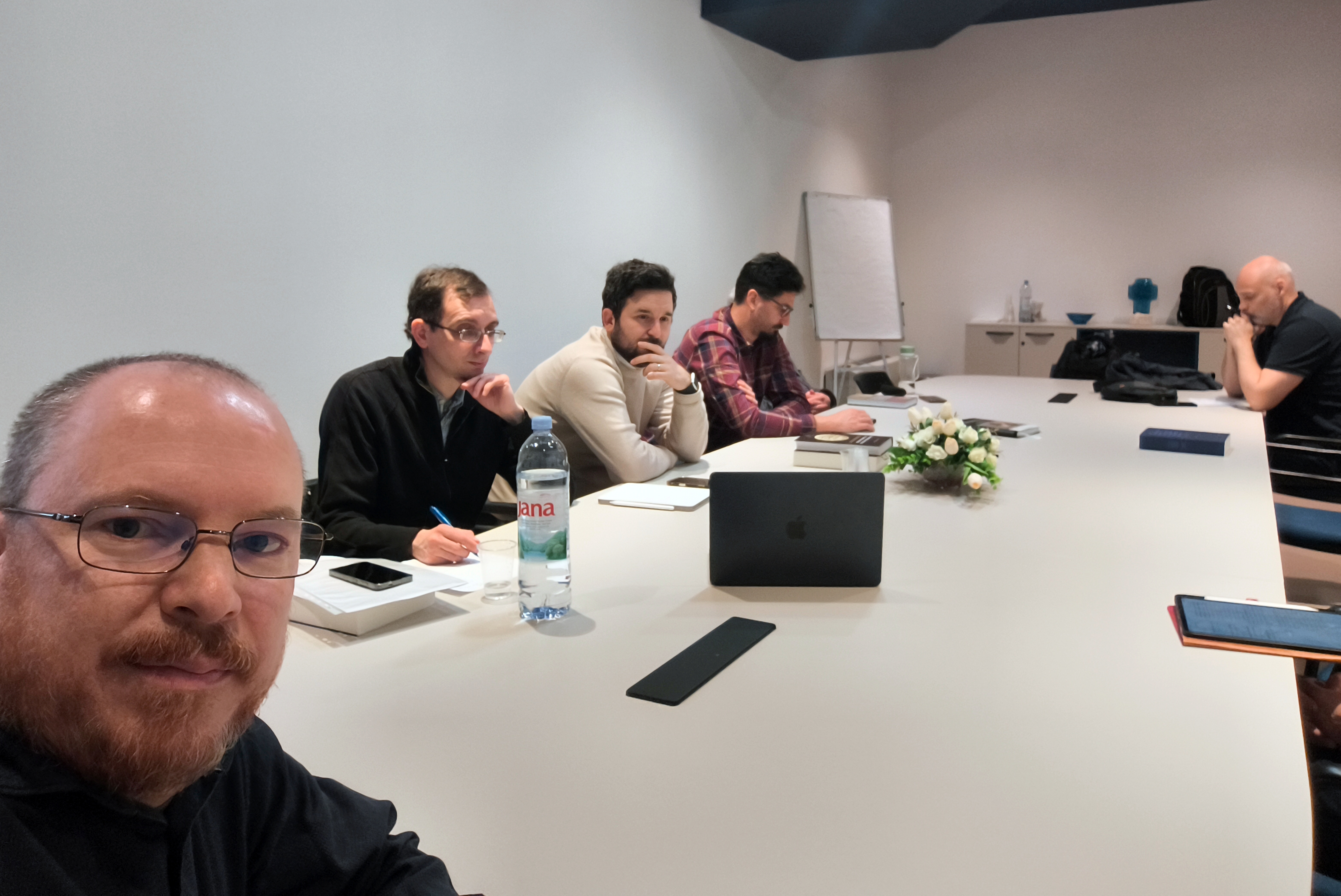
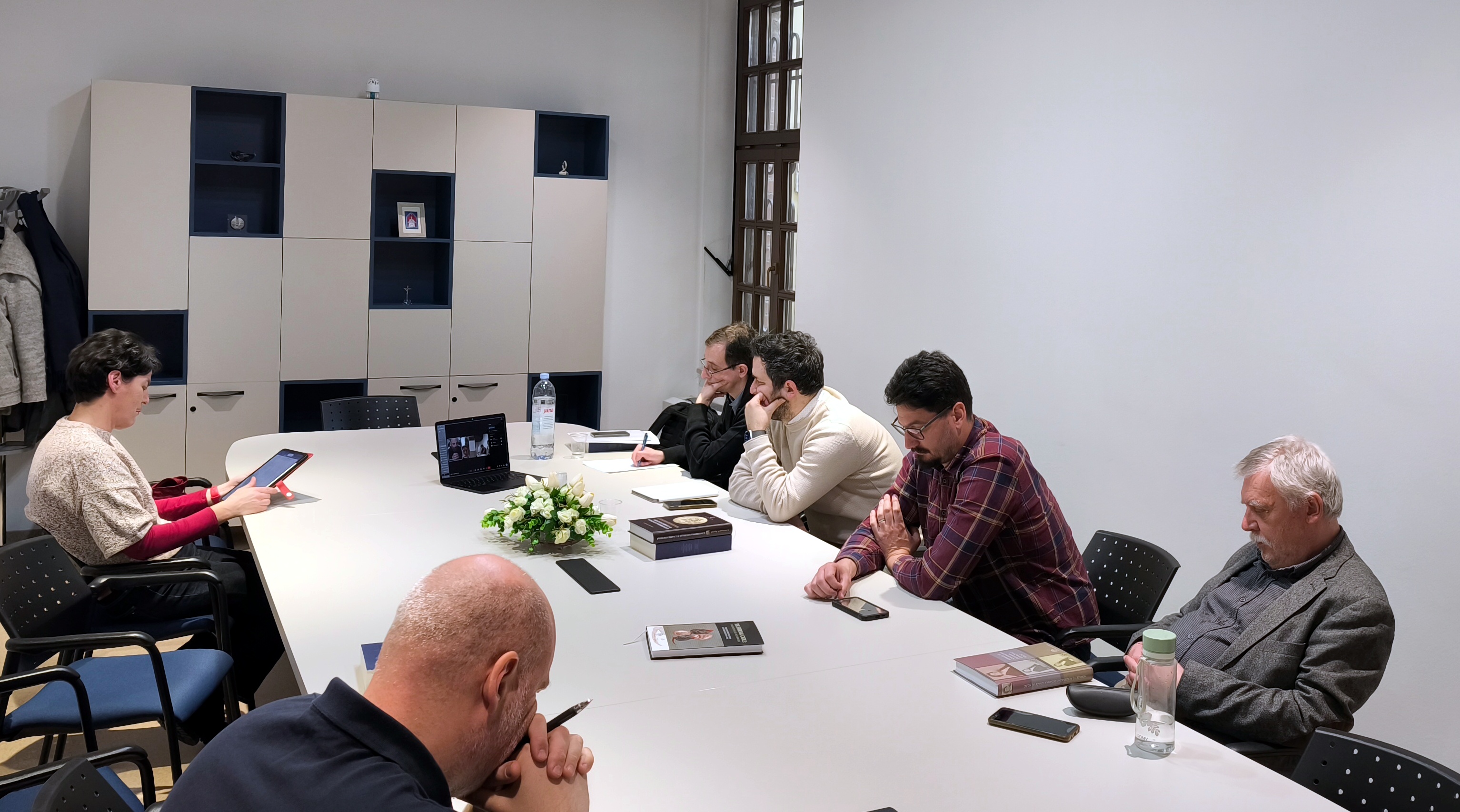
The working language of the workshop was English, and members of the project team participated both in person and remotely. A detailed overview of the workshop proceedings follows in its working language.
At the First Research Workshop of the Project Team, participants outlined the main scholarly directions of the project in relation to its planned research objectives and expected outcomes. The discussion focused primarily on the implementation of research activities during the first year of the project, the specific research topics pursued by individual team members, and the coordination of efforts related to the collection of relevant archival material. As emphasized by the project leader, Dr Ivan Majnarić, the project brings together a set of diverse yet closely interconnected and conceptually coherent research themes. Through the analysis of social, political, and administrative processes in the Kingdom of Croatia and Dalmatia and the Kingdom of Slavonia in the fourteenth and fifteenth centuries, these themes address the broader issue of the growing infrastructural power of the state. The discussion demonstrated that the project’s research will move fluidly between the level of local communities and individuals and that of broader administrative and political structures, thereby methodologically linking microhistorical approaches with broader questions concerning the formation of power, administration, territory, and the state. In this sense, the workshop clearly confirmed that questions of state formation and authority can only be fully understood through the careful analysis of concrete sources and the actors and local contexts they reveal.
Dr Francesco Bettarini presented his work on a corpus of the Chiarini family letters from the late fourteenth century. His research directly contributes to the project’s aim of understanding social practices and communication networks through which social ties, influence, and social capital were created and expanded within mercantile and business circles. Written in three Italian idioms – Florentine, Old Venetian, and Dalmatian – the letters offer a distinctly microhistorical perspective, revealing how individuals and families operated within broader political and administrative frameworks. The planned publication of the complete corpus would represent a significant historiographical contribution and a durable scholarly outcome of the project.
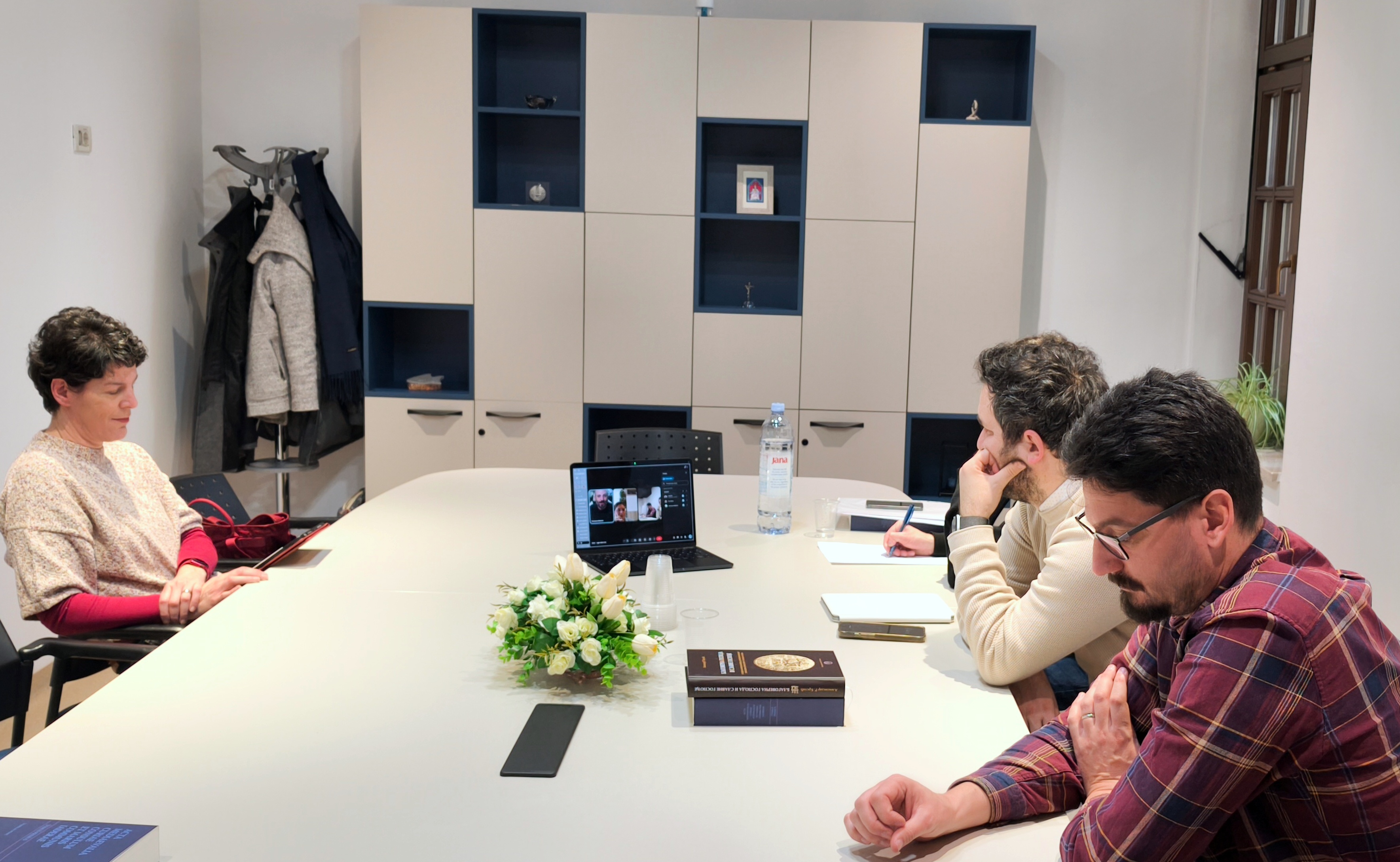
Dr Éva B. Halász outlined her research on late medieval Slavonian counties, placing particular emphasis on charters issued by the authorities of the Castle County of Kalnik. These sources form the basis for an in-depth study of castle counties and castle warriors as a distinct social group, contributing to a better understanding of how local administrative units functioned and persisted within the changing organizational framework of the Lands of the Crown of Saint Stephen during the fourteenth and fifteenth centuries.
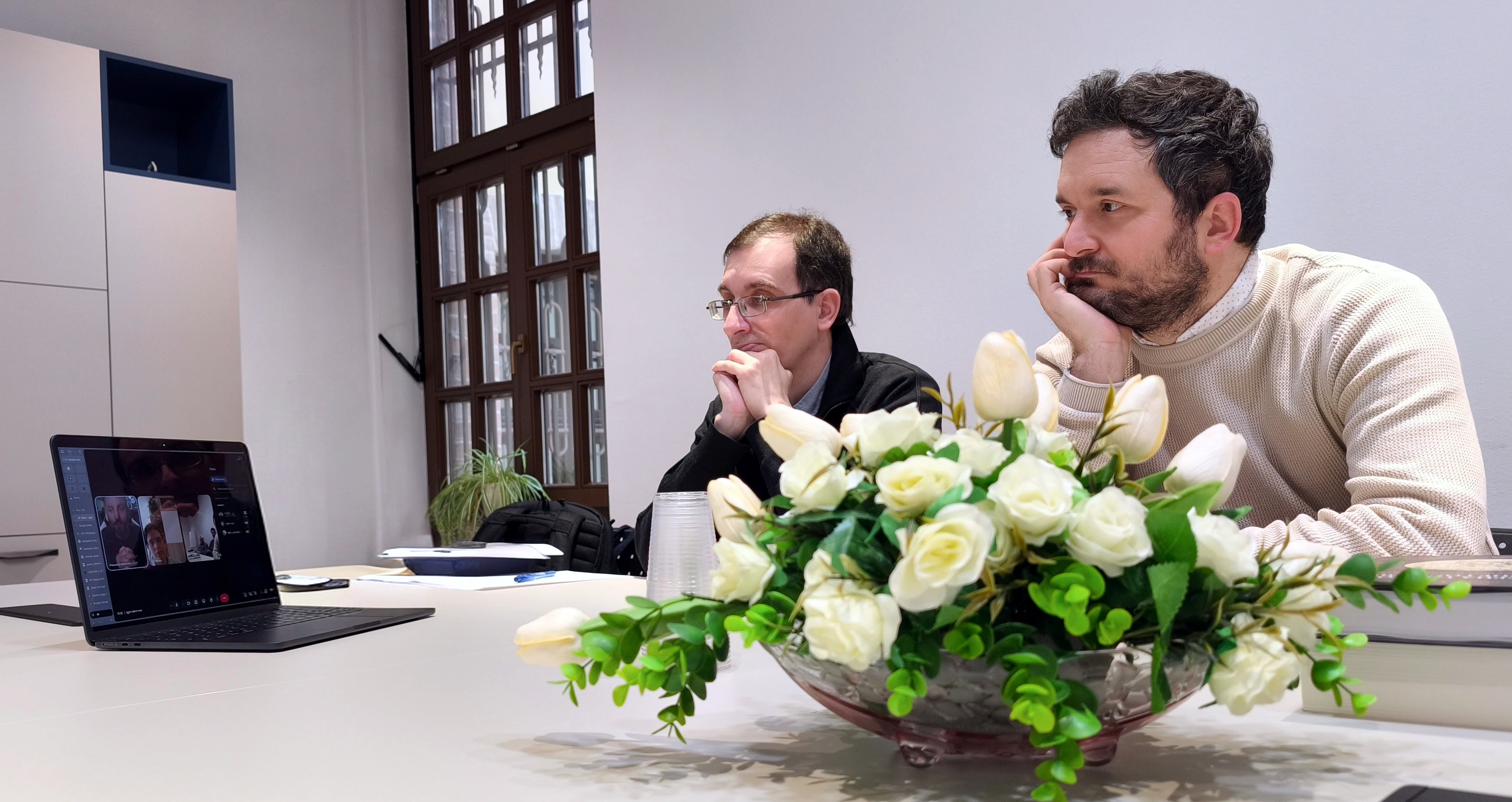
Dr Neven Isailović presented his research on noble communities associated with the fortress of Klis, as well as on groups of lesser nobility in the region between the Krka and Neretva rivers. This work aligns closely with the project’s interest in political peripheries and local strategies of adaptation to the demands of different forms of authority. A particular strength of this research lies in the identification and use of archival material preserved in less expected repositories, as well as in its contribution to the preparation of a source volume related to the nobility of the region – especially those connected with the activities of the Chapter of Knin as a place of authentication (locus credibilis) – one of the project’s key planned scholarly outcomes.
Dr Luka Špoljarić focused on the position of Croatian magnates in the mid-fifteenth century, with special attention to the Frankopan family. His research explores questions of political autonomy and the relationship between contemporary political theory and symbolic practice, demonstrating how magnates participated in the processes of territorial state formation while often simultaneously operating at its limits, oscillating between cooperation and contestation.
Dr Zrinka Pešorda Vardić presented her research on urban commoner confraternities in Zadar, emphasizing their role in shaping the urban social environment under different political regimes. By employing a prosopographical approach and analyzing confraternity matriculae, her work seeks to clarify relationships between commoners, nobility, and administrative officials, while also highlighting the role of social hierarchies in negotiating power within an eastern Adriatic urban context.
Dr Antun Nekić outlined his research on the connections between Dalmatian cities and the Hungarian royal court in the second half of the fourteenth century. His work focuses on financial mechanisms and the formation of political networks linking Zadar’s social elites – particularly the patriciate – with Italian cities and states. By examining both formal and informal channels of communication, this research sheds light on the practical functioning of state power and the interactions between local elites and central authority.
Dr Tomislav Popić emphasized the importance of studying the political culture of Dalmatian cities through an analysis of urban statutes from the thirteenth to the fifteenth centuries. Approaching statutes as political instruments rather than solely normative texts, his research aims to provide deeper insight into how power was articulated, negotiated, and exercised within urban communities. He also announced further work on judicial and ecclesiastical records, which will broaden the project’s analytical scope and contribute to the study of the institutional foundations of the territorial state.
In the concluding discussion, Professor Emeritus Mladen Ančić highlighted the project’s exceptional potential, stemming from both the richness of the proposed research themes and the diversity of the source material on which they are based. He emphasized that the publication of original archival sources represents one of the most enduring contributions of the project, as such outputs retain their scholarly value regardless of shifts in historiographical interpretation. Building on this, Dr Ivan Majnarić concluded that the workshop clearly demonstrated the strength and complementarity of the research team, noting how individual research strands naturally reinforce one another by linking urban and inland regions, social history and political culture, and microhistorical case studies with questions of practical administrative organization. He further stressed that the repeated recognition of shared source bases across different research topics opens important opportunities for intensified collaboration and joint outcomes. As a concrete organizational conclusion, he announced strong coordination of project activities, a sustained focus on achieving planned objectives, and the establishment of more efficient communication channels within the research team, particularly for the exchange of archival data. In line with these priorities, the project’s central academic results will be realized primarily through the publication of research articles in relevant journals and the preparation of selected volume(s) of archival materials for publication.