Share
Book "Ancient Historiography" by Prof. Ines Sabotič Presented
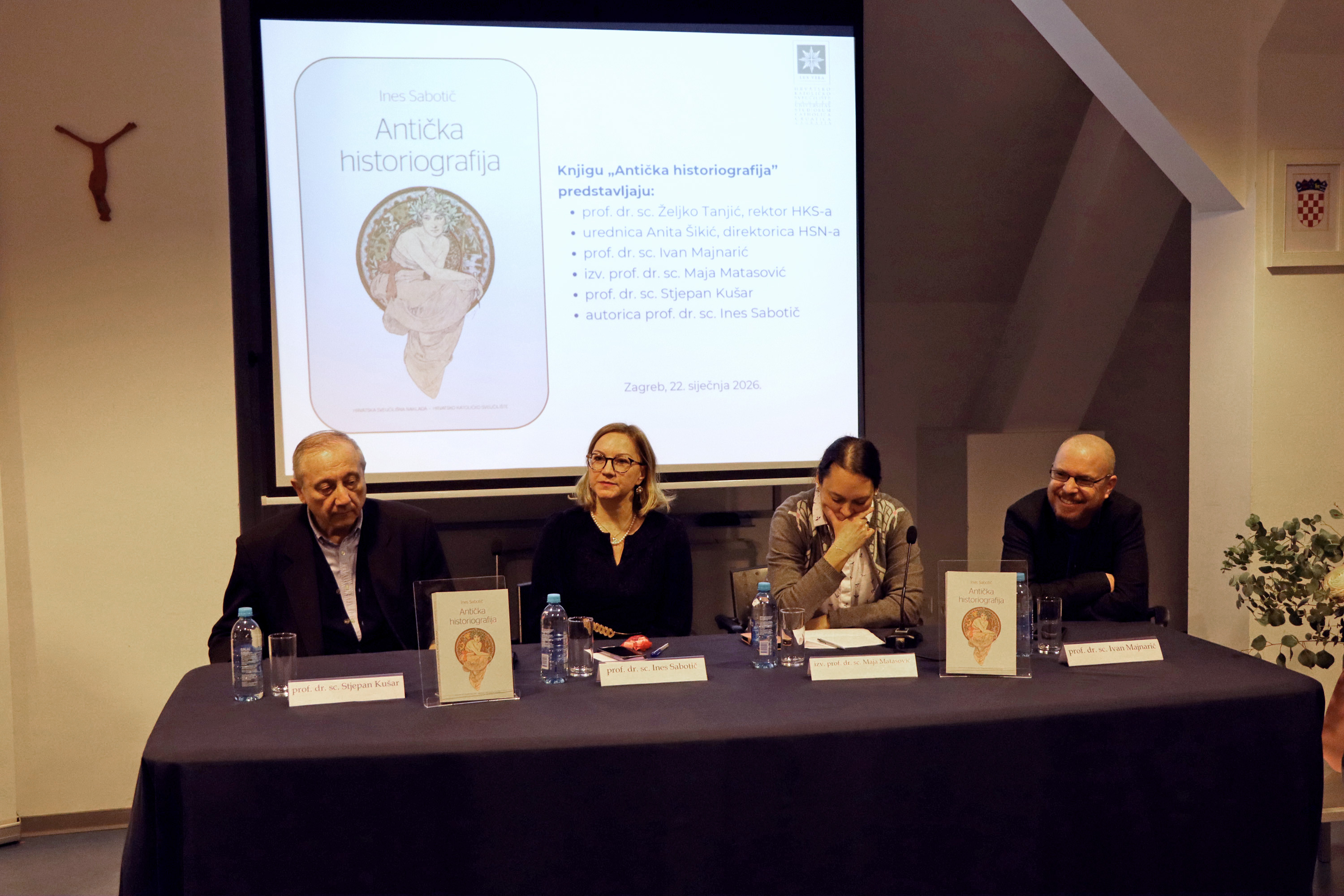
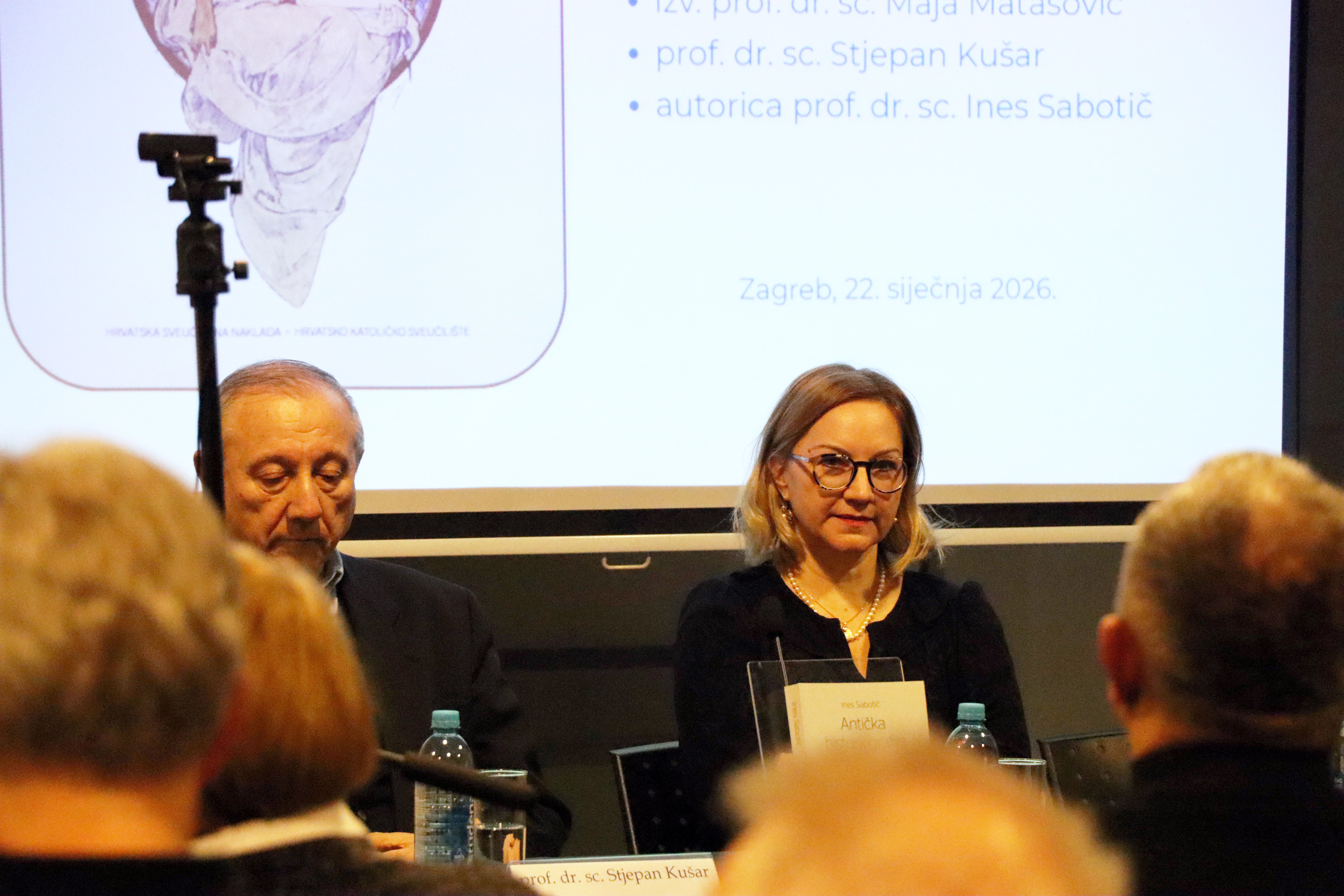
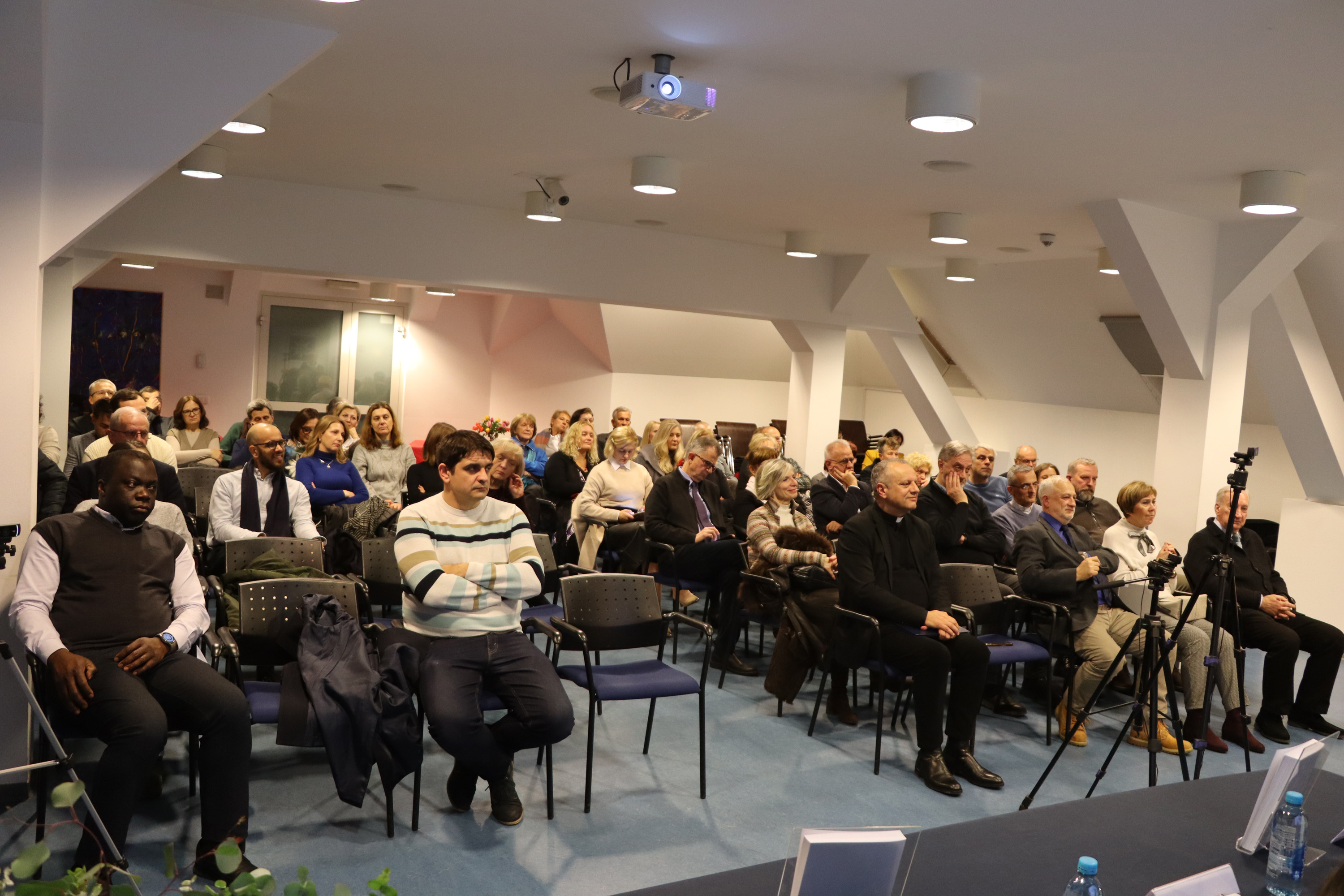
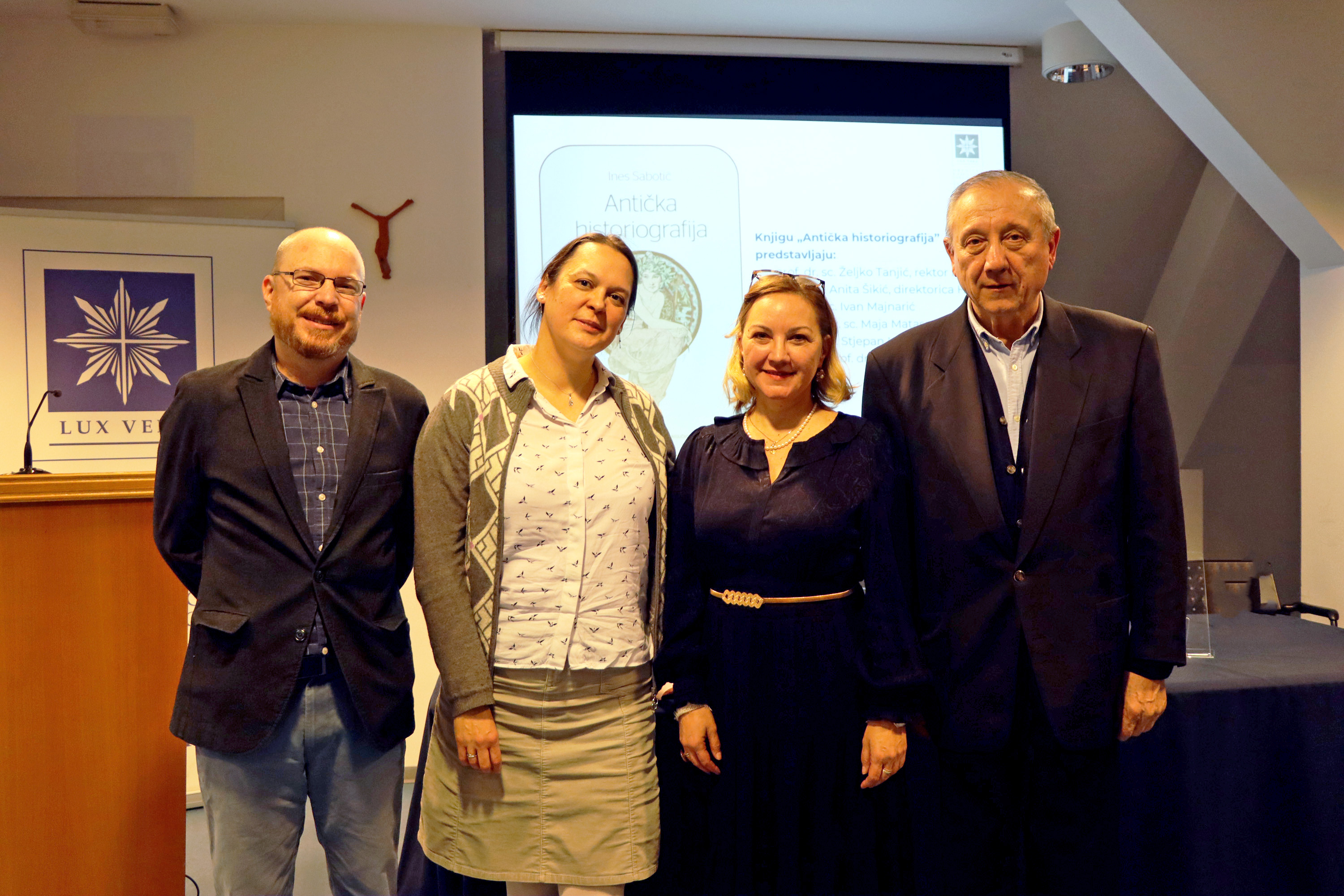
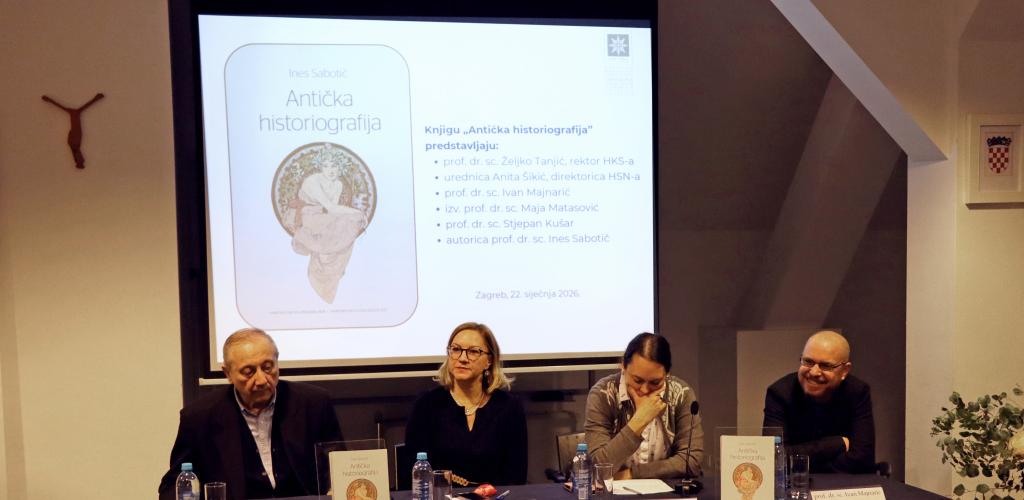
On Thursday, 22 January 2026, the book Ancient Historiography by Prof. Ines Sabotič was presented in the Bl. Alojzije kard. Stepinac Hall at the Catholic University of Croatia (CUC). The book was published as a co-edition of the Catholic University of Croatia and the Croatian University Press (HUP).
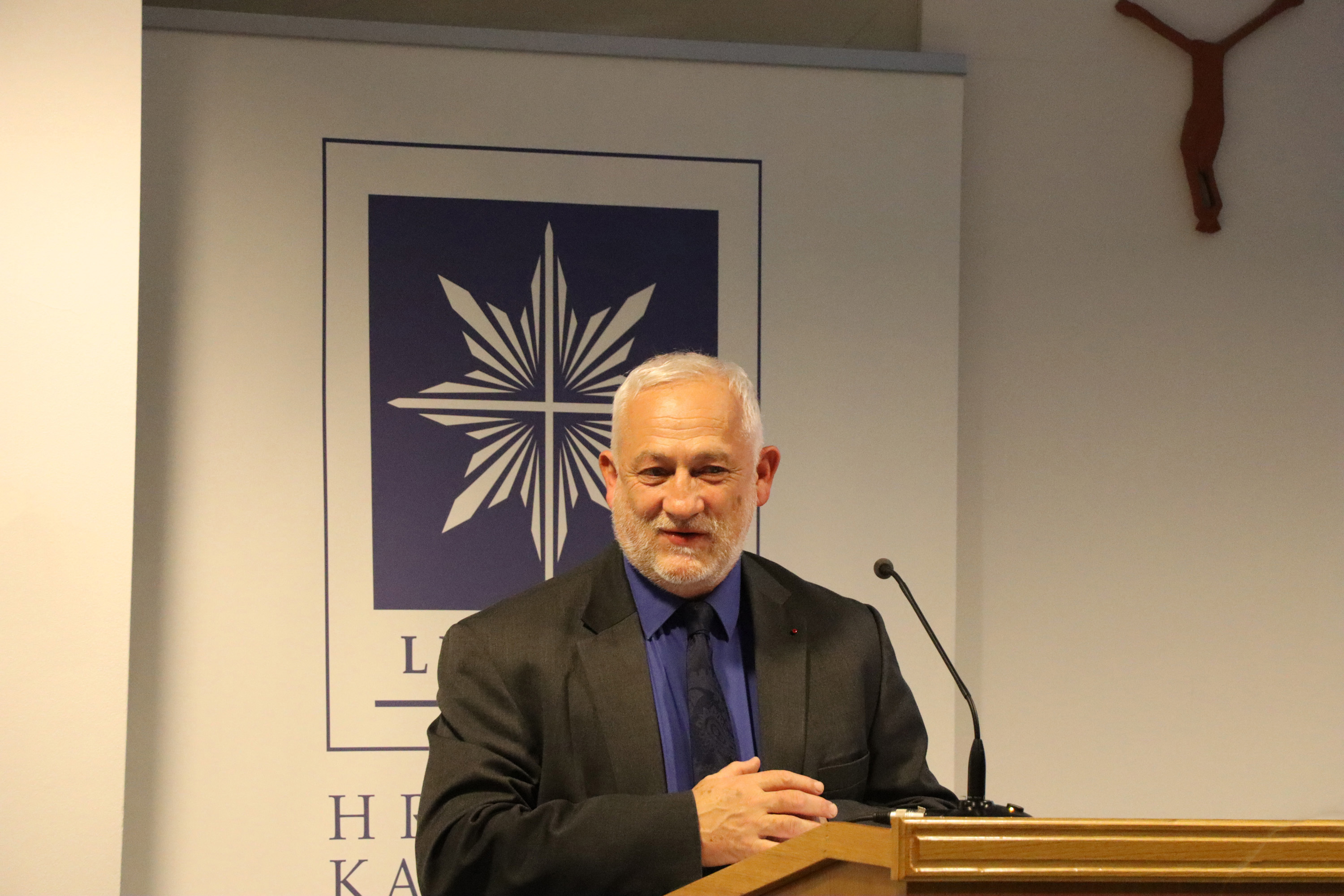
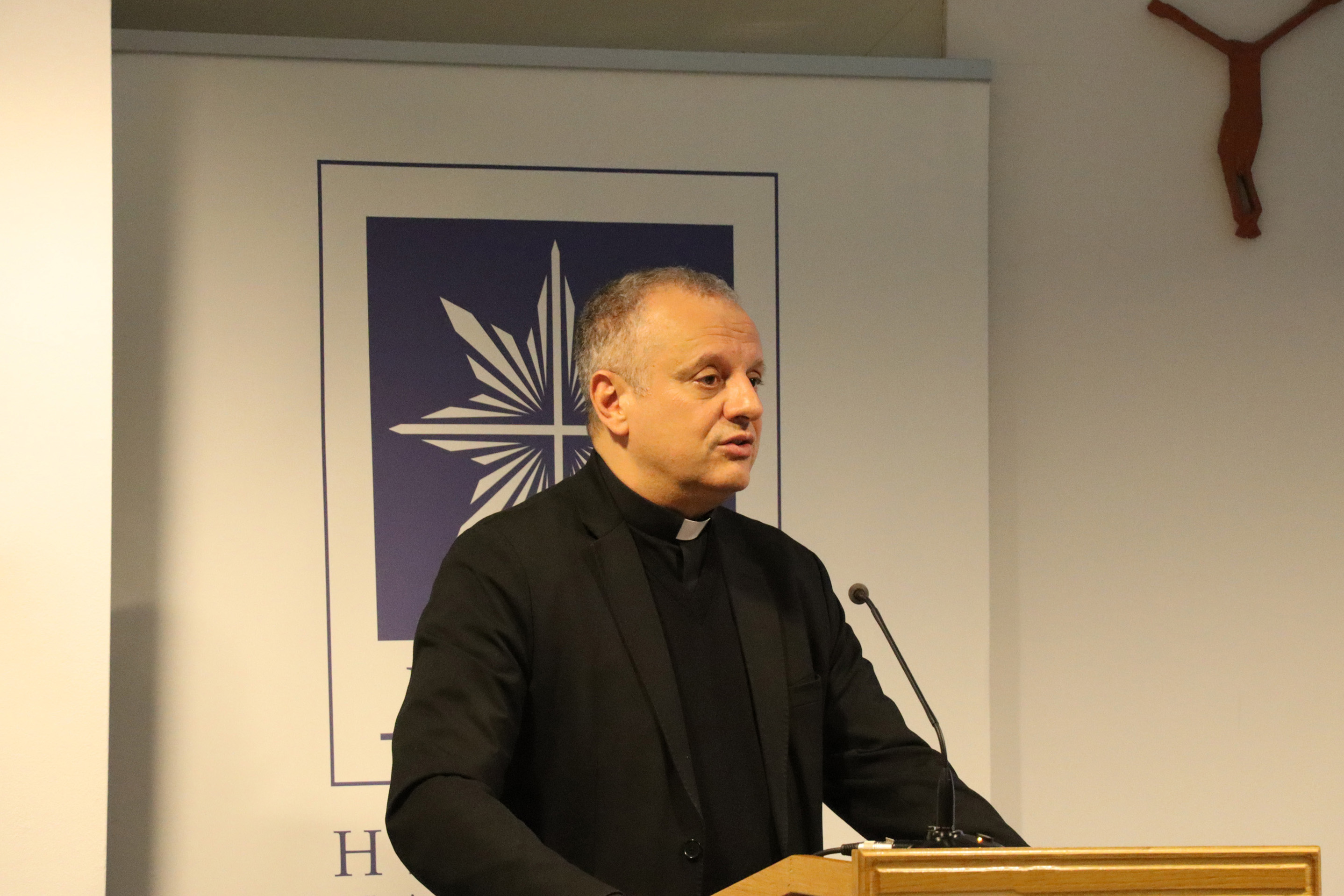
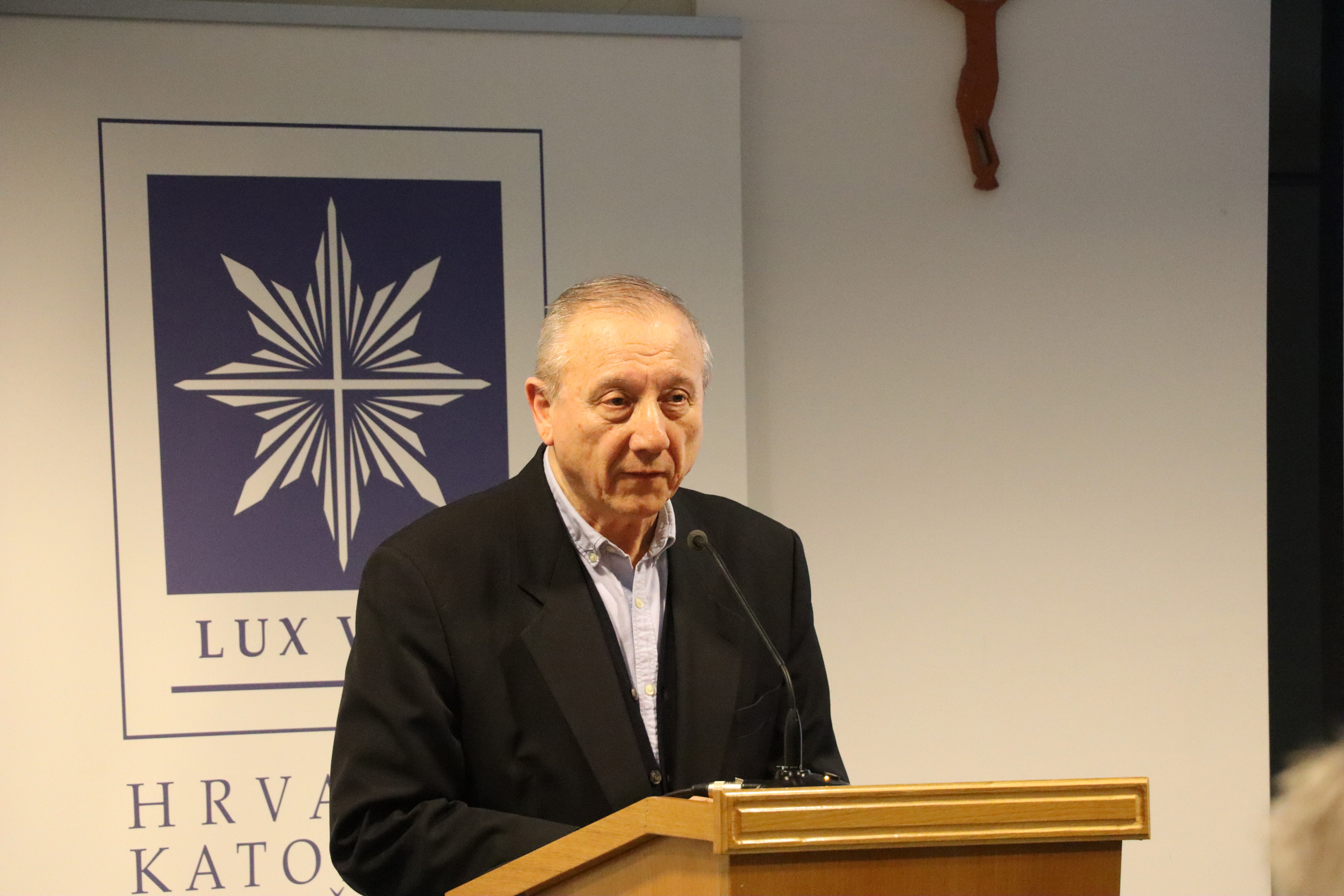
The programme opened with introductory remarks by Prof. Željko Tanjić, Rector of CUC, who briefly outlined Prof. Sabotič’s academic career and her many years of dedicated service at the University. He emphasized that a particular value of the book lies in the author’s in-depth perspective shaped by both Croatian and French historiographical traditions.
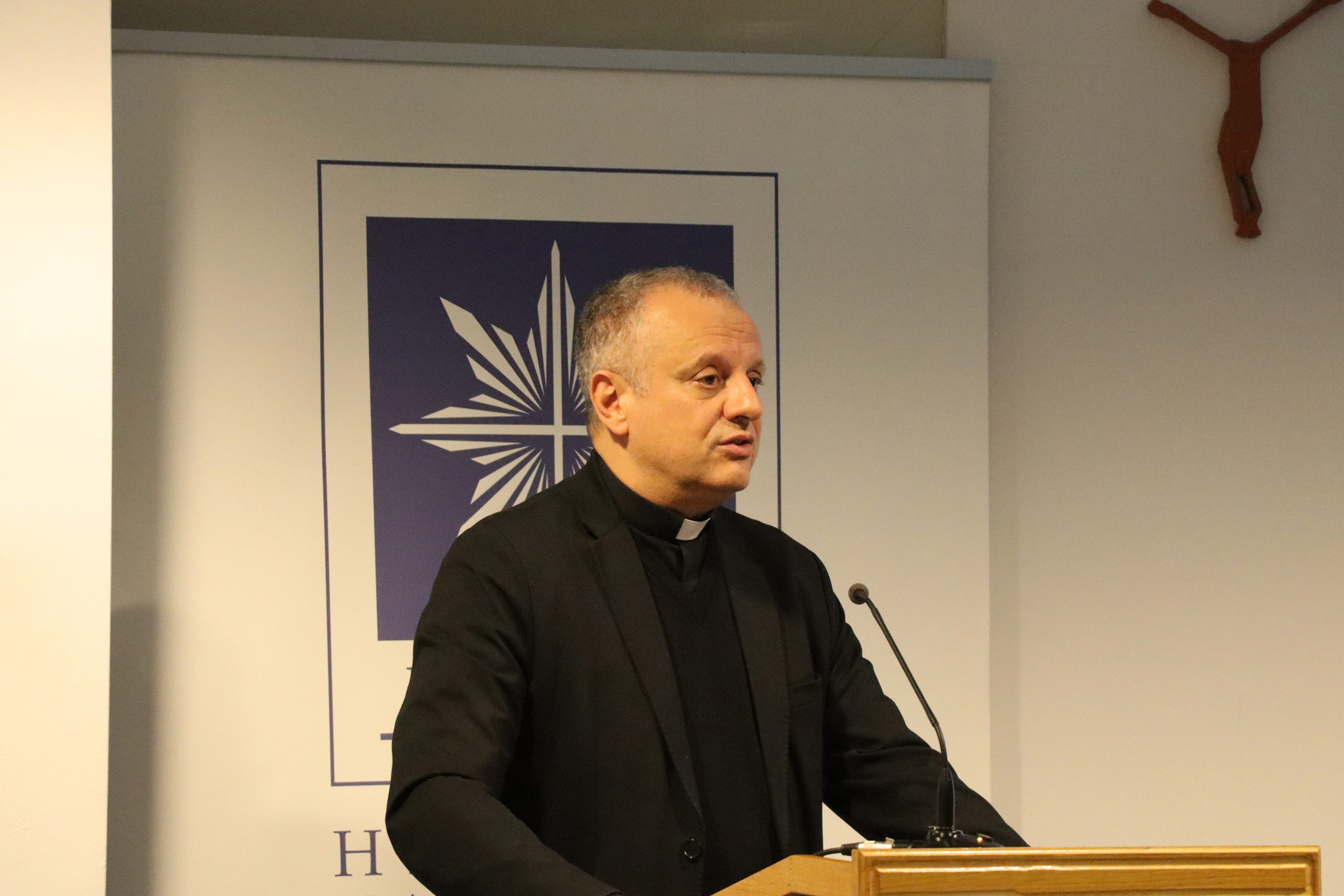
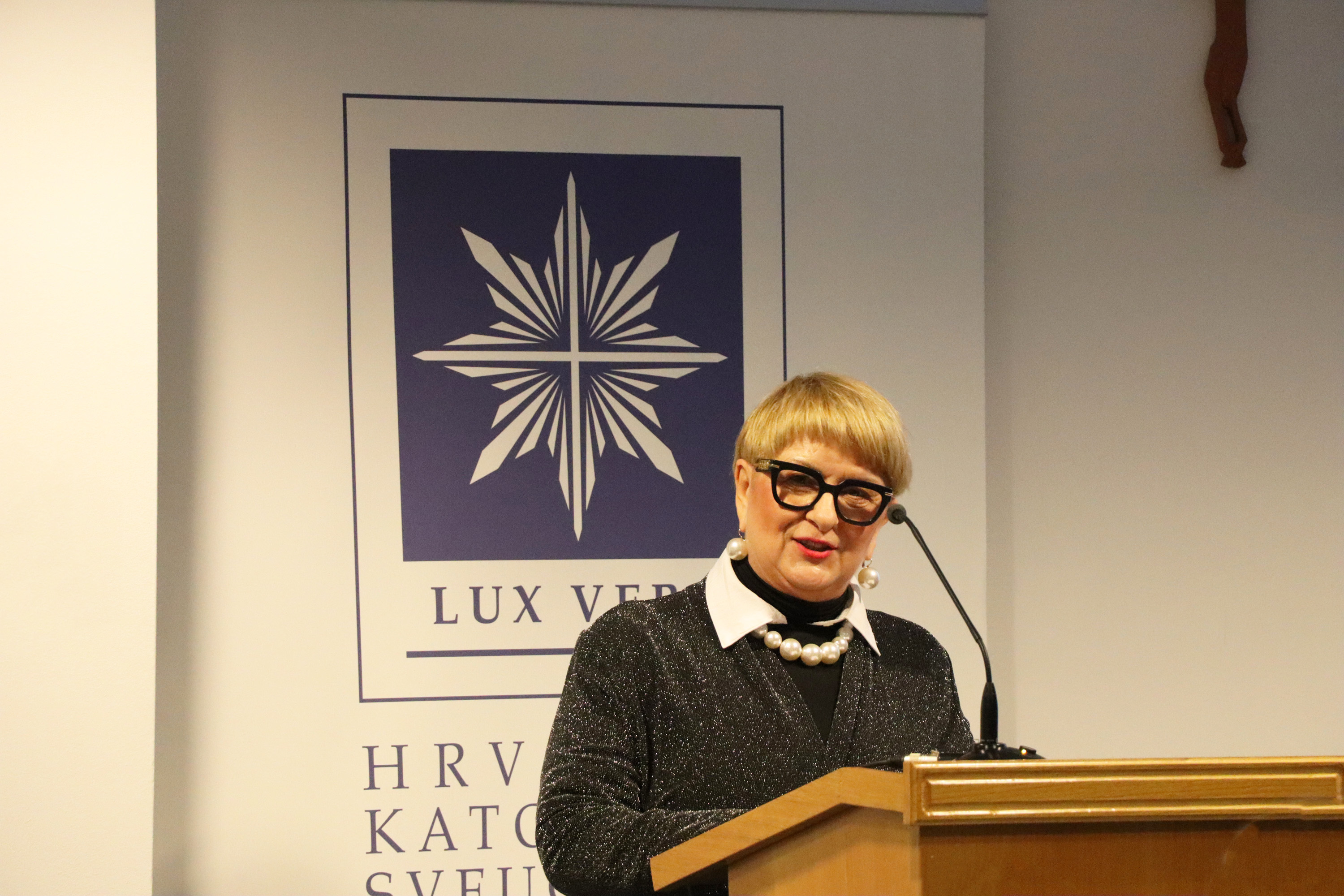
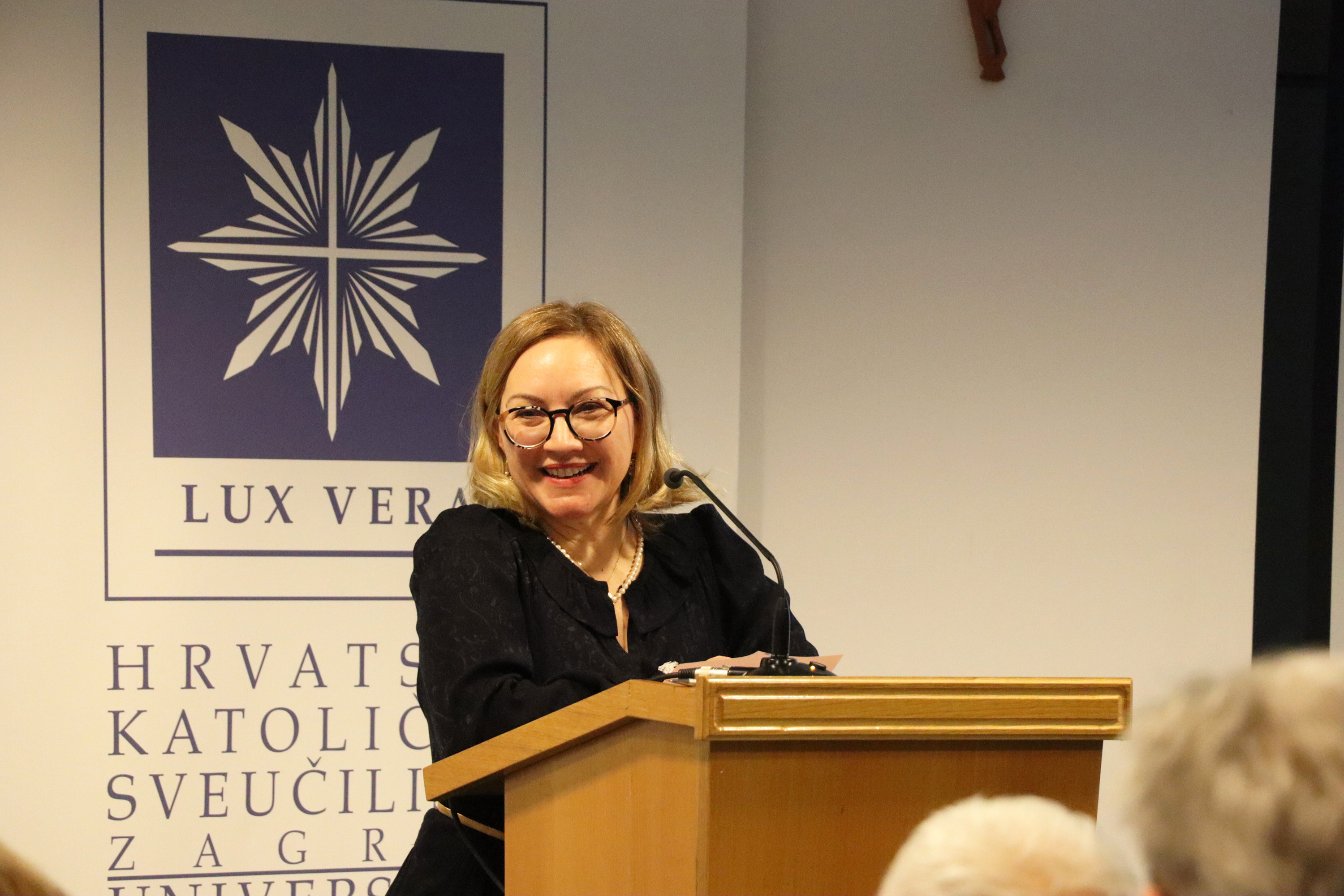
On behalf of HUP, Anita Šikić noted that the book was a special project in every respect, from its content to its cover design. “The cover features a Secessionist depiction of the muse Clio, patron of history and poetry, and the work itself is aligned with the shared mission of CUC and HUP—to promote public visibility in building the academic community and educating young people. The book contains extensive material on the sources of ancient historiography and covers the period from the 5th century BC to the first Christian historians of the 5th century AD,” Šikić said.
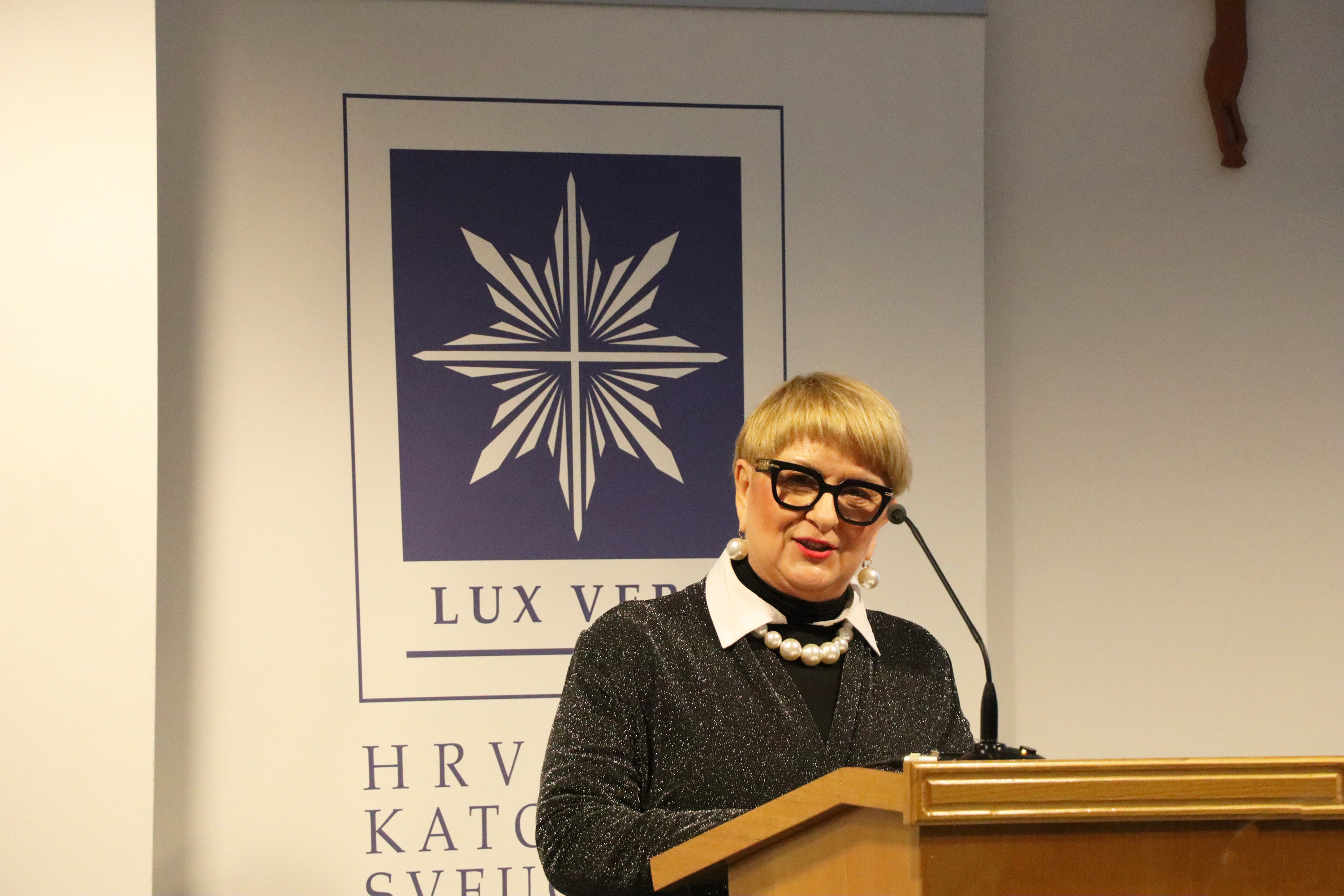
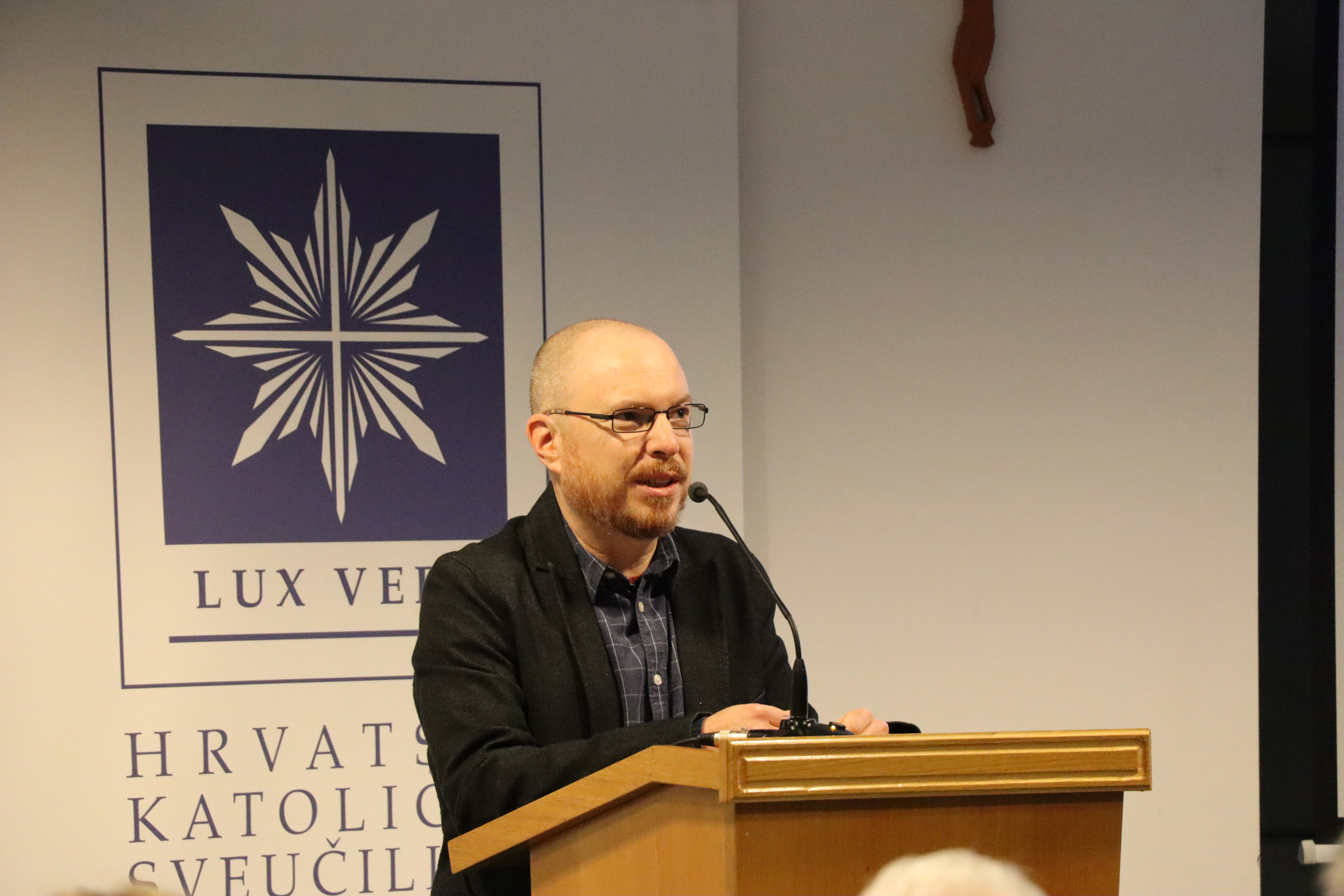
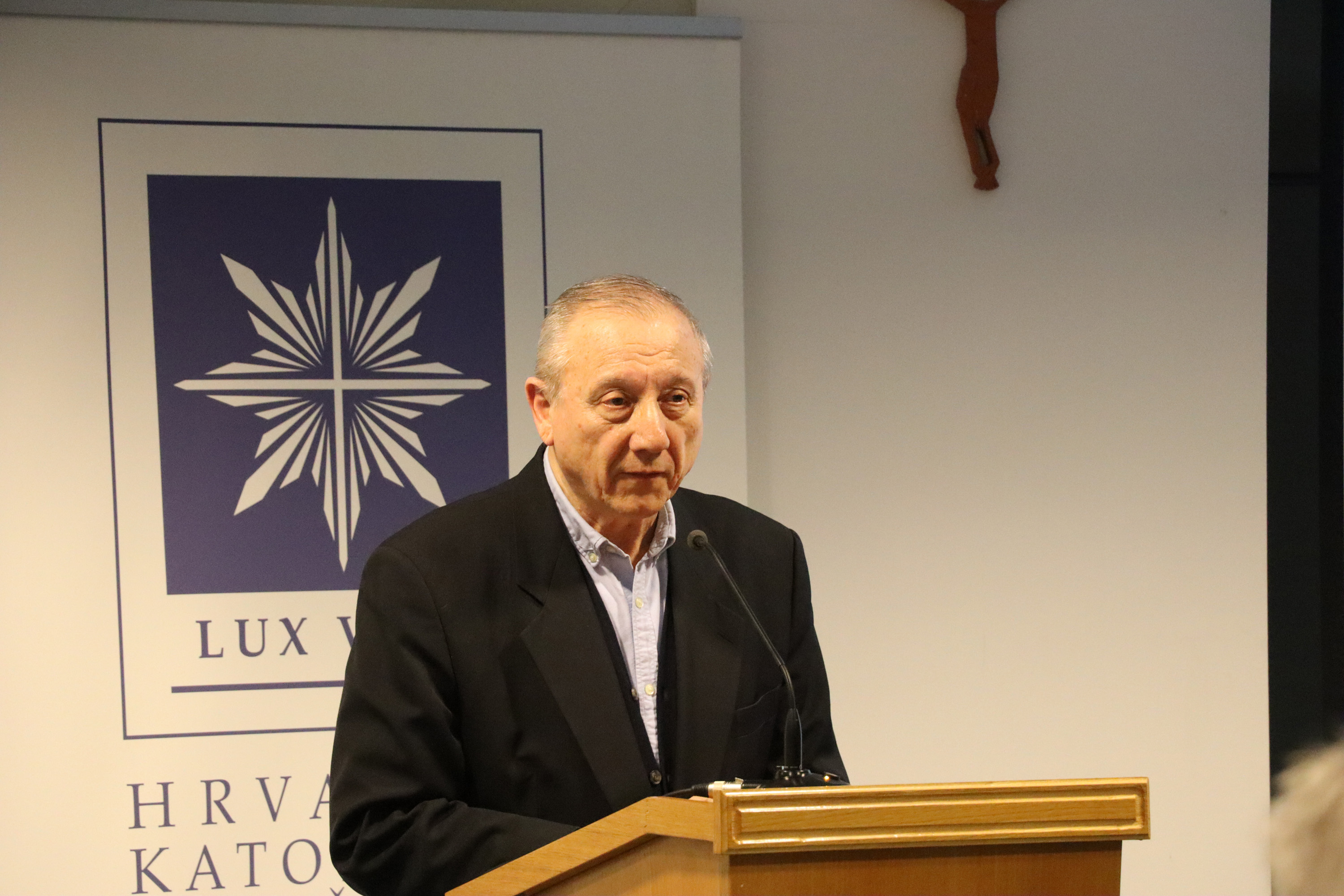
Prof. Ivan Majnarić from the University Department of History at CUC spoke about the concept of historia addressed in the book, opening his remarks with the question of authorship of the world-famous photograph Napalm Girl from the Vietnam War, which was later found to have been misattributed for decades. “From the perspective of history, determining the true author of a work is not a simple matter. This is why careful and detailed research is essential, and why the historian’s task is complex: a historian must consider an event not only as an isolated occurrence, but within its temporal context, the context of its audience, and the perspective of the person who recorded it. This book is particularly valuable because it explains how each author wrote within their own time—highlighting the specific modes of speech, thought, and writing, and the lessons they convey,” Majnarić explained.
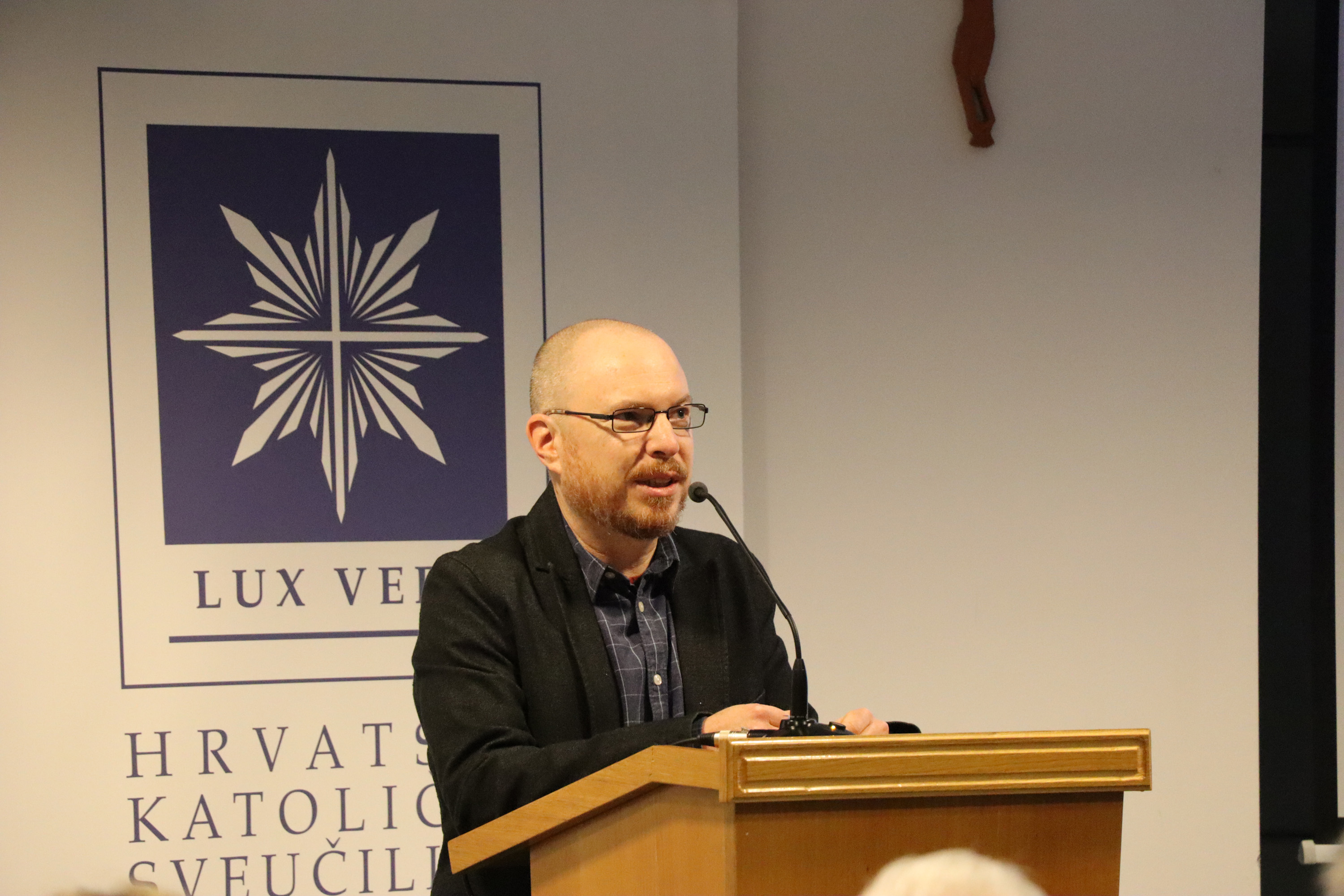
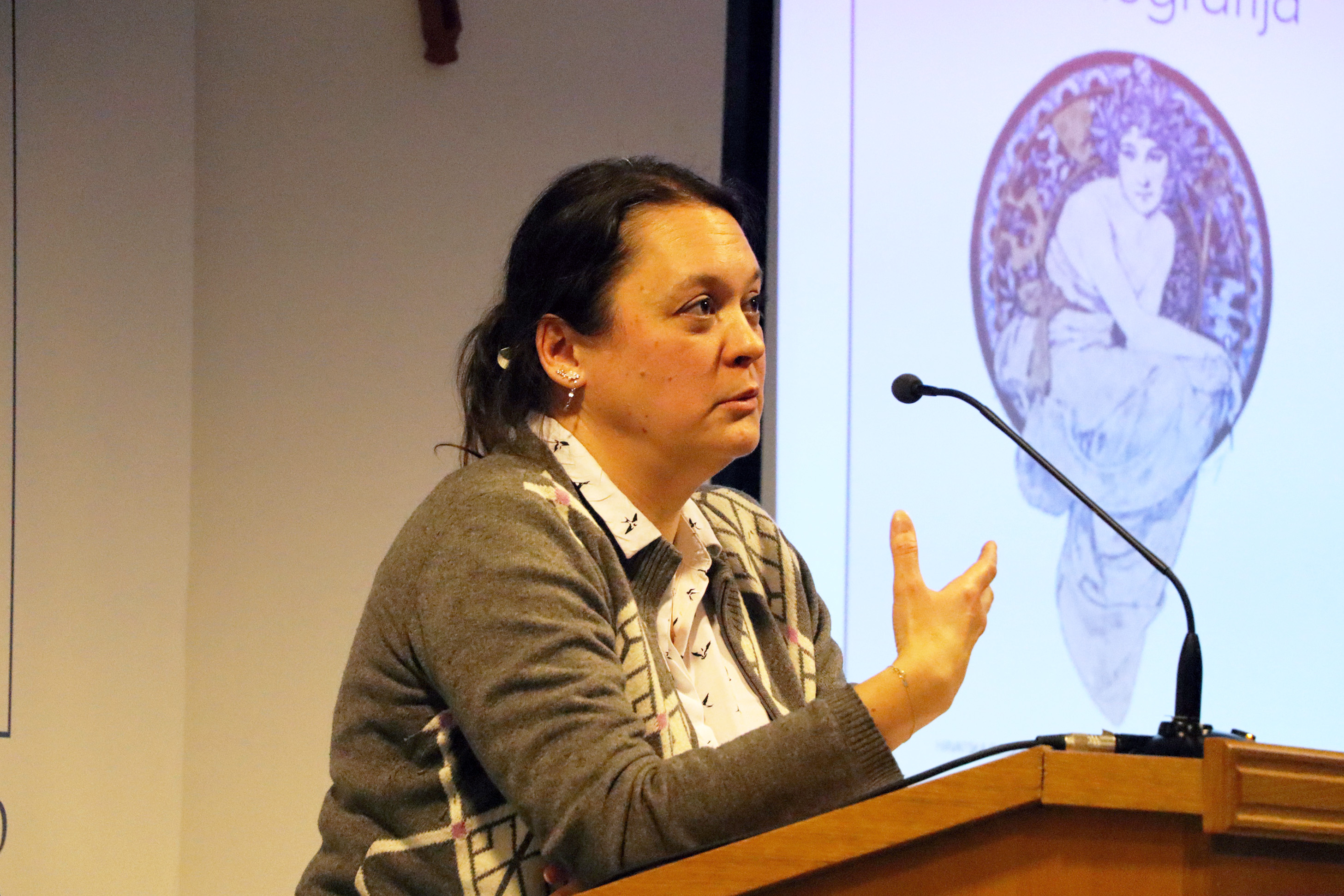
Assoc. Prof. Maja Matasović from the Department of Croatian Latin Studies at the Faculty of Croatian Studies, University of Zagreb—who translated parts of the book and also served as a reviewer—emphasized its added value from a philological perspective. “Beyond its historical richness, this work represents a major scholarly undertaking, encompassing the context of all historians from Herodotus onward, and offering students excellent quotations that contribute to a deeper understanding of the authors,” Matasović concluded.
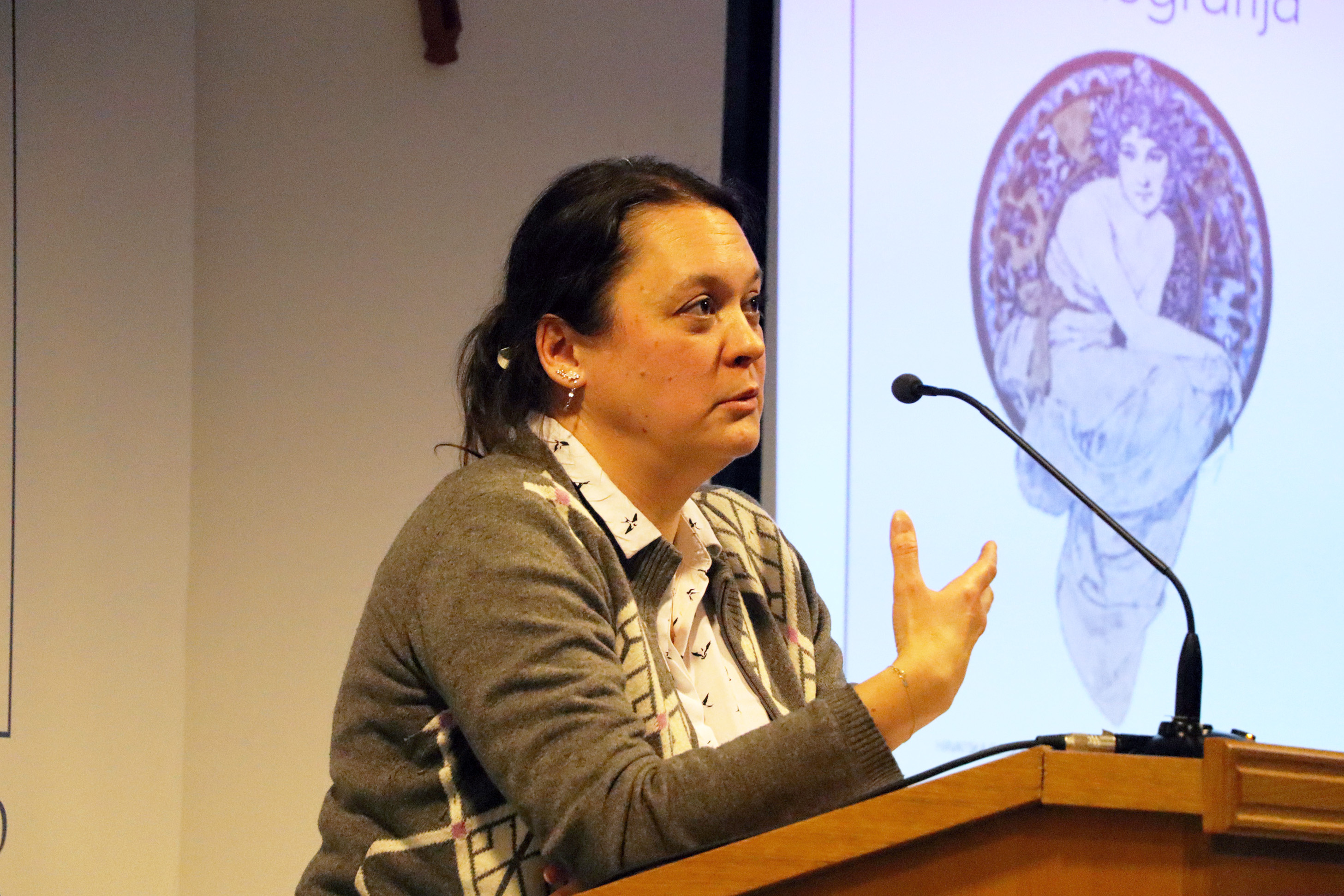
Prof. Stjepan Kušar addressed the issue of historians’ subjectivity and their susceptibility to anachronisms, whereby events are conveyed “coloured” by the author’s emotions and understanding of their own time. “We are historical beings; historicity is an essential characteristic of humanity. Therefore, it is important to understand the spirit of the author who writes a work. Authors create through their experiences, yet the presentation of history must be truthful and loyally accurate. A historian must be able to think both as a philosopher and as a scholar in other disciplines in order to penetrate deeply into the subject matter—and this book offers precisely that,” Kušar said.
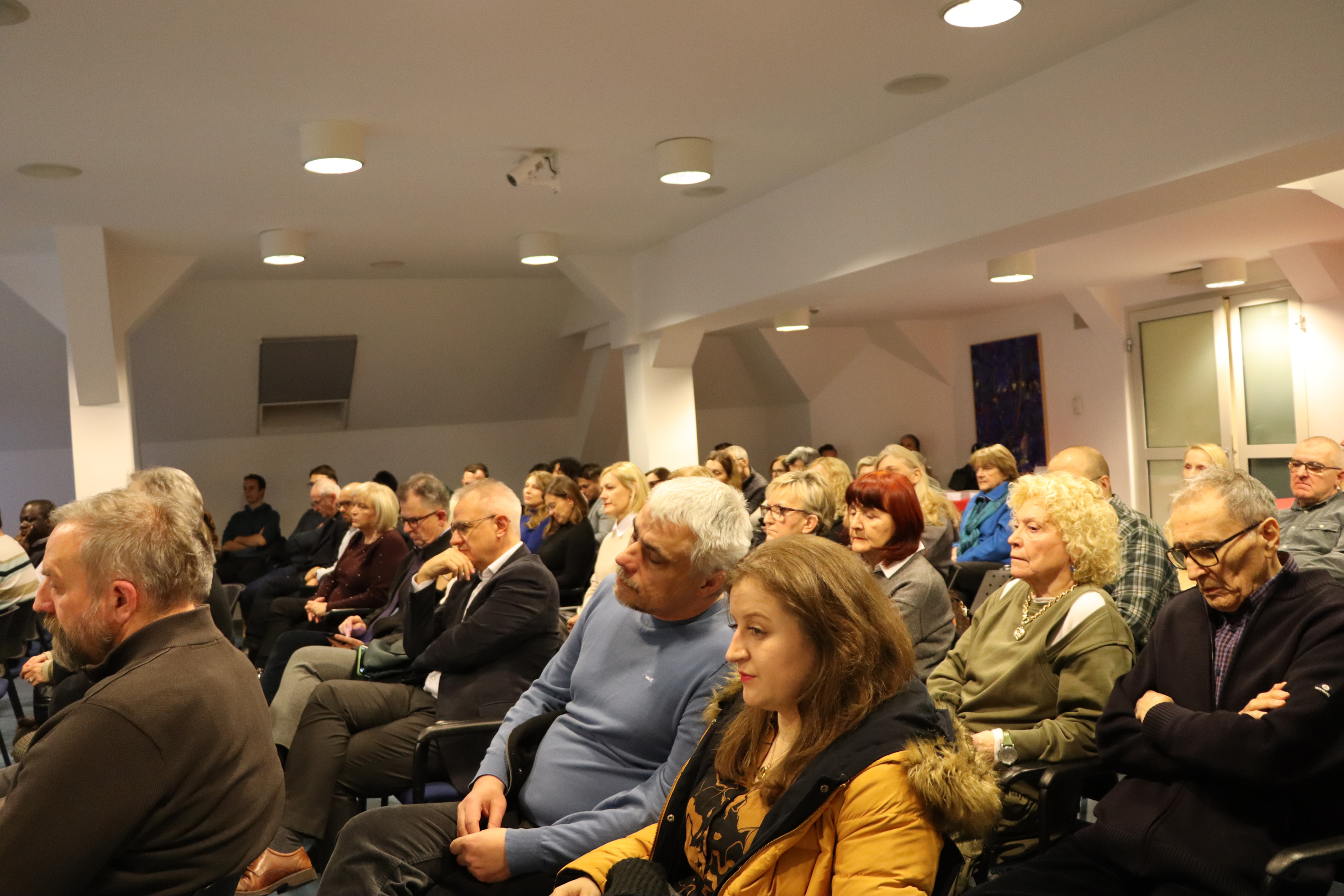
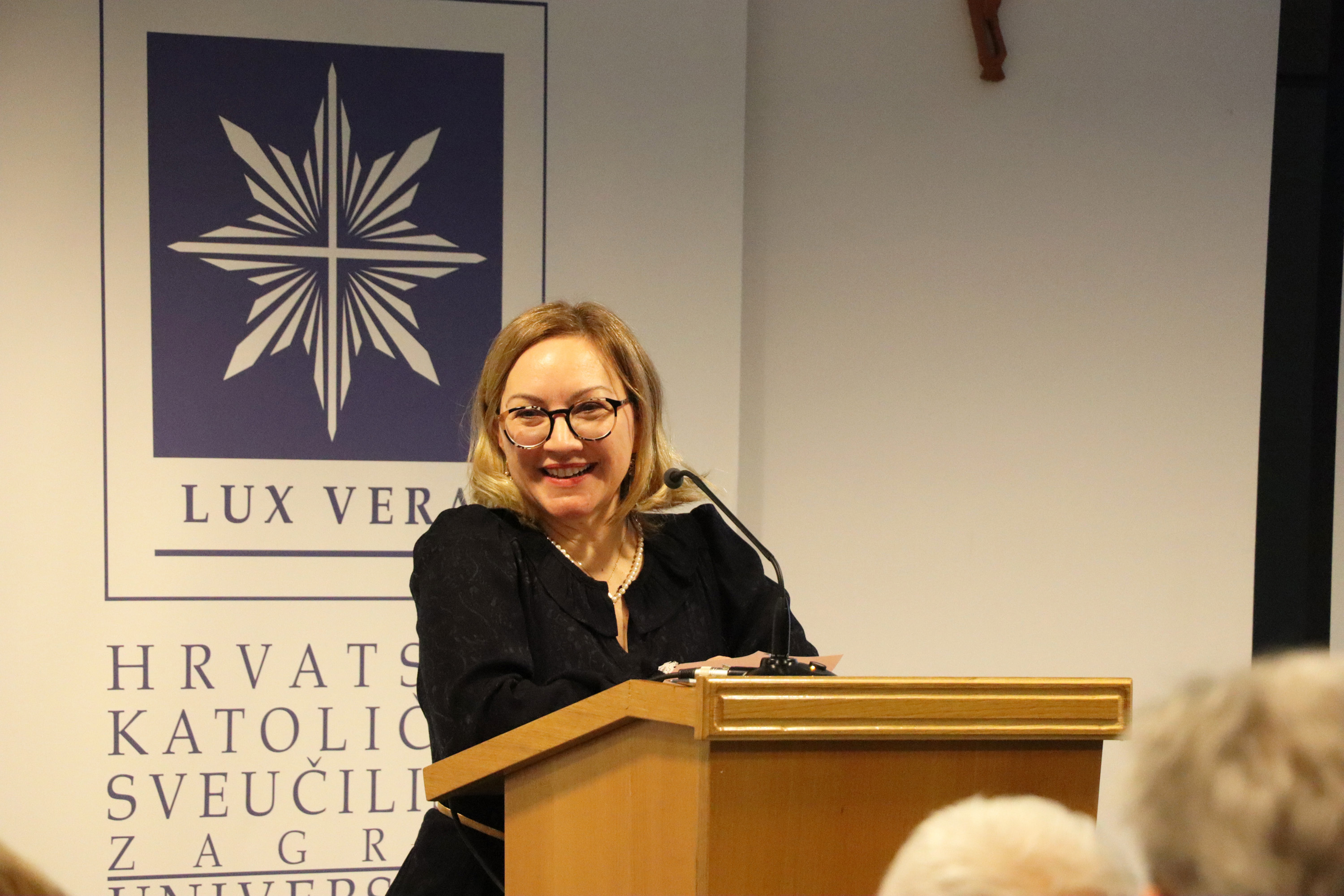
Prof. Ines Sabotič thanked everyone for attending and all those who supported her throughout the year-long process of creating the book. “A book is never written alone, and you never truly write it by yourself; there is always a great deal of help, for which I am deeply grateful. In this book, I wanted to convey the ‘voices’ of the people with whom I have spent so much time—the historians presented in the book—and it is important to hear what they had to say. I can even say they have truly become my friends, given how much time I spent with them. I thank the reviewers for everything—their support, critiques, translations, guidance, and advice,” Prof. Sabotič said.
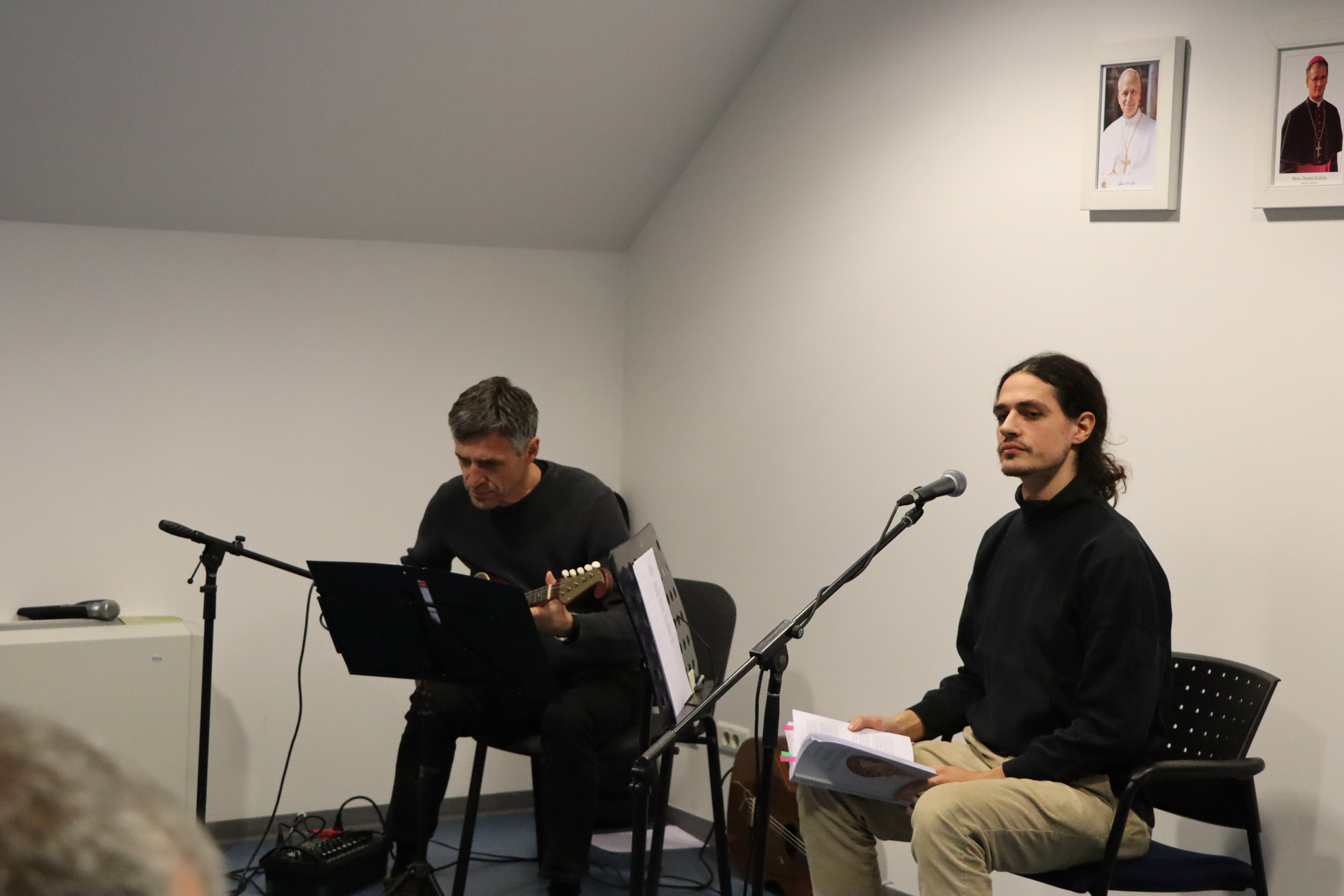
The programme was moderated by Prof. Gordan Črpić, Vice-Rector for Organization and Operations at CUC. Musical and poetic accompaniment was provided by the “Rimac Duo,” Marina and Lovro Rimac, who performed poetry from the period of Antiquity and musical settings of ancient texts.