Share
General Assembly of the European Federation of Catholic Universities Officially Opened at CUC
The Catholic University of Croatia (CUC) from 20 to 22 May 2026 hosts the General Assembly of the European Federation of Catholic Universities (FUCE), under the title “Mission of Catholic Universities in Challenging Times” (eng. Inspiring Catholic Universities in Challenging Times), which gathers 67 rectors, vice-rectors and deans as well as experts from sixteen European countries in order to discuss the role of Catholic universities in contemporary society marked by social, cultural and technological changes.
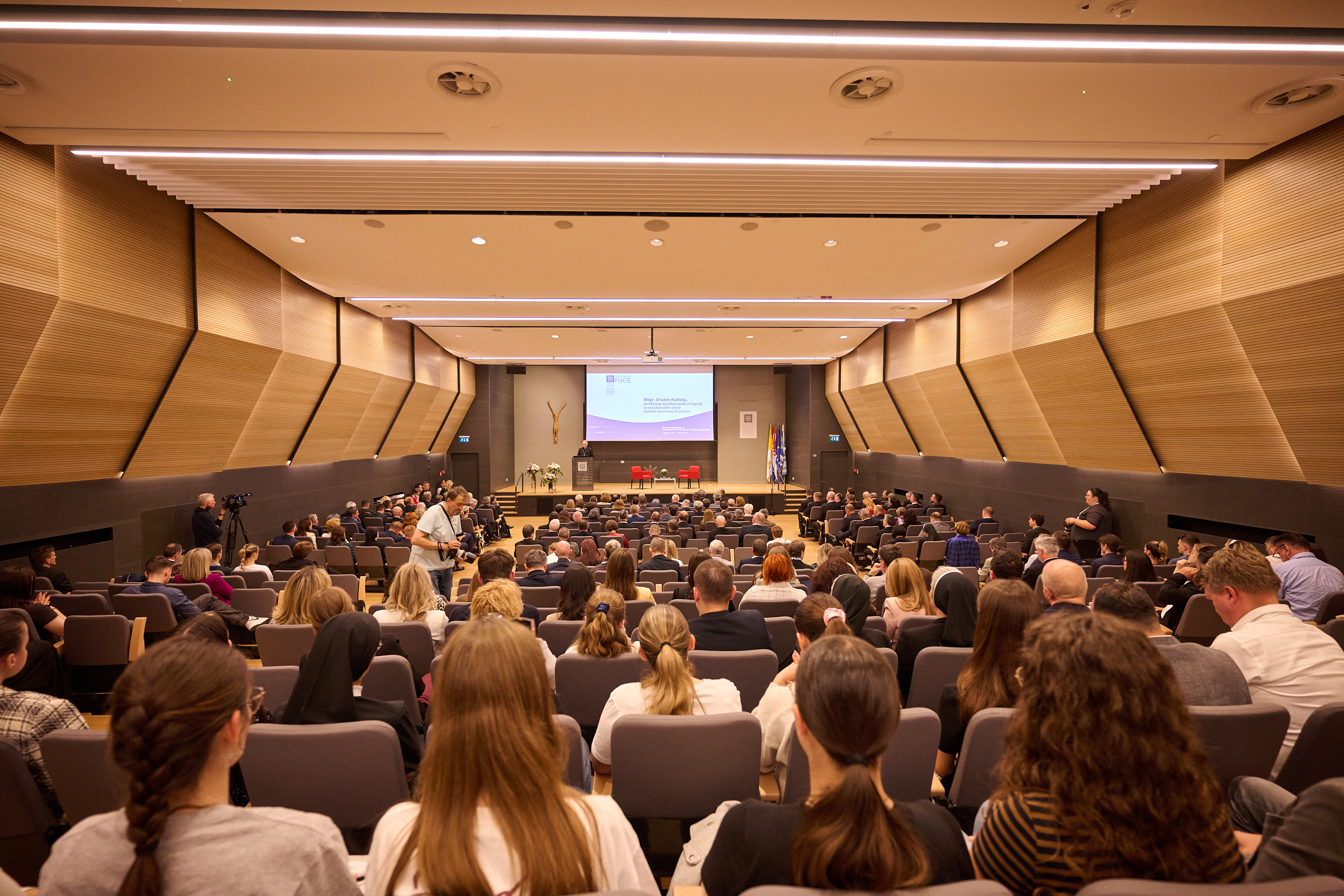
The opening was held on Wednesday, 20 May 2026, in the Aula Magna of CUC in the presence of numerous guests from ecclesiastical, academic, political and diplomatic life. Among the distinguished guests were Cardinal José Tolentino de Mendonça, Prefect of the Dicastery for Culture and Education of the Holy See, Cardinal Josip Bozanić, founder of the Catholic University of Croatia, Apostolic Nuncio to the Republic of Croatia Archbishop Mons. Leonardo Girelli, President of the European Federation of Catholic Universities and Rector of the Catholic University of the Sacred Heart in Milan Prof. Elena Beccalli, as well as President of the European University Association Prof. Josep M. Garrell.
The opening of the General Assembly was attended by Prof. Radovan Fuchs, envoy of the Prime Minister of the Republic of Croatia and Minister of Science, Education and Youth, and Minister of Culture and Media Nina Obuljen Koržinek.
At the gathering also participated the Bishop of Dubrovnik Mons. Roko Glasnović, Auxiliary Bishop of Zagreb Mons. Ivan Šaško, the first Rector of the Catholic University of Croatia, Auxiliary Bishop of Zagreb Mons. Marko Kovač, Secretary General of the Croatian Bishops’ Conference Rev. Krunoslav Novak, and Director of the Renovabis Foundation of the German Bishops’ Conference Dr Thomas Schwartz.
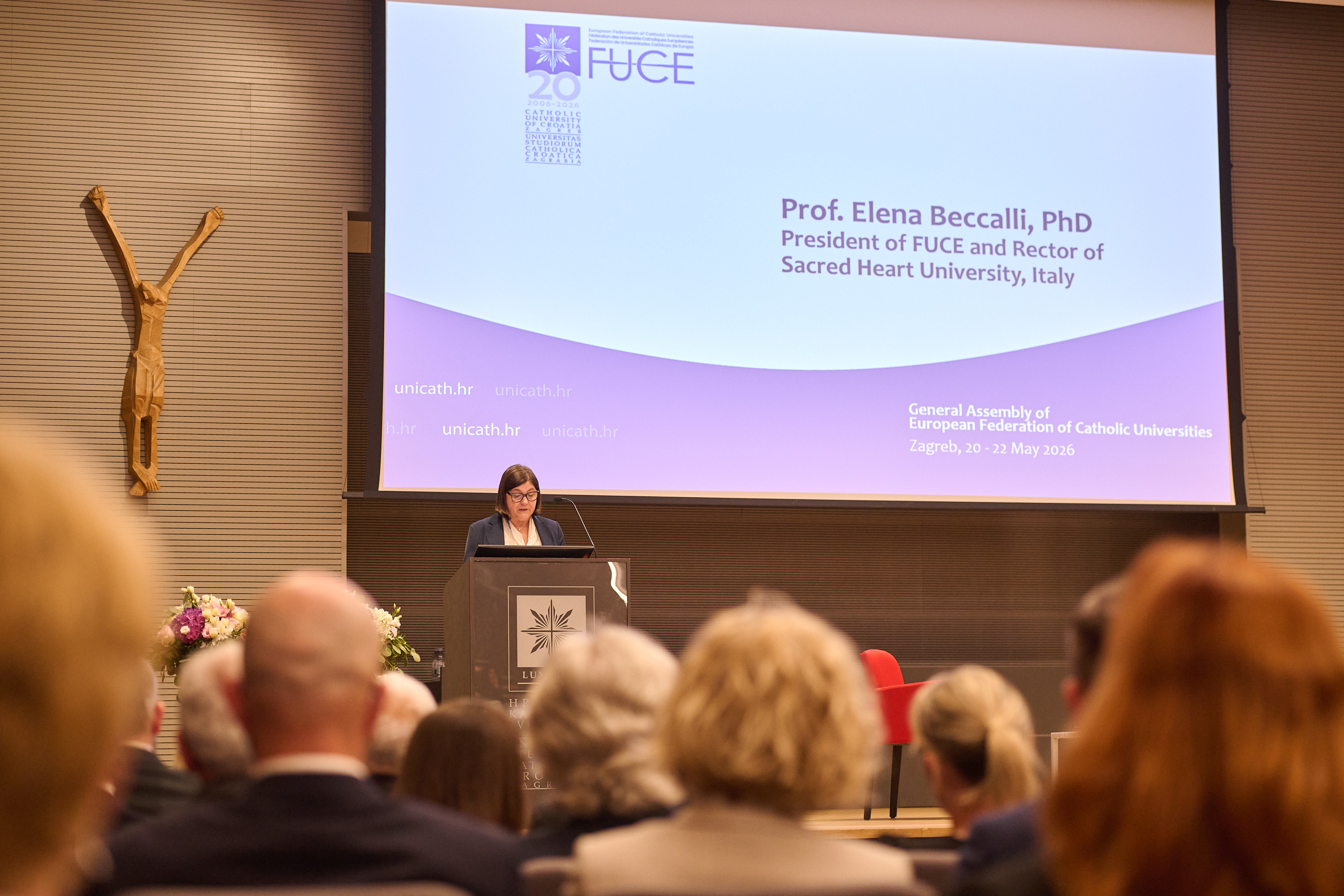
The introductory speech was delivered by the President of FUCE Prof. Elena Beccalli, in which she pointed out that Catholic universities today face numerous challenges, among which are demographic changes, digital transformation and increasingly pronounced problems of mental health of young people. She emphasised that Catholic universities must not be only places of transmission of knowledge, but communities that encourage critical thinking, dialogue and the integral development of the person. She particularly warned of the need for responsible use of artificial intelligence in education, while preserving creativity, freedom of thought and personal relationships in the learning process. Speaking about the identity of Catholic universities, she emphasised that their strength does not lie in competing with secular institutions in financial resources, but in education based on values and social responsibility.
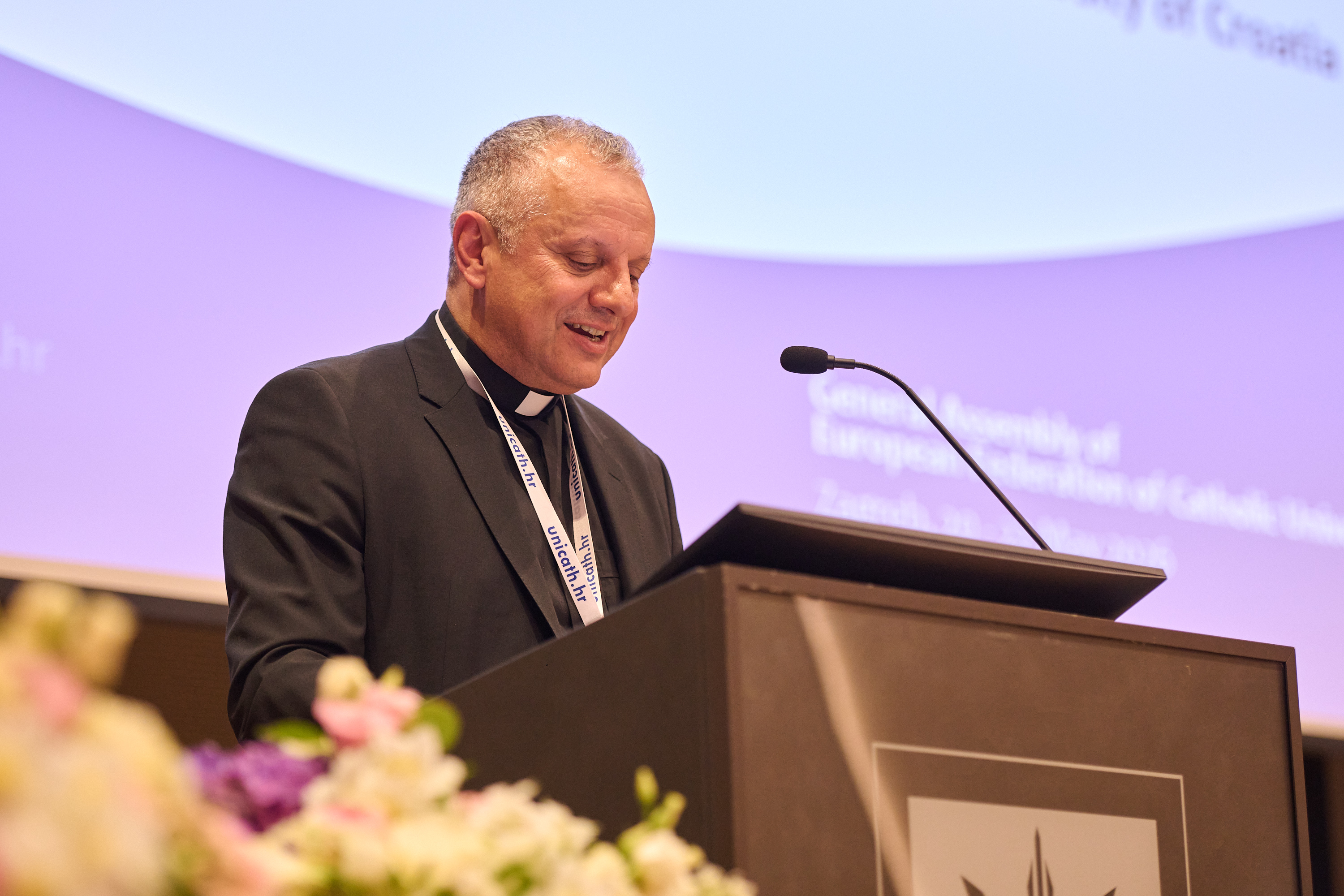
Rector Prof. Željko Tanjić in his speech emphasised that the holding of the General Assembly of FUCE at the Catholic University of Croatia is a special recognition for the University which this year marks the 20th anniversary of its establishment. Speaking about the challenges of Croatian society marked by the legacy of communism, the Homeland War and long-term social changes, he emphasised the importance of Catholic universities as places of hope, responsibility and service to the common good, and particularly highlighted the role of smaller and developing universities which, thanks to closeness to students, openness to innovations and connection with the local community, can make an important contribution to the future of European higher education.
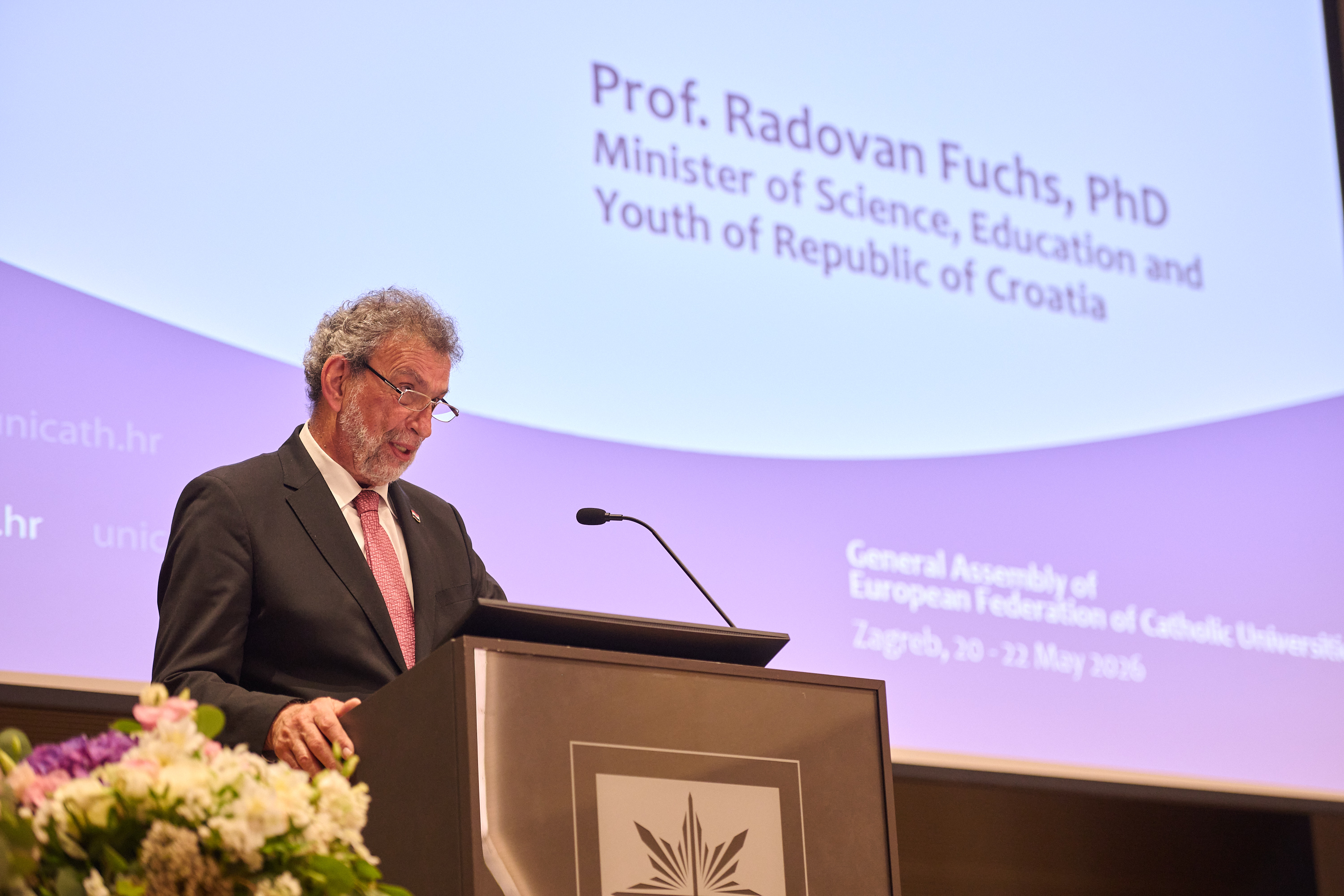
On behalf of the Government of the Republic of Croatia, the gathered were addressed by Minister Radovan Fuchs, who pointed out that the Catholic University of Croatia in recent years has positioned itself highly among Croatian universities. Speaking about the holding of the FUCE Assembly in a time of major European changes, he emphasised that Europe is facing demographic challenges and changes in higher education programmes, in which Catholic universities have an important role on the European academic scene. He added that the Republic of Croatia strongly supports the internationalisation of Croatian universities and the development of partnerships with European higher education institutions. He particularly praised the new leadership of FUCE, emphasising that in a short time it has achieved notable results. In conclusion, he stated that it is necessary to find a balance between science, humanistic values and technological development.
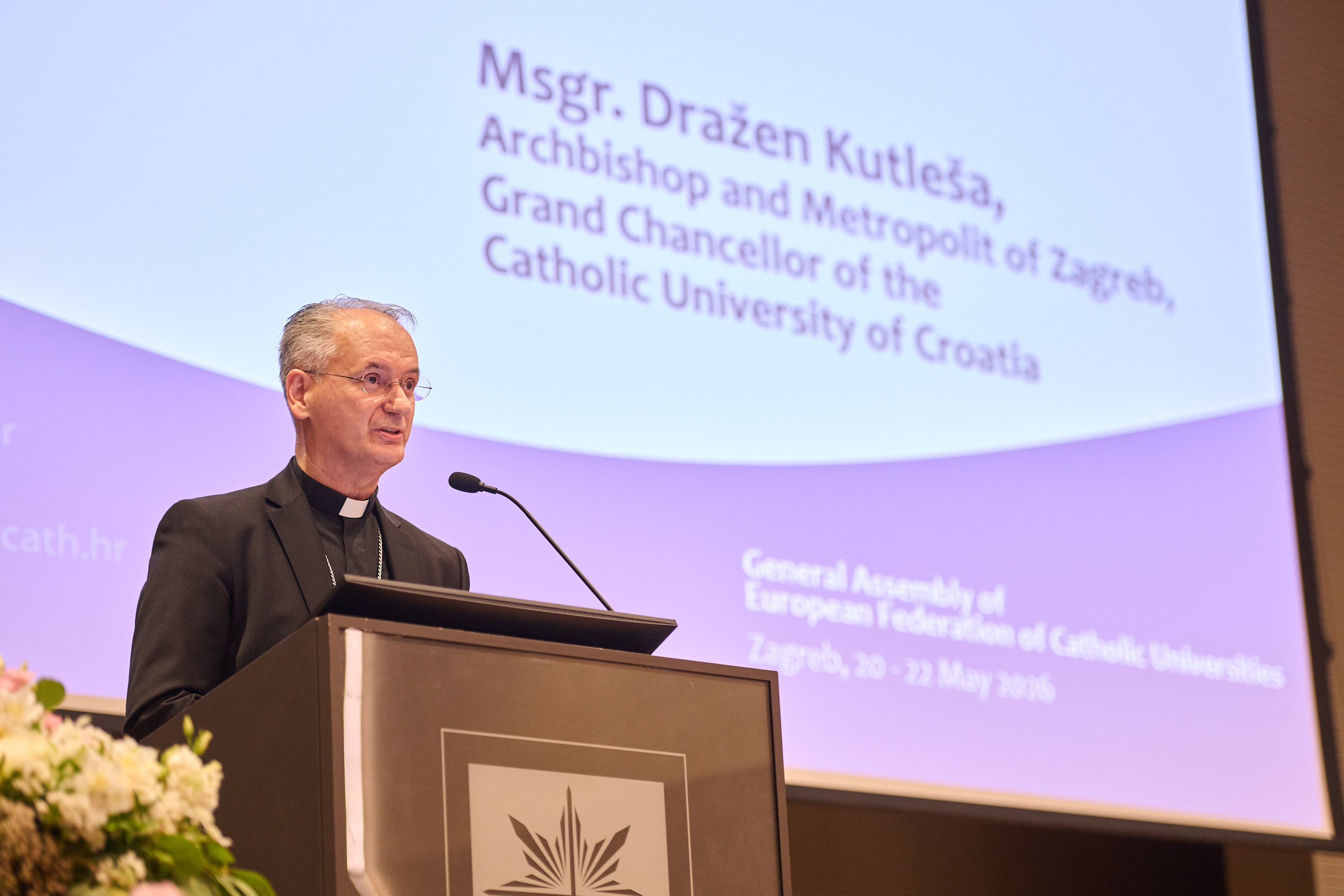
Participants were greeted by the Archbishop of Zagreb and Metropolitan and Grand Chancellor of the Catholic University of Croatia Mons. Dražen Kutleša, emphasising that Catholic universities have an important task to offer orientation and meaning in a time of deep social, cultural and spiritual challenges of Europe. He pointed out that contemporary scientific achievements, especially in the field of quantum physics, do not close the space for transcendence, but encourage intellectual humility and openness to the mystery of creation. Speaking about the relationship between faith and reason, he emphasised that the task of Catholic universities is to witness the unity of truth and to connect scientific research with questions of meaning and human responsibility. In conclusion, he stated that Catholic universities should be places where young people are not taught only how to think, but also why to think and for what to live.
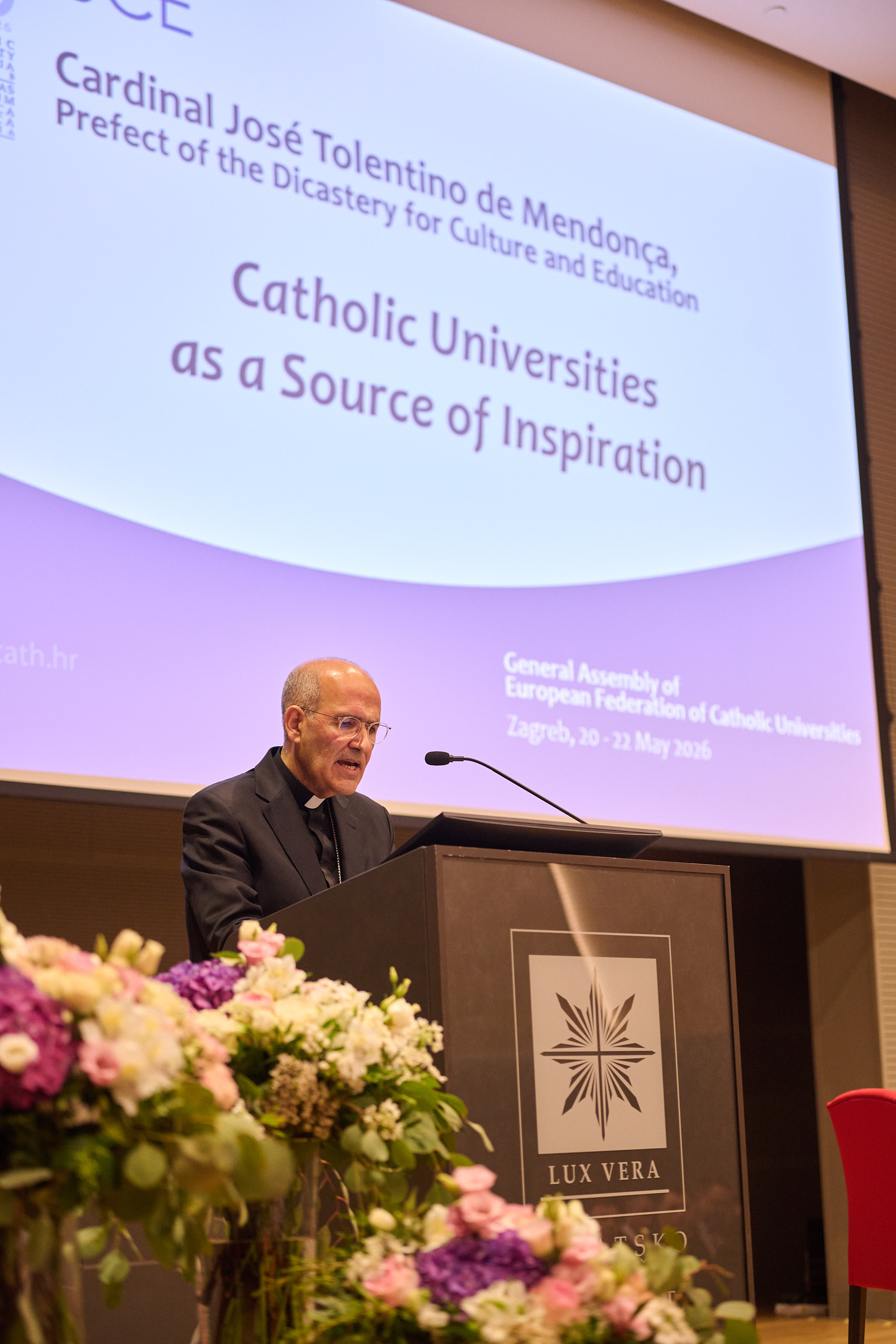
The central lecture was delivered by Cardinal José Tolentino de Mendonça, in which he connected that Catholic universities in a time of social, technological and anthropological crises should be “universities that inspire”, places of hope, dialogue and integral humanism. Cardinal Tolentino emphasised that research, teaching and social action must not be separate tasks, but connected dimensions of the mission of the university which places knowledge at the service of the human person and the common good. He particularly warned of the challenges of artificial intelligence and the technocratic paradigm, emphasising that technology must never replace human thinking, relationships and ethical responsibility. Speaking about the role of Catholic universities, he emphasised the importance of connecting science, faith and culture as well as the need to create educational communities that shape critical thinking, solidarity and a sense of meaning.
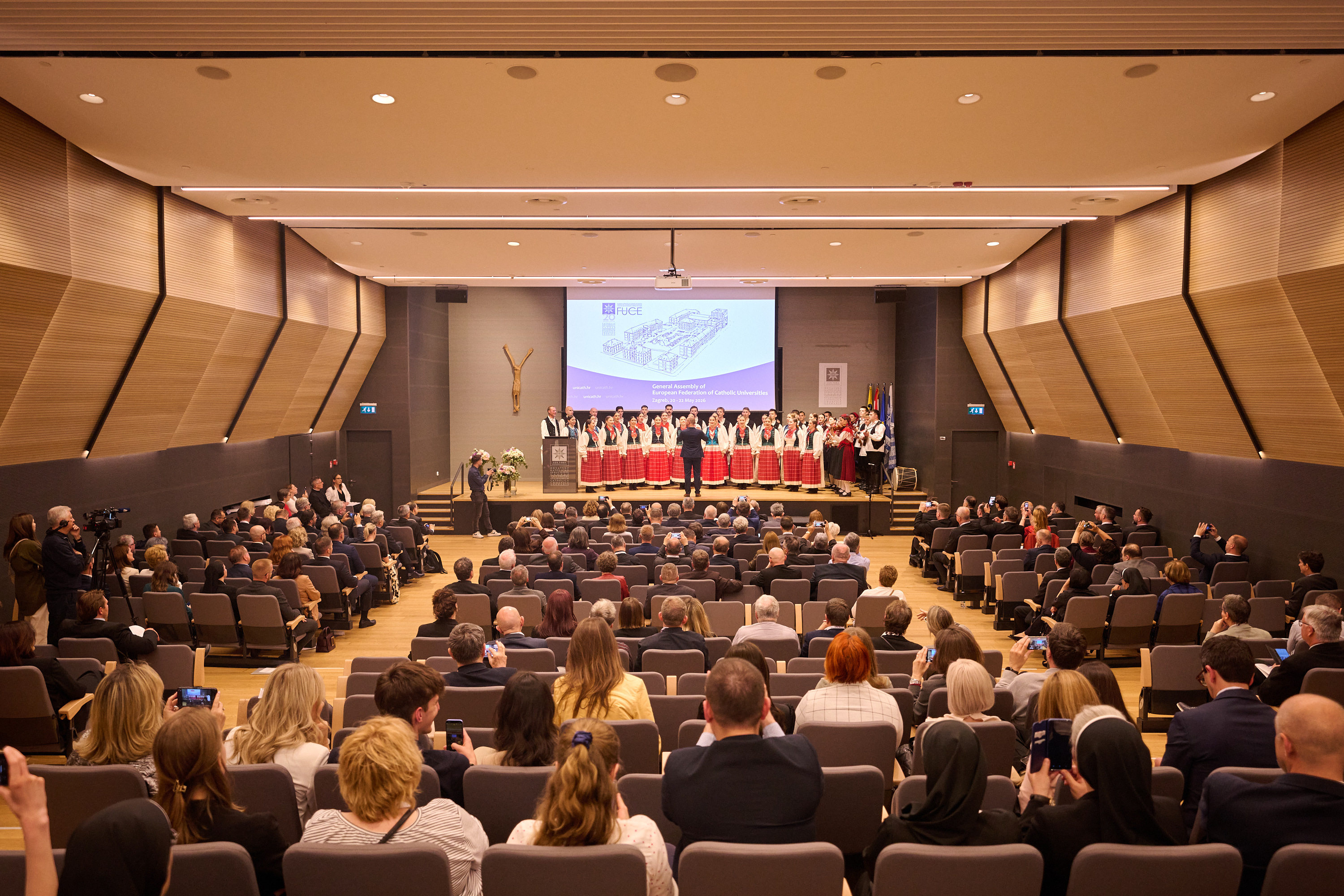
In the musical part of the programme, the Folklore Ensemble “Ivan Goran Kovačić” performed, presenting a programme of Croatian traditional music and songs and showcasing the richness of Croatian cultural heritage.